

By José Luis Ortiz Güell
An encounter with the indomitable soul of an artist who transformed pain into the highest form of art.
Imagine, for a moment, a voice. One that rises from the very heart of the earth and soars until it makes the beams of heaven tremble. That is the voice of Jana Hurková. But Jana, known professionally as Belle De Z, is no ordinary singer. Her life reads like one of those stories no one would dare to write because it seems too extraordinary to be true. A Slovak immigrant settled in Vila-real, a mother who survived an abusive relationship, a woman whose brain carries seven life-threatening aneurysms.
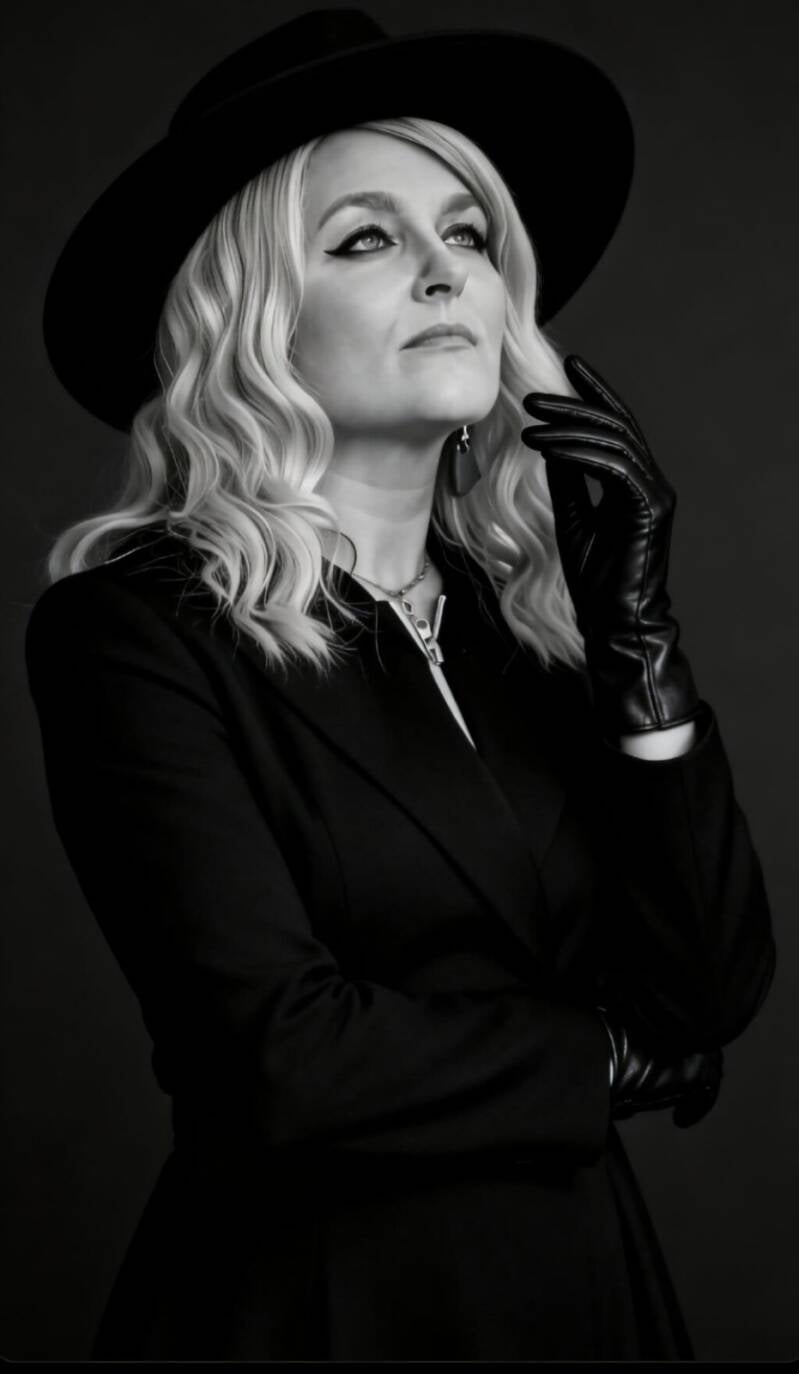
And yet today, from some of Europe's most prestigious stages, she offers us the most beautiful and frightening lesson of all: that it is possible to be broken inside and still smile, sing, and triumph.
In an intimate corner of Madrid, with a steaming cup of tea in her hands—hands that tremble for just a moment, like the memory of an earthquake deep within—Belle De Z welcomes this journalist. There is no distance in her gaze; there is an intensity that burns.
She has not come to talk about gold records, but about seconds of life, about how a woman can stand at the edge of the abyss and decide, through sheer determination, to look up and start walking again. Allow yourself to be captivated by this interview, because it is not every day that one gets to sit across from such a remarkable embodiment of human resilience.
1. Belle De Z, let's begin with your beginnings. You were the little girl who sang in the choir at the church in Rimavská Sobota and who, at just 14 years old, was selected to perform before the President of what was then Czechoslovakia. What remains of that girl with the flawless voice in the indomitable woman we hear today on Czechoslovak Got Talent?
Absolutely everything. That little girl is still living inside me, although life forced her to become a much stronger, more aware, and braver woman.
I remember those years in Rimavská Sobota perfectly. The church choir was my first stage, apart from the shower and the staircases in my home. It was where I discovered that singing was not simply about performing notes, but about conveying emotions. There I learned discipline, sensitivity, and respect for music.
And yes, performing before the President of Czechoslovakia at just 14 was an extraordinary experience for a girl from a small town. At the time, perhaps for the first time, I felt that music could open doors that seemed impossible to reach.
But life later took me down some very difficult paths. The brain aneurysms, the strokes, the surgeries, the recovery… all of that changes a person forever. You never sing the same way again after looking death in the face so many times. Your voice changes because your soul changes.
On Got Talent, people saw strength, anger, energy, even a kind of rebellious spirit. And they were right.
Today, I am no longer that shy little girl who simply wanted to sing beautifully. Today, I am a woman who sings because she survived. Because she is still here. Because she understood that life is far too fragile to be lived in fear. But the essence remains the same: genuine emotion. The difference is that now every song carries scars behind it. And that is something no music school can teach you.
2. In 1999, you crossed Europe almost by chance: a vacation, a beach, love at first sight—and an encounter that changed everything. The fairy tale did not last long and gave way to a very harsh reality: psychological and physical abuse. You managed to escape that nightmare and raise your daughter alone in a foreign country. Where did you find the strength not to pack your bags and go back, but instead to stay and, above all, begin to heal?
It was an extremely difficult period, but I believe that when you become a mother, you discover a strength you never even knew existed within you.
Many times I thought about going back, about giving up, but something inside me kept telling me that I had to move forward. Spain eventually became the place where I rebuilt my life from scratch.
It was not easy. I was alone, in a foreign country, and very afraid. But I also understood that if I wanted to give my daughter a better life, I first had to save myself.
Over time, I realized that staying was not a defeat. It was my way of healing and rediscovering myself as a woman and as an artist.
3. In 2018, you released "You Belong," a blues ballad that earned you a bronze medal at the Global Music Awards in California. Critics praised your vocal power. But what did it mean to give a title and a melody to the word "belonging" when you yourself have always lived between two homelands—Slovakia and Spain?
"You Belong" was not born out of love for a homeland, but out of a very deep emotional wound.
The song is about those toxic relationships that can be incredibly difficult to leave, relationships in which a person eventually loses themselves, suffers, and forgets their own worth.
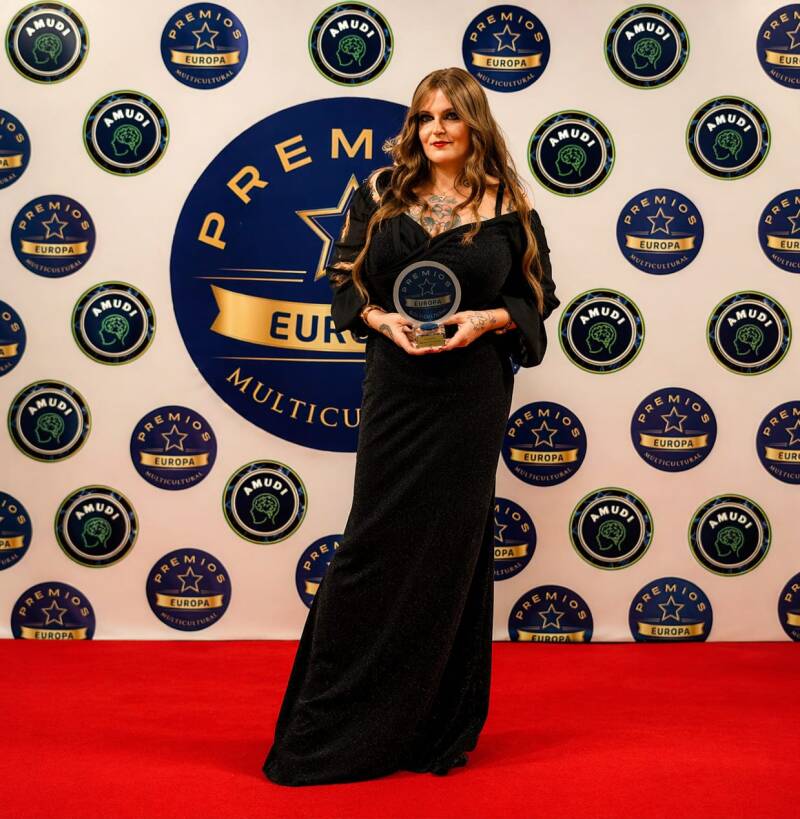
At that time, I had fallen in love again and was hopeful about believing in love once more. But I was also carrying a great deal of fear because of everything I had experienced before.n And just then, a very serious case of abuse took place in Vila-real, the city I consider my home. It affected me deeply and marked a turning point in my life. That is why the line "You wanna be free now" is so important. It speaks about the need to break free, to breathe again, to regain one's dignity, and to learn to truly love oneself. Because love should never hurt you or destroy you.
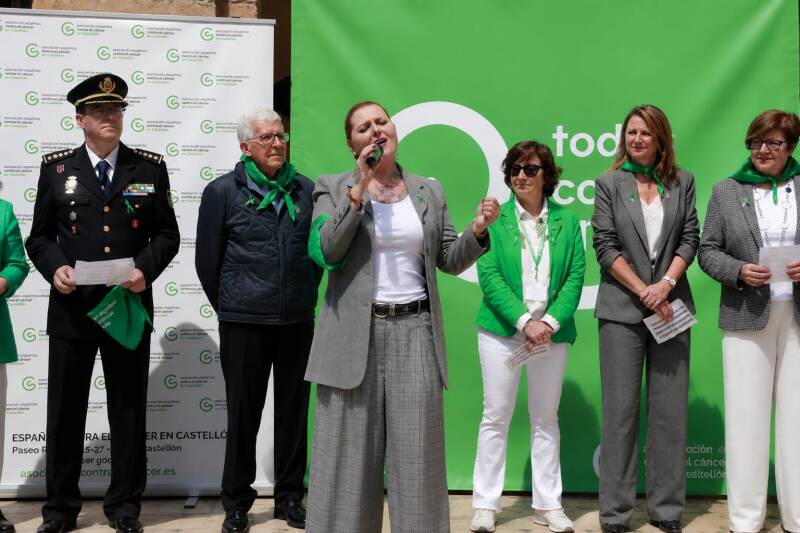
From that point on, I also began working and volunteering with women and men who had experienced abuse, because suffering does not distinguish between genders. I believe it is very important to overcome the fear of speaking out. We never know who might be going through something like this; it could be someone very close to us.
And although I was born in what was then Czechoslovakia and carry both the Czech Republic and Slovakia in my heart, Spain was the place where I truly began life again as a woman and as an artist. My daughter was born here, my music was born here, and my soul began beating again here.
4. Let's talk about the storm, Jana. In 2019, your body began fighting back. Six brain aneurysms ruptured. Then another appeared in 2024, followed by two strokes and the near-total loss of your childhood and teenage memories. Can you describe that moment? Not the medical or clinical aspects, but the exact moment when you realized that your brain—the most precious instrument a singer has—was no longer working as it should?
The hardest part was not just the physical pain. The hardest part was feeling that I was losing pieces of myself. There was a moment when I understood that my brain—the place that holds your memories, your identity, your emotions, and your music—was no longer responding in the same way.
When the aneurysms began and the strokes followed, I felt tremendous fear. Not fear of dying, but fear of no longer being myself. Fear of losing memories of my childhood, my youth, the people I love, and everything that had shaped me as a woman and as an artist.
When I began noticing those gaps in my memory, it was devastating. For a singer, the voice does not come only from the throat. It also comes from emotions, memories, and lived experiences. I felt as though life were tearing away very important parts of my story.
And I am still fighting. I am currently waiting for another operation because two aneurysms that were treated in 2018 are now leaking tiny amounts of blood into my brain.
It will be a much more complex and delicate procedure because doctors will have to work again on areas of my brain that have already been treated. Of course I am afraid. It would be a lie to say otherwise. But I also have tremendous faith and confidence in the medical team that has been treating me since 2018, especially Dr. Antonio Lorenzo.
I always say that I am still here thanks to them. Thanks to the incredible neurology and neurosurgery teams at Castellón General Hospital, I have been able to keep living, keep fighting, and keep making music. After everything I have been through, I have learned that hope is also part of recovery. And although I have lost many memories, I have not lost my desire to live, to sing, and to keep moving forward.
5. One of the most moving details you have shared is that, after your first surgery, while in the recovery room and unable to speak, you tried to "sing in your mind" because you were afraid you might have lost your vocal range. Is there anything more terrifying for an artist than inner silence?
Yes. I believe there is nothing more terrifying for an artist than feeling silence inside themselves. It was truly a very difficult and deeply unsettling moment for me. When I woke up after the first surgery, one of my greatest obsessions was finding out whether I could still sing. I could not speak properly yet. I was disoriented and terrified… and I remember that all I did was try to sing mentally. In my head, I repeated melodies over and over, trying to find out whether the music was still alive inside me.
Because singing is not just a profession for me. It is my identity, my way of expressing emotions, and the way I feel alive. The fear of losing that was absolutely terrifying. But the most emotional moment came when they moved me to the hospital ward. A very kind nurse came in and asked how I was feeling. I looked at her and said, "Would you listen to me?"
She knew I was a singer, so I gathered my courage and tried to sing a Madonna song. And something happened that I will never forget. The nurse began to cry… and in the end, we both started crying. I cried because I was overwhelmingly happy to discover that I could still sing. And she, I believe, cried because of the emotion of that moment and everything it meant after all I had been through. It was a beautiful, deeply human moment, impossible to explain in words. One of those moments that remain engraved in your soul forever.
Add comment
Comments