

Four Men from Zaragoza Are Rewriting the Rules with Artificial Intelligence
By José Luis Ortiz Güell
The world is watching four men from Zaragoza with a mixture of awe and admiration.
Stepping into The Blue Horizon’s studio is not like visiting an ordinary production company. It is like peering into the abyss of a revolution that many would rather ignore, while others fear it like fire. Artificial intelligence is no longer a laboratory experiment or a promise for tomorrow: it is a tool reshaping the very DNA of cinema, and it bears the signature of four men from Zaragoza who have decided to plant their flag on the other side of the ocean.
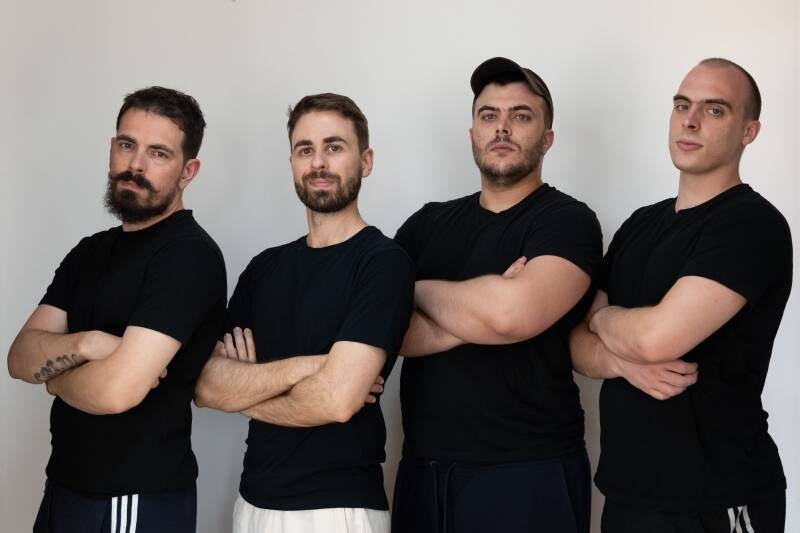
I have crossed the Atlantic to speak with Alex, one of the company’s founders, and find out whether there is substance behind the hype or whether it is all smoke and mirrors. What I have discovered is a bold declaration: classical cinema, with all its epic grandeur and tradition, already has an heir—an unconventional, brilliant, and, above all, unstoppable one.
1. Alex, thank you for welcoming me. The first time I watched your videos, I didn't know whether to laugh or simply be blown away. What does it feel like to be an ambassador for this technological madness?
(Laughs) I wouldn't call it madness, but rather creative vertigo—the same feeling the first people who picked up a movie camera must have experienced. Suddenly, the world opens up: everything that once existed only as a dream sketched in a notebook can now come to life.
I've spent years writing short films, books, and screenplays, but I always ran into the same wall: budget, technology, limitations. With AI, that wall comes crashing down
Seven years ago, I wrote a screenplay about Atlantis and lost civilizations. It sat gathering dust in a drawer. Today, thanks to this technology, we're negotiating to turn it into a hybrid film featuring real actors. If it happens, it will be a dream too big for my heart to contain.
2. In your manifesto, you talk about “more than a decade of experience as filmmakers.” But let's be honest: you've traded the ARRI camera for a keyboard and a Midjourney subscription. Isn't that a betrayal of the analog essence we critics hold so dear?
That's a rather narrow way of looking at things. It's true that anyone can open Midjourney and start generating videos. But most of what comes out is noise, not cinema. We're aiming for something else: when people watch one of our productions, we want them to say, “This is cinema.”
Our process isn't all that different from traditional filmmaking. We start with an idea, write a screenplay, and design characters and settings. The difference is that, instead of a camera, we use prompts, images, and professional techniques. And now we're taking the next step into hybrid production, combining real actors with AI-generated environments. Just look at this adaptation of Baki, which is taking the internet by storm:
https://www.youtube.com/watch?v=LJmZabvus0Q
I can assure you that, no matter how much you spend on a subscription, creating something like this without a background in filmmaking is almost impossible. Either you've got the talent, or you'll crash and burn.
3. Let's talk about Zaragoza. You've achieved what the city council couldn't accomplish in decades: putting the city on the global cultural map. But at what cost?
We're from Zaragoza, but none of us lives there anymore. We've had to cross the ocean to be taken seriously. In Spain, entrepreneurs often feel more persecuted than supported. Our politicians seem more interested in squeezing those who create and produce than in giving them room to grow. And that hurts, because we love our country, its people, and its culture. But competing at Hollywood's level is simply unfeasible within an ecosystem that stifles rather than encourages ambition. Until that changes, we'll keep flying the flag for Zaragoza and Spain from abroad. And we'll do it on a grand scale.
4. The film industry is shaking. Actors are going on strike, and screenwriters are demanding anti-AI clauses. You want to make one of the first hybrid films. Are you the solution or the problem?
I'm passionate about history, and history teaches us that every major technological shift brings fear with it. The Industrial Revolution was seen as a threat by the Luddites, yet the world adapted. The same thing will happen now.
AI is here to stay. Denying it is childish, although understandable when that denial comes from a fear of the unknown. But we don't want to be mere spectators. We want to become leading voices in shaping the rules of this coexistence. We support fair arrangements that bring established professionals into the process rather than simply replacing them.
Are we the solution or the problem? Someone once told me that life isn't black and white, but a whole spectrum of gray. Our work will speak for itself. Everyone can make up their own mind.
5. A picture is worth a thousand words. Can a machine feel the same way you do when watching a sunset?
Of course not. Just as an ARRI camera feels nothing, yet it was used to shoot Joker and Avengers: Endgame. AI is a tool, not a living being. It can imitate, analyze, and replicate, but it will never experience the world as a human does.
And here's the thing: many people think this is simply a matter of typing a prompt and pressing a button. Nothing could be further from the truth. If it's so easy, I invite anyone to make a video like ours. If they succeed, they should give us a call—we'll hire them on the spot.
6. With the World Cup, your content has surpassed 200 million views in 30 days. What does it feel like to have that kind of impact?
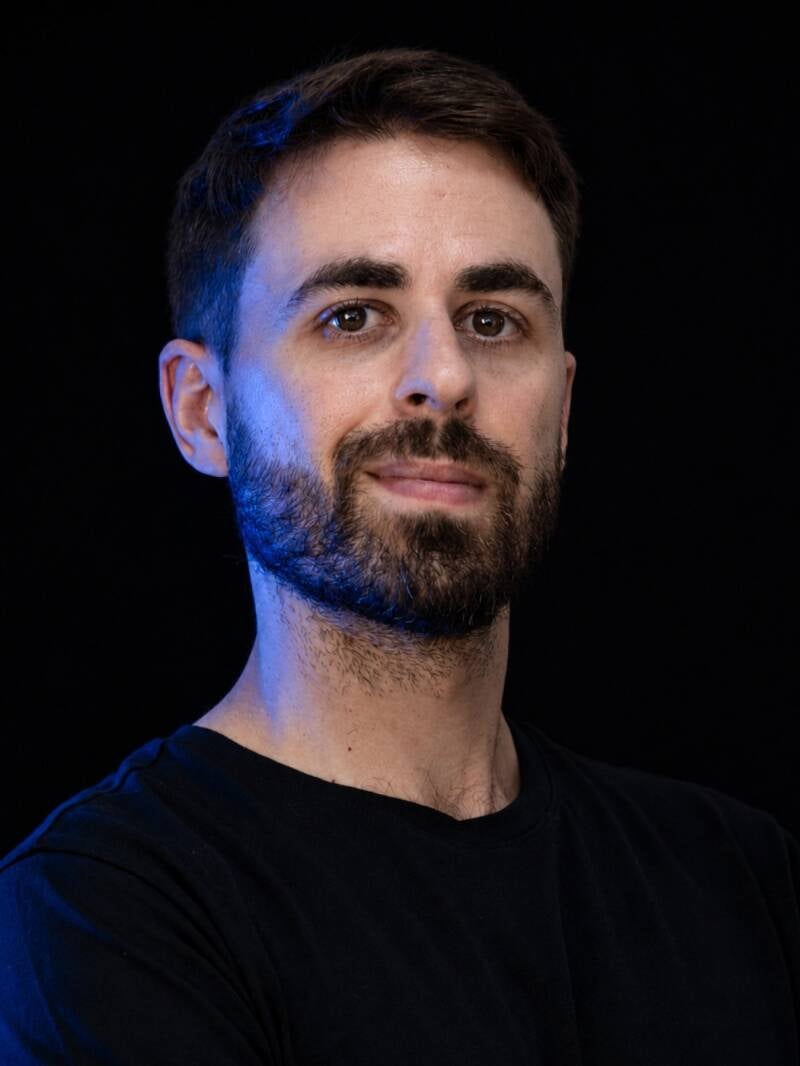
It's absolutely crazy. We started with a five-minute video featuring all 48 participating countries, capturing that World Cup spirit that seemed to have been lost: unity, sport, and passion without borders. The response has been overwhelming.
We even created the song from scratch using AI, and it's now on Spotify and YouTube, with millions of plays. Some people say they like it even more than Shakira's song—although, of course, that's a comparison that needs to be taken with a grain of salt. After that first explosion of interest, we began releasing videos after every match. And people aren't just watching: they write to us, suggest ideas, and send us videos of themselves dancing to our songs. Seeing fans from all over the world get emotional as their players are transformed into movie heroes… that's priceless.
And, ladies and gentlemen, this is only the beginning. We're working on an original series and a feature film. Hopefully, you'll be seeing them on the big screen very soon. Alex gets up and offers me a second coffee, which I decline. He has the look of a Renaissance artist who has just been handed a printing press: he knows the rules of the game have changed forever.
The Blue Horizon is not the future; it is a mirror reflecting the future into the present. In a city looking toward the twenty-first century with one foot in tradition and the other on the edge of the digital abyss, these four young men have shown that you don't need millions of dollars to move an audience. All you need is an abundance of creativity, a touch of madness, and the courage to look classical cinema straight in the eye… while preparing to transform it.
It will be a first-class transformation, and they've invited us all along for the ride. The question is: are we ready to be part of it?
Follow The Blue Horizon on Instagram and visit its official website.
Add comment
Comments