

By Susan Villa.
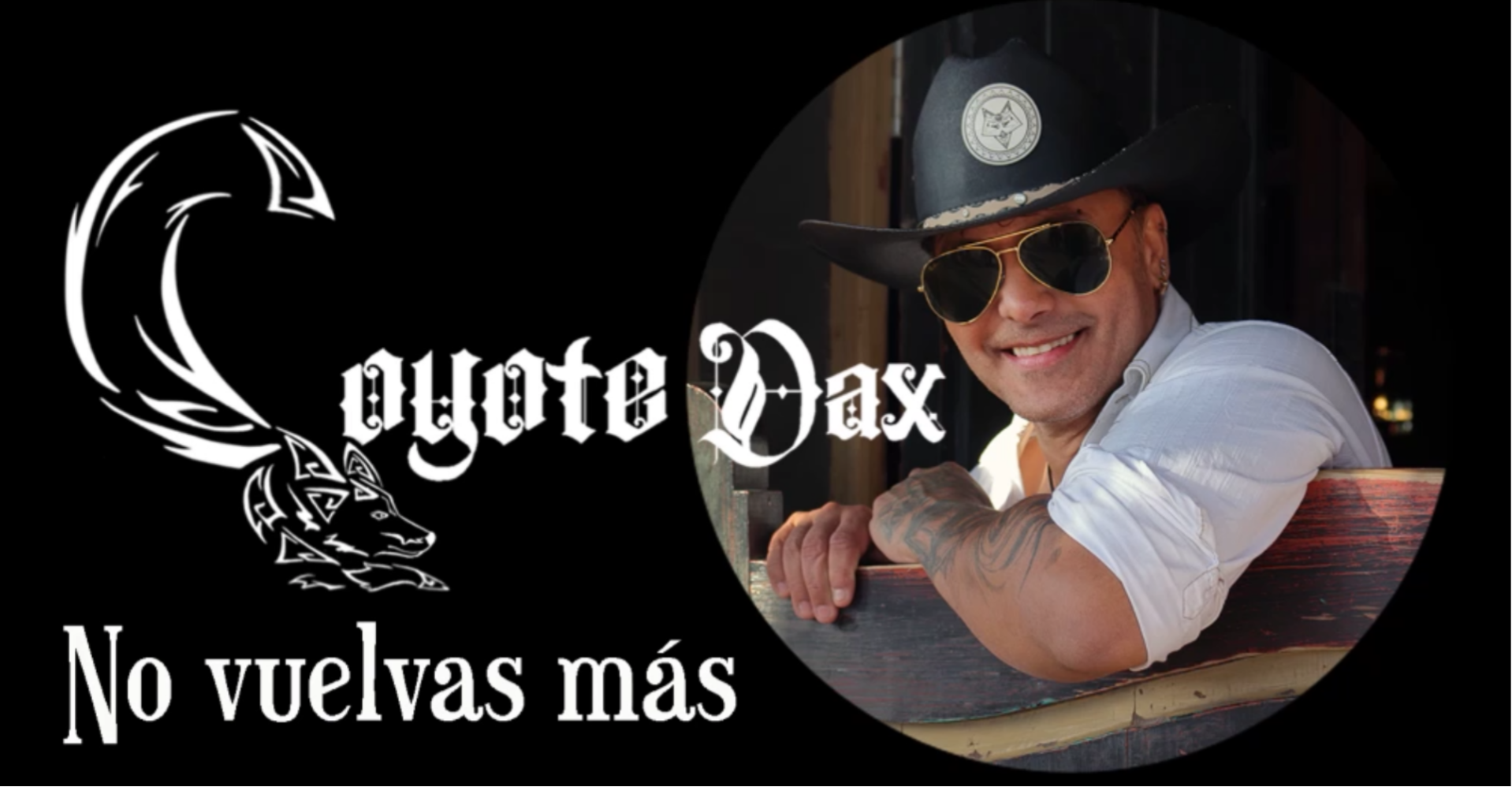
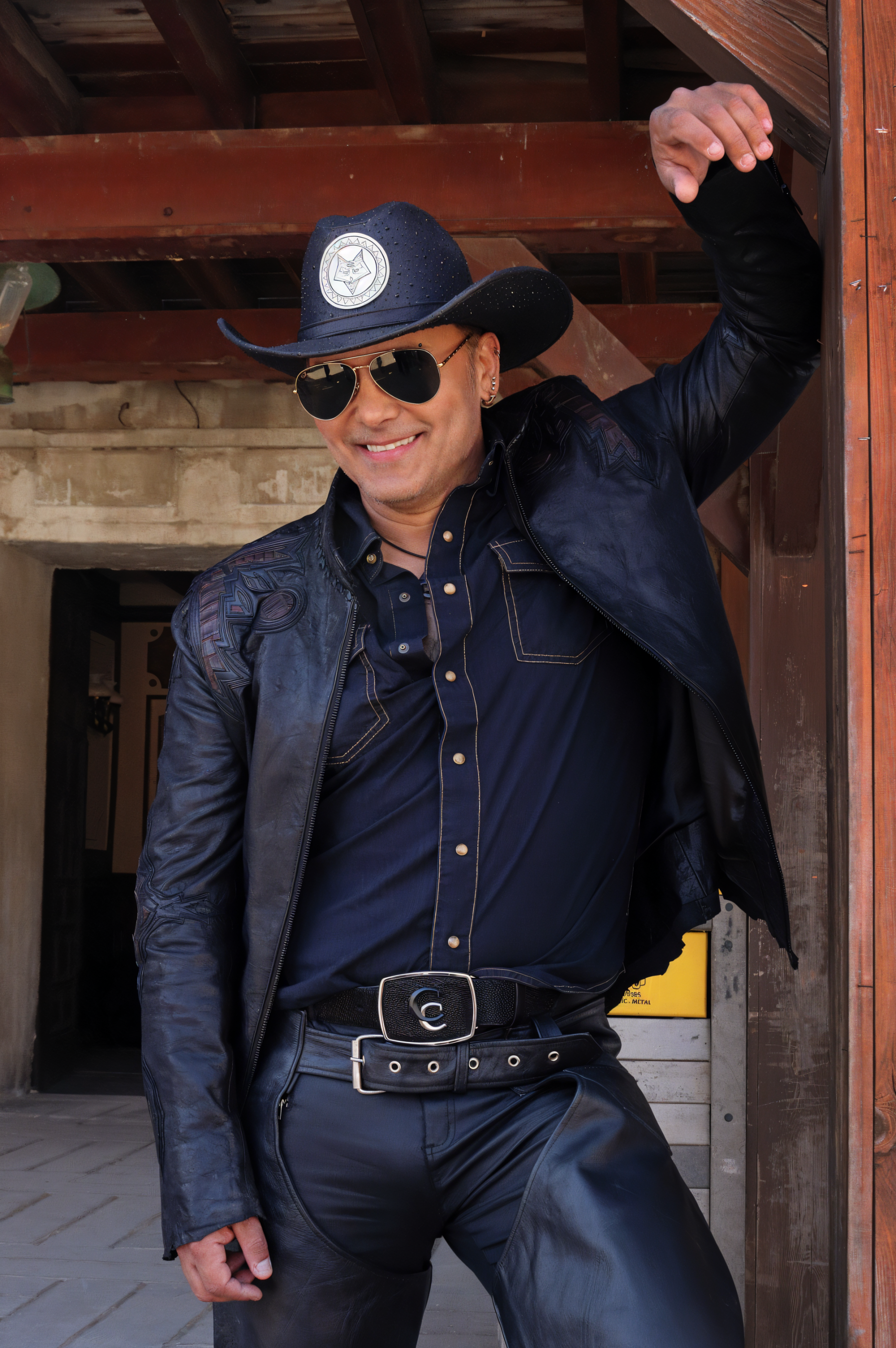
The return of Coyote Dax to the music scene marks a milestone in his artistic evolution and his impact on the public. With his new single, “No vuelvas más,” the singer fuses country elements with Latin rhythms, giving a fresh and renewed twist to his characteristic style. This combination demonstrates his ability to reinvent himself and connect with a diverse audience.
On the other hand, “Mamá te extraño” is a deeply emotional composition that explores grief and memory, consolidating music as a channel of expression for universal feelings. With a national tour on the horizon and an increasingly close relationship with his followers, Coyote Dax reaffirms his presence in the industry and in the hearts of his fans.
Coyote Dax. No vuelvas más
1. What does “No vuelvas más” mean to you? At what personal moment was this song born?
This song was born two years ago, when I was in the kitchen of a friend named Carmen, and I began humming.
I started writing lyrics without knowing what I was going to sing. At that moment, I was talking with someone about toxic people who, when a relationship ends, refuse to accept it and insist that without them you won’t be happy or find anyone better. That’s why “No vuelvas más” was born.
2. In this single, you return to your roots. How would you describe the fusion between country music and Caribbean and South American rhythms?
“No vuelvas más” is a song created for my comeback, my worldwide release. Today’s musical trends include more urban sounds, which have positioned themselves within the music genre of many countries.
I honestly didn’t feel comfortable making that kind of rhythm or singing those songs because I am someone with a very consolidated genre. I’m unique for now in both music and image—obviously, country music in Spanish has been my signature since the beginning of my musical career. I can’t deny that, since I was born in Venezuela, I also have Latin rhythms in my roots and DNA, such as merengue, salsa, reggae, and bachata. For this reason, I decided to fuse country with the music of my origins, of my birthplace. I call it “Latin Country Fusion.”
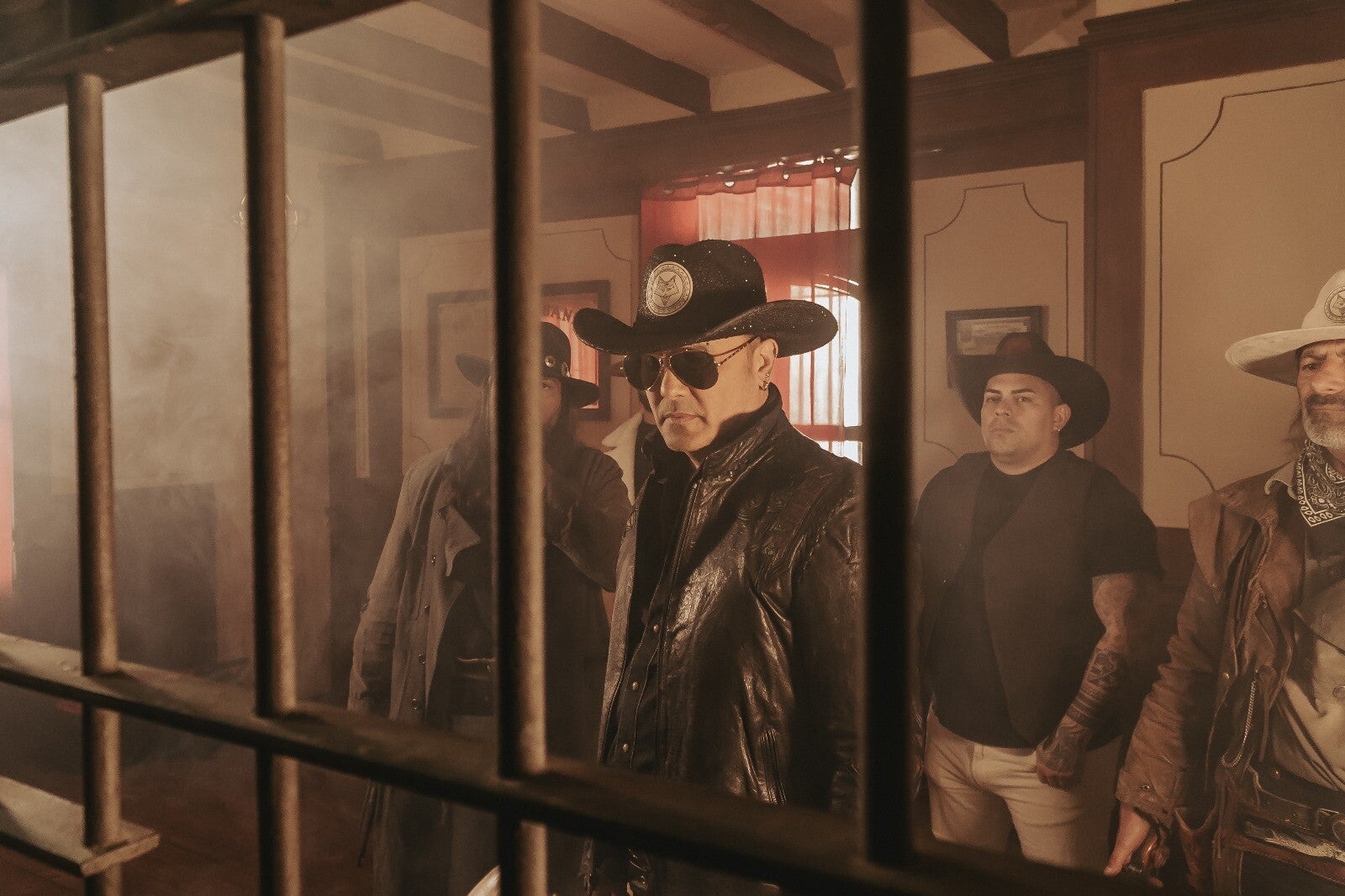
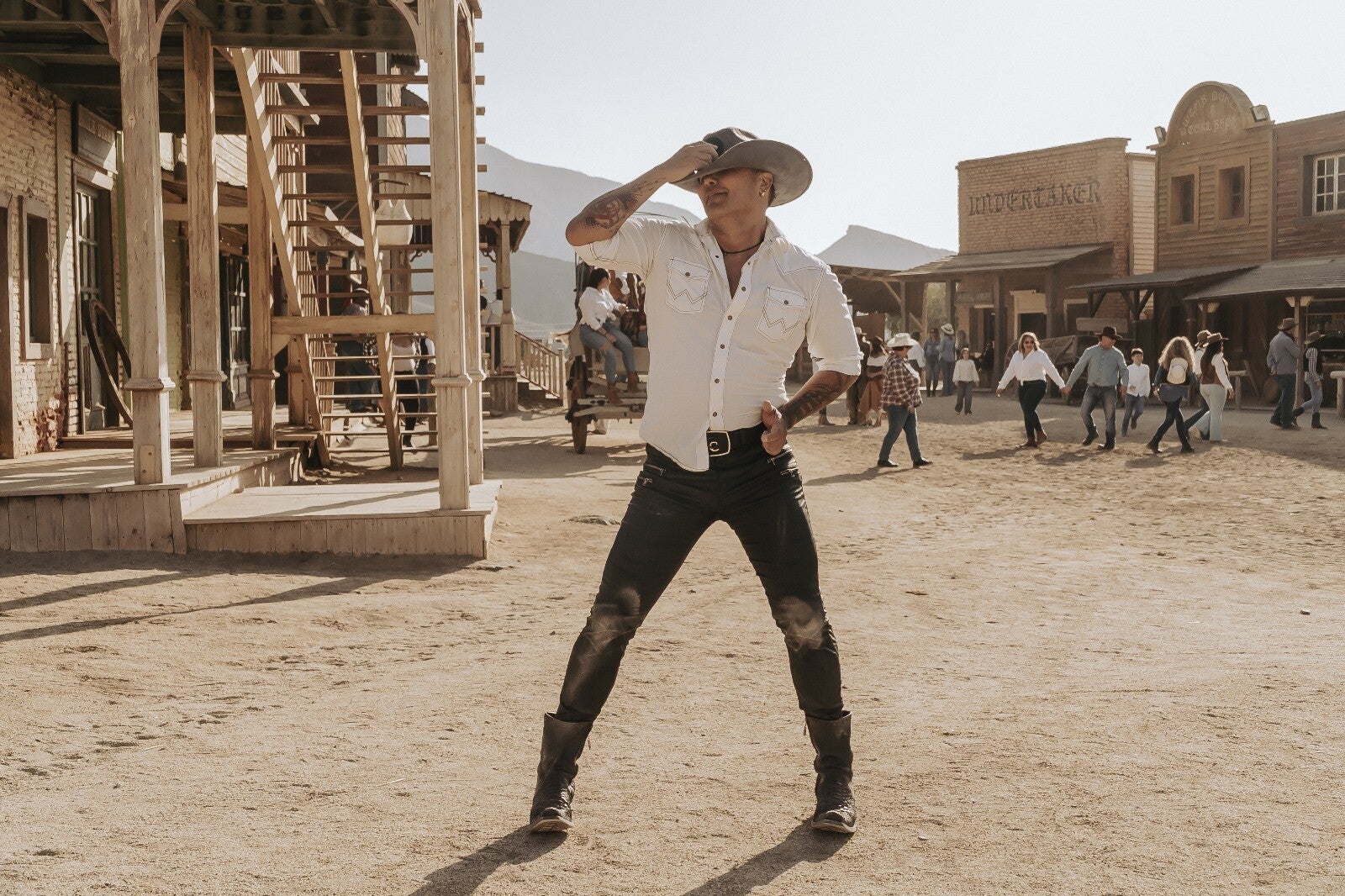
3. The music video was filmed on Western-style sets in Almería. What symbolism does that setting hold for you?
This setting has great meaning for me. I didn’t know the place, and it was truly a pleasant surprise—both for the hospitality and the affection of the people who worked there. They were very kind to me.
The theme of this park encompasses everything that my artistic career as Coyote Dax represents. The setting, the streets, the scenery—all of it somehow brought me back to my beginnings. Even though many years have passed since “No rompas más,” I now return to the spotlight with a new video clip and a new song titled “No vuelvas más,” going back to my roots.
4. What was the creative and production process behind “No vuelvas más”?
This song was written and directed by Kiko Vea, who is my producer, and by Dax Alejandro La Rosa—that’s me. We first worked on a melody, then on the story and the lyrics, which we created together. The production was entirely handled by Kiko Vea, who has known me for many years and has long directed both my songs and the upcoming releases I have planned.
5. What does this song’s choreography have that you hope will connect with the public this summer?
“No rompas más” has undoubtedly been the most iconic song, one that—thanks to the public—has entered every home and remained in the country’s musical history.
It comes with a dance called “Line Dance,” which everyone performs whenever the song plays. I often meet people who tell me they still can’t get the steps right because they have two left feet. So, thinking of those people and honoring what they have asked for—something they need to enjoy dancing—I’ve released “No vuelvas más,” and now I’m making them dance from the waist up, with choreography where you gesture with your hands.
6. How did you experience the emotional process of writing and recording “Mamá te extraño”?
It was written in 2016, and unfortunately, my mother passed away that same year. I found myself in a situation of nostalgia and sadness. At that time, it wasn’t the right moment to release it—I didn’t have the motivation or the strength to dedicate this song to my mother.
Now that I am returning and people are seeing that Coyote is here to stay for a long time, I wanted to honor my mother with this song, “Mamá te extraño.” Especially during this month, when Mother’s Day is celebrated and it’s such an important date for Latin America, Central America, and for many people. I want to pay tribute to all those mothers who have fought for their children and who, in some cases like mine, carried both the role of mother and father.
Mamá te extraño
7. What finally motivated you to release the song dedicated to your mother?
To tell her how much I miss her, how much I love her, and how much I regret many things I could have done better in life. With stubbornness and pride—because I’m human—I didn’t give her the time I now feel I should have given.
I was also motivated by Mother’s Day in May. I wanted to offer this song to those who have lost their mother and to those who still have them, so they can hear in these words that they can give their mother more love, affection, and enjoy her company.
8. What do you hope the public feels when listening to such a personal song?
We all think and feel differently. Each person will receive it in their own way.
I would love for people to identify with it, to feel in some way that their mother is close to them, and for those who still have their mother to value her more. That is the purpose of the song.
9. Did your mother influence your musical career in any way?
Yes, my mother was always a pillar in my career. I started singing at the age of 9. She sang beautifully. As a young boy, I always listened to her singing while she cooked or cleaned.
When the opportunity came for me to become an artist, I always had her support, her affection, and her lessons. She was always very attentive with my siblings and with me. She fought as both mother and father, and she had the strength to give us the best.
10. Do you think this song could bring comfort to those who have suffered a similar loss?
If they identify with the lyrics, it will surely be a comfort. I wrote and sing it from a personal place, from my experiences and my story with her. But it’s true that many people have similar stories, and if this song can give them encouragement, and if my words are what they once wished they could tell their mother, I will feel proud and filled with joy.
11. You were very well known for “No rompas más.” Do you feel that this success was a blessing or a burden at certain times?
No, not at all. For me, “No rompas más” has been my pride. It will accompany me throughout my entire career, for the rest of my life, until the last day I step on a stage. It is the song that made me known, that made me a legend, and placed me in the musical history of many countries—and of this beautiful country, Spain. That’s why it will always be a blessing and a pride to sing “No rompas más.”
12. How has your approach as an artist changed from those early successes until now?
My approach hasn’t changed much. Artists gain maturity and experience, which become our foundation. That foundation makes us better artists, better singers, and better people. I’ve taken my life experiences into my professional work. I feel that now I’m the best version of myself. Those who knew me back when “No rompas más” came out will now discover other sides of me they didn’t know.
13. Which artists inspire you today, and who would you like to collaborate with?
I admire many artists. I appreciate those who are emerging now. I like Karol G, Enrique Iglesias, Gente de Zona, Alejandro Sanz, La Oreja de Van Gogh, Mónica Naranjo, Malú, Manuel Carrasco.
Artists who have inspired me include Elton John, Garth Brooks, Alan Jackson, Michael Jackson, Cyndi Lauper, Madonna, and Phil Collins. They have all the talent—they are composers, singers, actors, and musicians. They were my inspiration to become the artist I am today.
14. How would you define your essence as an artist at this stage of your life?
As something original which—thank God—has remained intact since my beginnings in 2001. Today, I still have a unique image and musical style. At the moment, I can’t say that any other artist can be compared to me, and that’s why my essence has remained unchanged since 2001.
I’m grateful that one day another Spanish-language country singer might emerge with similarities to me. For now, I can feel proud of what I have today.
15. You speak of a “Coyote Community.” What does this communication with your fans represent to you?
It is a family—I call it the Coyote Dax Family. It represents support, consistency, and the unconditional love they’ve had for me, the faith they’ve shown, and the patience they kept during all this time until I decided to return strongly to my career.
My community, my family—those who love me, who support me, and with whom I will always add. I am here in this life to add, not subtract. This family adds to my life every day; they make me feel proud and happy because they inspire me to release more songs so my music can reach them with all my affection.
16. Do you feel that new generations are discovering you? What kind of response have you received from them?
New generations aren’t discovering me because they have danced to “No rompas más.” It’s true that, thanks to the public, the song has remained popular and crossed generations throughout the years. It has been danced to for 15 years at weddings, festivals, and parties.
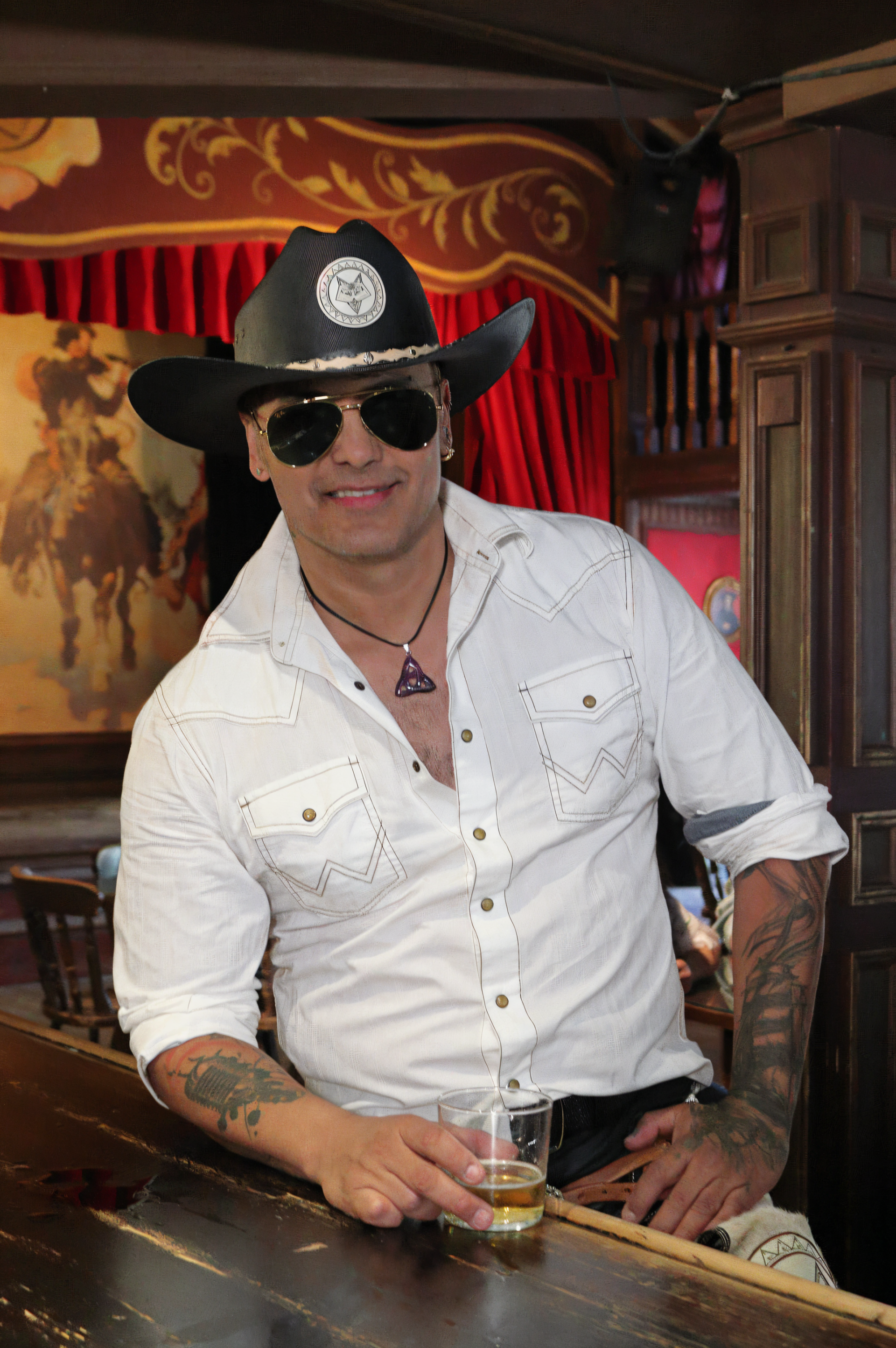
What they didn’t know was the face of Coyote. Now is the moment for the new generations to know the face of Coyote Dax and see that I am not a “gavilán.”
A girl once stopped me in the street and told me I was a gavilán. I told her I was a condor. I didn’t understand her comment at first because there was a very famous telenovela here in Spain called “Pasión de gavilanes.” Well now, they’re going to know the face of Coyote Dax.
17. How important are social media today in your relationship with the audience?
I have to admit that I’ve always been a bit of a dinosaur when it comes to social media. I’ve been reluctant to participate in them. But I must understand that this is part of what new generations demand—or what the current artistic landscape demands.
I have finally given in to social media. It will be important for the projection of my new songs, for recognition from Generation Z or new generations who did not know my music or did not know the image of Coyote Dax.
18. What emotions or messages do you wish to convey in this new musical stage?
I have always been a songwriter who sings about both love and heartbreak, but I have also created songs like “El coyote ya llegó” and “El baile del coyote,” fun songs that invite people to dance, forget their problems, and be happy.
I hope they become part of each person’s history—whether that history is about love, joy, weddings, birthdays, births—just as I became part of their lives through “No rompas más.”
19. What can you tell us about the 2025 tour? Will there be any special surprises?
I will be touring with a show called “El baile del Coyote” in Valladolid, Almería, Badajoz, Granada, Galicia, Madrid, and Barcelona.
You will see a renewed Coyote, more devoted than ever. My main goal is that during the show, people have fun and dance to my songs, but also connect with me so that the night becomes unforgettable for both them and me.
I want to thank you for this interview, for giving me the opportunity to reach your readers, and for allowing me to be with you. I am infinitely grateful for your affection and support.

Add comment
Comments