

Through the OncoloMeeting Foundation, she seeks to provide information, resources, and ongoing support.
By Susan Villa.
Talking about cancer still means, in many spaces, speaking in a low voice. Not so much because of a lack of medical information as because of the absence of a narrative that includes the real experience of those who go through it: the emotional impact, the institutional void, the loneliness that appears when the spotlight of treatment fades and an even more complex stage begins—the stage of continuing to live.

It is within this silenced territory that OncoloMeeting positions itself: an initiative born from direct experience with the illness and conceived not as an individual testimony, but as a collective project of support, information, and defense of rights.
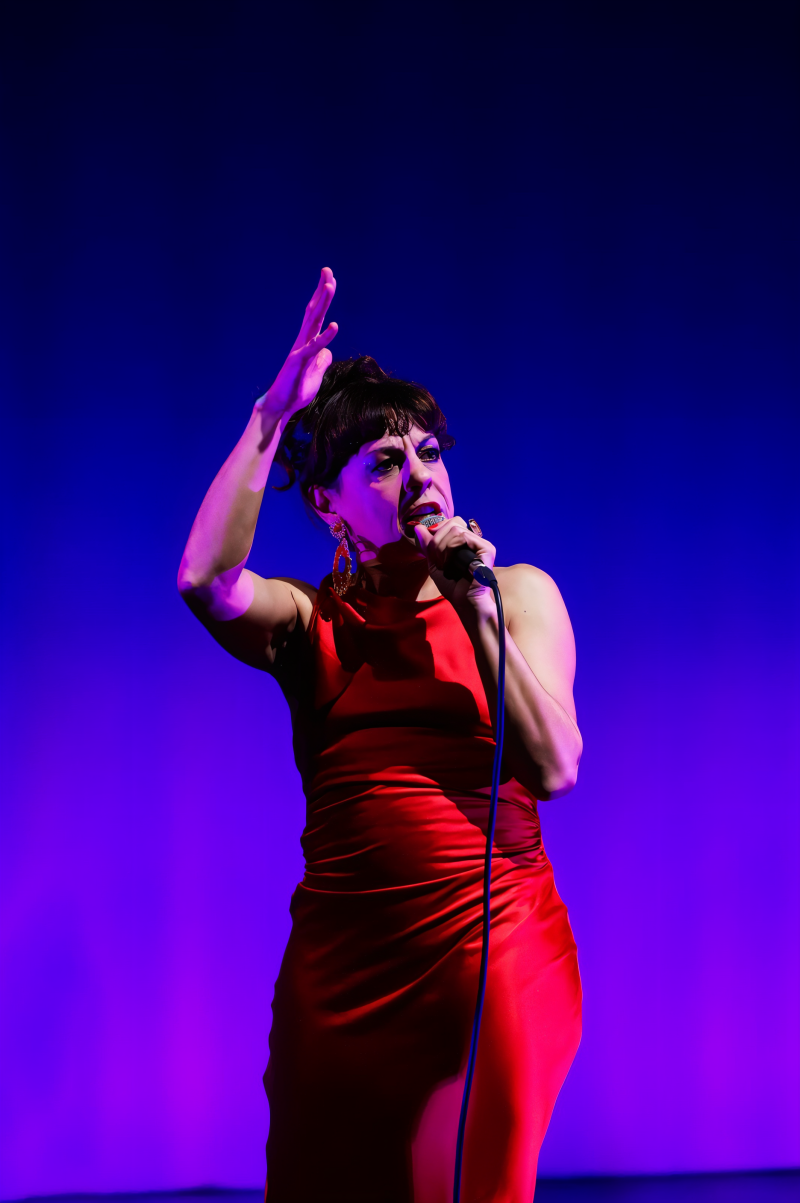
Cristina Medina, actress and president of the OncoloMeeting Foundation, speaks from that place without filters or prefabricated slogans. Her discourse does not seek heroics or sugar-coated messages, but rather to name what many people live through and few are able to say out loud.
In this interview, Medina reflects on the origin of the platform, the urgent need for an oncology community based on mutual understanding, and the structural shortcomings that continue to affect patients and survivors. She calls for a change in perspective: to stop treating cancer as a “common illness” and to recognize it as a collective with specific rights.
A direct, honest, and necessary dialogue, traversed by a central idea that gives meaning to the entire project: it is not about surviving, but about living.
1. OncoloMeeting was born from your personal experience with the illness. At what point did you decide that your experience with cancer had to become a collective project and not remain only an individual testimony?
From the moment I discovered everything that is not visible in this illness. There are so many side effects during and after treatments, and so much social, economic, labor, emotional, and organic abandonment. “We want to live, not survive.”
2. The OncoloMeeting app seeks to create an oncology community based on mutual support, even through anonymity. What shortcomings did you detect during your own journey that made you realize this space did not exist and that it was urgent to create it?
The lack of understanding is one of the most brutal shortcomings there is. People, “with the best of intentions,” tell you, “I understand you because I have a cousin who went through it,” etc. It is impossible to understand what is happening to us organically and emotionally if it hasn’t happened to you.

When patients and survivors stopped me on the street and we started talking, it was “very healing.” The feeling of “loneliness” derived from misunderstanding faded away. I was not alone; what was happening to me was happening to others as well. That gave me a different awareness: “it’s part of the process,” and that allows me to keep going.
There are many unknown territories we pass through, but we are only allowed to “be brave and be warriors.” We are not allowed to cry, to express our fear, our weakness; we are demanded the opposite. Why? We are ill at that moment of treatment, going through one of the worst moments of our lives, “with enormous uncertainty.” It is a Sword of Damocles that accompanies us for quite some time, but we are not allowed to name it—no one wants to listen.
However, with another “equal,” it becomes a topic “that can be spoken about calmly,” sometimes through permitted and relieving tears, etc.
3. One of the pillars of the foundation is to offer quality information and practical resources for the daily lives of patients and survivors. What kind of information did you miss the most when you received the diagnosis and during treatment?
All kinds. You don’t understand the words the oncologist is using, and on top of that no one warns you about side effects, whether organic or emotional. There is absolute abandonment when it comes to bureaucracy and aid (aid does not exist). Because it is considered a “common illness,” we do not have “special” rights. It is truly shocking.
4. From OncoloMeeting, you advocate for cancer to stop being treated as a common illness and to be recognized as a collective with specific rights. From your experience, what real consequences does this lack of recognition have on the working and social lives of those who suffer from it?
In many cases, after years on sick leave, you end up being dismissed from your job. In other cases, you are given “fit-to-work clearance”—not medical discharge—and even if you can’t, you have to go back to work. It is extremely difficult to be a waitress or a supermarket stocker with lymphedema or peripheral neuropathy in your hands (you drop things), but the diagnosis is “you look fine,” and they clear you to work.
In many other cases, after treatment and surgery, you are discharged without taking into account that after the entire process there is a fairly high percentage of patients who fall into depression, and what we hear is, “the best thing is for you to go back to work.”
Instead of referring you to a psychologist, you are referred to a psychiatrist who prescribes pills so that you can be active again. Many times, taking those medications together with the side effects of chemotherapy is devastating. There is a lot to be done in this area.
5. Cancer arrived at a moment of great public visibility for you as an actress. How did the illness affect you, physically and emotionally, in your career and in your relationship with the audiovisual industry?
Honestly, I don’t know whether it has had consequences or not. It is true that no one calls me to work in audiovisual projects (I’ve gone to some meetings for certain programs, but I was ruled out). I don’t want to think that it’s because I’m immersed in this illness. If that’s the case, “very bad on them—they’re missing out.”
At the same time, I’ll tell you that my priority today is to continue feeling well and to enjoy my loved ones: my children, my partner, my friends—and as for the rest, “Camilo Sesto!” (laughs).
6. You have decided to speak openly about the process and its aftereffects, something unusual in highly exposed professions. Do you think there is still fear about making cancer visible for fear of no longer being “hireable”?
I don’t know; I haven’t even considered it. My life—and myself—are now in another league: the league of truth, of enjoying my life, everything it offers me and what it doesn’t offer me. Why devote time to that?
7. The slogan of OncoloMeeting is “we want to live, not survive.” After everything you have lived through, what does living fully mean to you today?
Feeling well, not being in pain, laughing and enjoying the love my loved ones give me. Even if it sounds “Flower Power,” it is my current truth. I want to be at peace with myself and with mine, and to help those who come after or who are currently going through this very complicated ordeal.
8. Looking to the future, what new projects or lines of work does OncoloMeeting currently have, and what would you like the foundation to achieve in the coming years?
Right now, we are working on improvements to the current app and on a second version that will be more effective. At the same time, we are working with companies to become collaborators through the app so that our users can access resources that, as of today, our government “does not offer.”
For example: assistance with all the “paperwork” with the help of the Illustrious Association of Social Graduates of Madrid; Isla Mágica (offering its entertainment services to users); gynecological and dental clinics offering significant discounts and monthly free services for users in situations of economic vulnerability; lawyers who help with procedures that are sometimes necessary to fight for labor rights; support related to physical exercise, nutrition, and psychology.
Add comment
Comments