

Five million streams, a transatlantic tour, and Todo en su lugar, the album that consolidates her generational voice.
By Susan Villa.
Mercedes Cañas’s career has been consolidated, in a very short time, as one of the most honest and recognizable voices in today’s pop-folk scene. Following the impact of her first album Que entren en mi cabeza and two extensive tours on both sides of the Atlantic, the Madrid-born singer-songwriter presents Todo en su lugar, a second work that confirms her artistic maturity and her ability to transform the intimate into a shared language.

With more than five million streams on digital platforms, this album emerges from the need to look inward and organize universal emotions such as love, friendship, heartbreak, or self-discovery, without artifice and with a deeply generational narrative.
In Todo en su lugar, Mercedes Cañas expands her creative universe and allows herself to explore new emotional nuances, from grieving a friendship to reflecting on commitment in times of fragile bonds. Songs such as “No quiero fluir” and the track that gives the album its name function as small emotional manifestos, where calm, introspection, and the acceptance of the passage of time take on central importance. All of this translates into a repertoire conceived for live performance, where each song is re-signified in contact with the audience and reinforces that almost therapeutic connection the artist establishes through her music.

In this interview, conducted by Susan Villa, Mercedes Cañas reflects on her beginnings, the creative process behind this second album, and the importance of the stage as a space of truth and encounter. A serene and close conversation that allows us to understand not only the artistic moment the singer-songwriter is experiencing, but also the way in which music becomes, for her and for those who listen to her, a refuge from contemporary emotional noise.
1- At what moment did you decide that music was the professional path you wanted to pursue, and what memories do you keep of those first steps as a singer-songwriter?
Music was always in my life in one way or another, and I always dreamed of dedicating myself to it, but it was not until after the pandemic that it began to become a reality. I started uploading videos singing my songs on social media such as Instagram, and they kept reaching more and more people, until one day people I didn’t know began coming to my concerts. I remember those first times with great affection, and when I think about it, I realize how privileged I am to be able to dedicate myself to music one hundred percent.
2- After the impact of your first album Que entren en mi cabeza, what personal and artistic lessons do you think were decisive in approaching this second work with greater maturity?
I think that little by little I began to feel like talking about other things in my songs, and I became more introspective. I continue writing about love and heartbreak, but I have gotten to know myself better by writing to myself and speaking about less explored themes, such as grieving a friendship.

3- Todo en su lugar addresses very recognizable emotions such as love, breakup, or self-discovery. To what extent does writing from the everyday serve you as a way of putting yourself in order internally?
It is therapy for me. I like to write with a cool head, once I have overcome a grief or an important situation. It helps me understand life a little better.
4- Songs like “No quiero fluir” raise a very generational reflection on commitment. Do you feel that music can also function as a space of resistance against certain current emotional dynamics?
I think that, in a certain way, music is a refuge from all the emotional chaos of today. It helps us disconnect and, at the same time, connect with ourselves. I believe that is the magic of music.
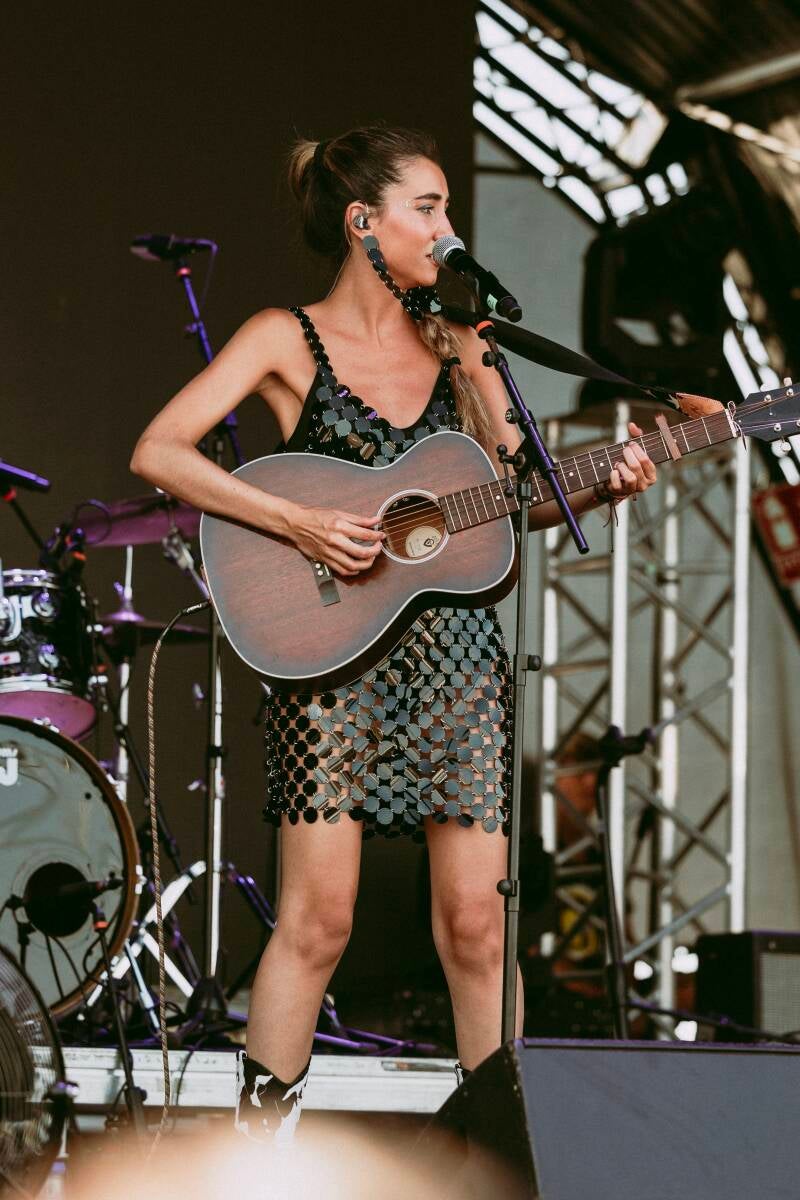
5- Live performance seems to occupy a central place in your project, with an extensive tour across Spain and Latin America. What does the stage give back to you that you do not always find in the studio or in the composition process?
Closeness and authenticity, I suppose. When you sing a song at a concert, it does not sound exactly the same as on Spotify, and that makes it unique. I like to see people’s faces during the concert. It is as if that communication becomes tangible, as if suddenly we all felt similar things.
6- After this album and the Todo en su lugar tour, at what creative point are you right now, and what can you share about Mercedes Cañas’s upcoming projects?
I am already writing what comes next. I suppose that is how singer-songwriters function: we never stop writing about what happens to us. But we will have to wait a while for the new material, because right now I am enjoying the album Todo en su lugar, creating content, and performing it at concerts. I believe it is necessary to give an album the time it deserves in order to truly enjoy it and digest it properly.

Add comment
Comments