

Interview with the creator of “Plásticos y Decibelios”: half a century of unique experiences and deep listening in an era of immediacy
By Susan Villa
For a quarter of a century, Plásticos y Decibelios has been much more than a music website: it has served as a refuge for attentive listening, a space of resistance against speed and forgetfulness, and a critical compass in a territory increasingly dominated by algorithms. Born when the internet had not yet dictated the rules of cultural consumption, and when sharing music was almost a clandestine act, the platform has survived—and strengthened—thanks to an idea as simple as it is demanding: discernment. In an ecosystem where new often gets confused with immediate and popular with relevant, Plásticos y Decibelios has defended, week after week without interruption, consistency as a form of thought and quality as the only possible engine.

Behind this perseverance is Julián Ruiz, one of the most singular and multifaceted figures in Spanish music journalism. A journalist, music engineer, and producer with over 140 albums and 16 number-one hits to his name, Ruiz has been a direct witness—and in many cases, a protagonist—of some of the most decisive moments in recent popular music history. From the epicenter of La Movida Madrileña to studios in Miami, New York, and London; from Rock-Ola to intimate interviews with Mick Jagger, Yoko Ono, Lenny Kravitz, and David Bowie, his story spans five decades of musical culture without forced nostalgia or complacency. At the 25th digital anniversary of Plásticos y Decibelios, Ruiz champions deep listening, perseverance, and the value of time in a world that seems to have forgotten that music—like life—needs pauses to leave a mark.
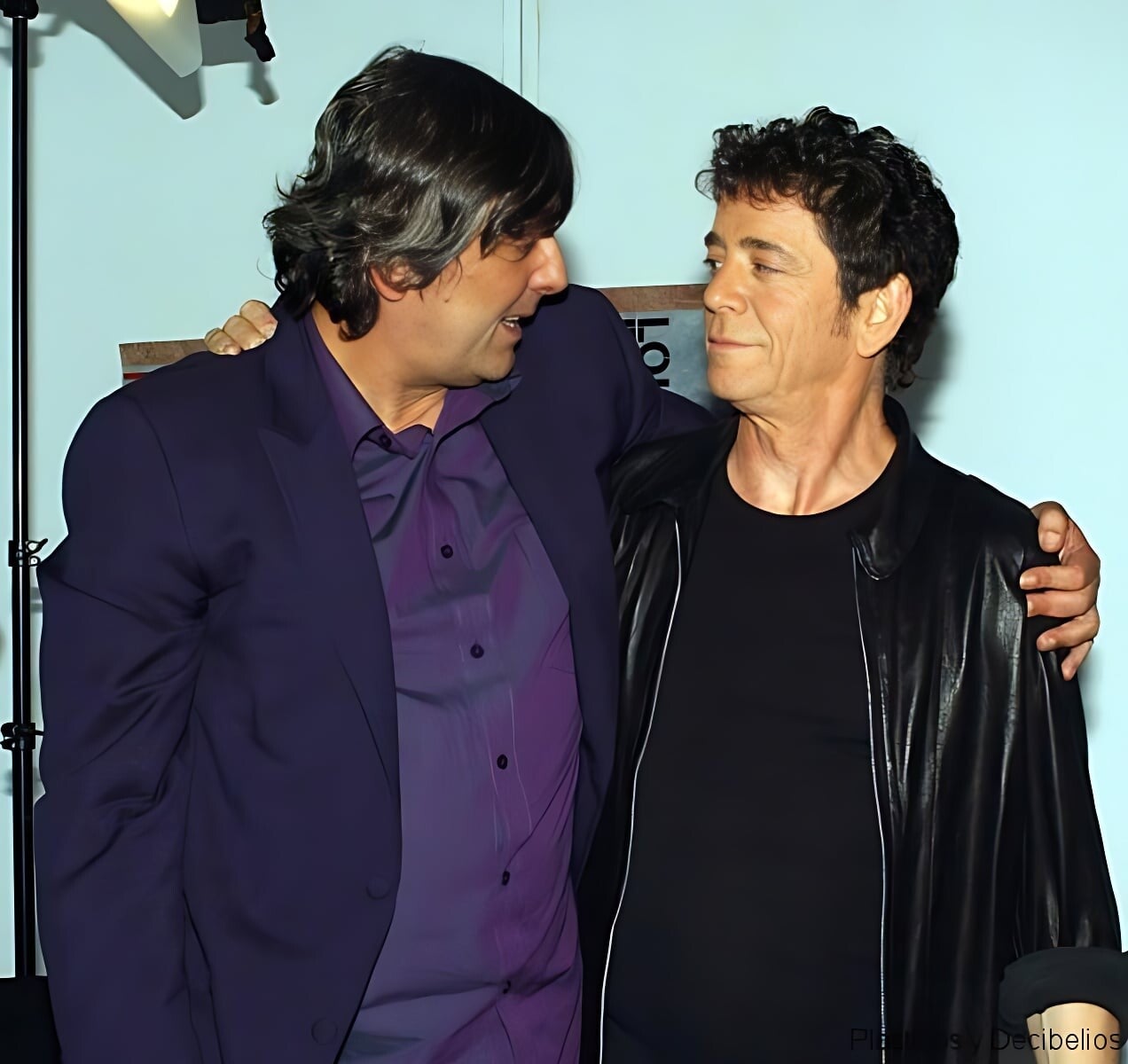
1. Your website turns 25, something exceptional in digital music journalism. What do you think has allowed Plásticos y Decibelios to remain relevant while so many other projects have disappeared?
It was a challenge because when Plásticos y Decibelios launched, Facebook didn’t even exist. Napster was used to share music for free. Thanks to the program, which celebrates 50 years on the radio and 25 on the web, both have grown like conjoined twins, supporting each other and contributing quality.
I never got involved with commercial matters, nor accepted the challenges of record companies. I have always maintained a singles list and an albums list for all new releases, and that carries a high value.
2. Over this quarter-century, you’ve defended a very clear idea: “If it’s good, it’s twice as good.” What does discovering music “with discernment” mean today in an era dominated by algorithms and immediate consumption?
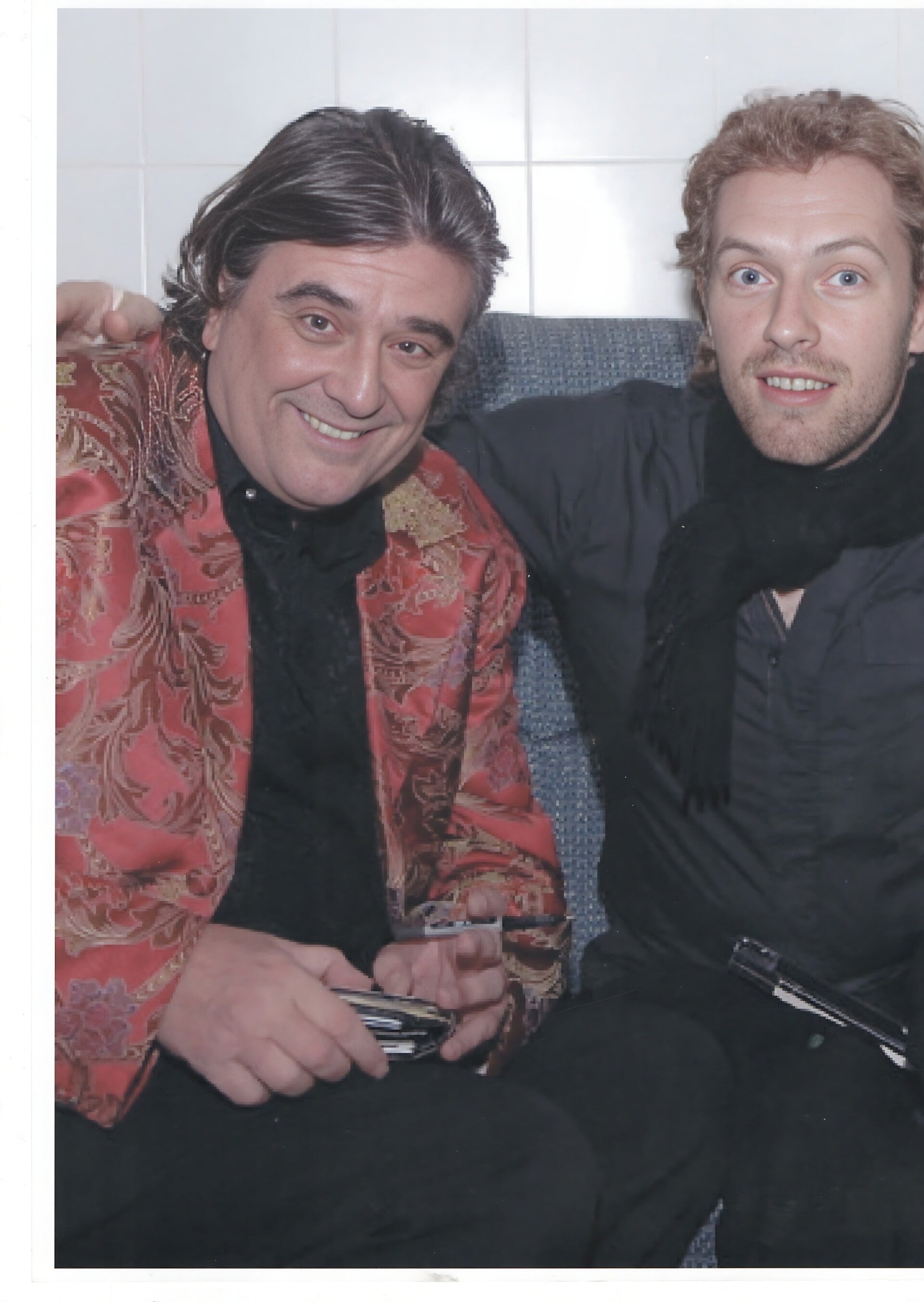
It’s a struggle because there is a lot of good music, but it’s not being showcased. I committed myself to Coldplay from their first single. They became godparents of the website, and later for my book Plásticos y Decibelios, Chris Martin wrote the foreword.
3. Your career blends three strong profiles: journalist, music engineer, and producer. Which of these roles has demanded the most truth, precision… or risk?
All three carry risk, but music the most. Making a living from music is very difficult.
I’ve done 140 albums, achieved 16 number-one hits in Spain and abroad. That’s extremely hard. I am still active; the latest album came out a few months ago. I called it Julián Verne because it was a journey to the center of the Earth. It’s available on all platforms, like Spotify and Apple Music.
4. You were also at the heart of La Movida Madrileña as a producer and direct witness of that cultural effervescence. How do you remember that moment, and what did it truly signify beyond the myth?
There was Rock-Ola, a club where all the new bands played, and we—friends, journalists, producers, and artists—went.
I produced Tino Casal and Alaska y los Pegamoides. The epicenter of La Movida was in Glorieta de Bilbao with Los Costus, two painters, along with Olvido Gara (Alaska), Tino Casal, and others.

5. You’ve witnessed unforgettable moments with artists like Lou Reed, David Bowie, Prince, Mick Jagger, Lenny Kravitz, and Yoko Ono—visiting legendary studios, intimate interviews, unique stories, as noted in the 25th-anniversary dossier. Are there any of these experiences that still move you deeply?
Some experiences were especially meaningful. I met Mick Jagger five or six times. I recall an interview scheduled in New York that was postponed because he had rehearsal; he didn’t attend me until the next day. I was very upset, and upon returning to the hotel that night, I found a bottle of Moët & Chandon with a note from him apologizing.

At that time, Jagger was going through an intense personal phase: he was dating Carla Bruni and had just released the single Sweet Thing dedicated to her. The promotion was as singular as he was: we were given a chocolate CD, impossible to play. Carla Bruni had met Eric Clapton, who fell deeply in love with her and confessed it to Jagger. Ultimately, Mick ended up with her. All this occurred during the same period as that New York interview.
I was in Lenny Kravitz’s Miami studio, which was crazy, where he was working with Mick Jagger. A song that didn’t do very well, God Gave Me Everything, was sung by Mick, and he told me, “I’m amazed—he came in the morning and had my song’s lyrics in an hour, it’s incredible.”
I’ve interviewed Yoko Ono three times. She is a special woman, with a very particular way of relating to people: she practices tarot and decides who gets an interview accordingly. On one occasion, we connected through an uncommon affinity. I’m very interested in Egyptology, and I brought her one of her records in which she appears as a sphinx. She was surprised and asked how I got that copy. I gave it to her for signing, and she wrote a dedication I still keep: “For Julián, who is a special guy, a special gentleman.”
6. In today’s accelerated world—fast consumption, increasingly short songs, lack of reflection—how does someone who has always championed consistency and deep listening experience this speed?
We live in a world that moves too fast, with barely any space for reflection. On a trip to India, while visiting temples, a guru noticed I was particularly stressed and asked where I was rushing. He reminded me that the world is not ending and that it is necessary to stop, reflect, and meditate.
That experience made me realize how much spirituality is part of their culture, especially among Hindu shamans, even more than among Buddhists. Since then, I often reflect on why we live so hurriedly and acknowledge that life is transient: we must seize every moment because life ends when it ends, and no one has returned to tell us there is another.
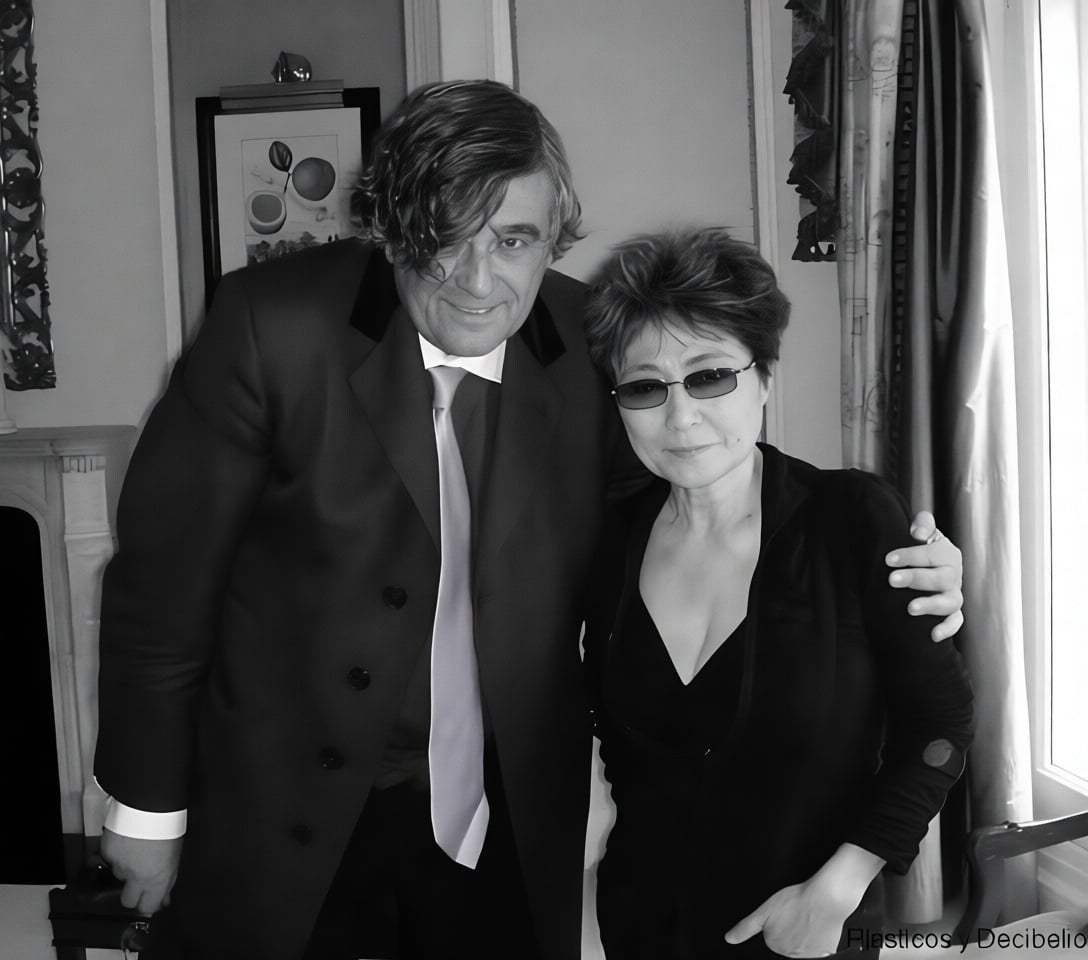
Yoko - Ono
7. Plásticos y Decibelios has published weekly lists for 25 uninterrupted years. In a world that changes so rapidly, what has that consistency taught you about the musical tastes of your audience and your own?
I listen to music four hours a day. Nothing else; I listen a lot. I keep making records and know how everything works. What happens in today’s world doesn’t appeal to me because it’s dominated by Instagram, TikTok, and social media. There is indeed a very strong music industry worldwide.
8. You once said Paul McCartney told you he would retire “when he dies,” a sentiment you share. What role does perseverance play today in a sector where everything seems disposable?
Of course, if you don’t work until the end, your adrenaline fades, and you grow old. The struggle for life is constant, even at 100 years old. Those who last longest are the ones who have fought hardest.
The problem today is that perseverance clashes directly with a sector dominated by speed and disposability. The internet has been both a blessing and a curse. It has enabled valuable cultural initiatives like Plásticos y Decibelios, but it has also imposed a dizzying pace: songs are shorter, many feel unfinished, and singers don’t even articulate clearly. This disregard for time and well-crafted work is a major mistake.
9. Your website has loyal readers in America, Europe, and practically the entire world. How do you feel about the responsibility of knowing your musical judgment influences multiple generations simultaneously?
I’m proud. As I mentioned with Coldplay, the website greatly helps bands succeed. I have promoted groups on numerous occasions, for example, Prefab Sprout, Blue Nile, and Kevin Parker.
10. Finally, after 25 years of history and thousands of contents, what projects are you focusing on now, and what do you want to continue building in this new phase of Plásticos y Decibelios?
After publishing two books, Plásticos y Decibelios and El sargento Pepper nunca estuvo allí, I’m now working on a third called Every Photo Tells a Story.
I have photos with many interesting people. Each photo tells a story, a lived experience with each interviewee. I am very meticulous when working on a book; I respect the process and take my time.
Add comment
Comments