

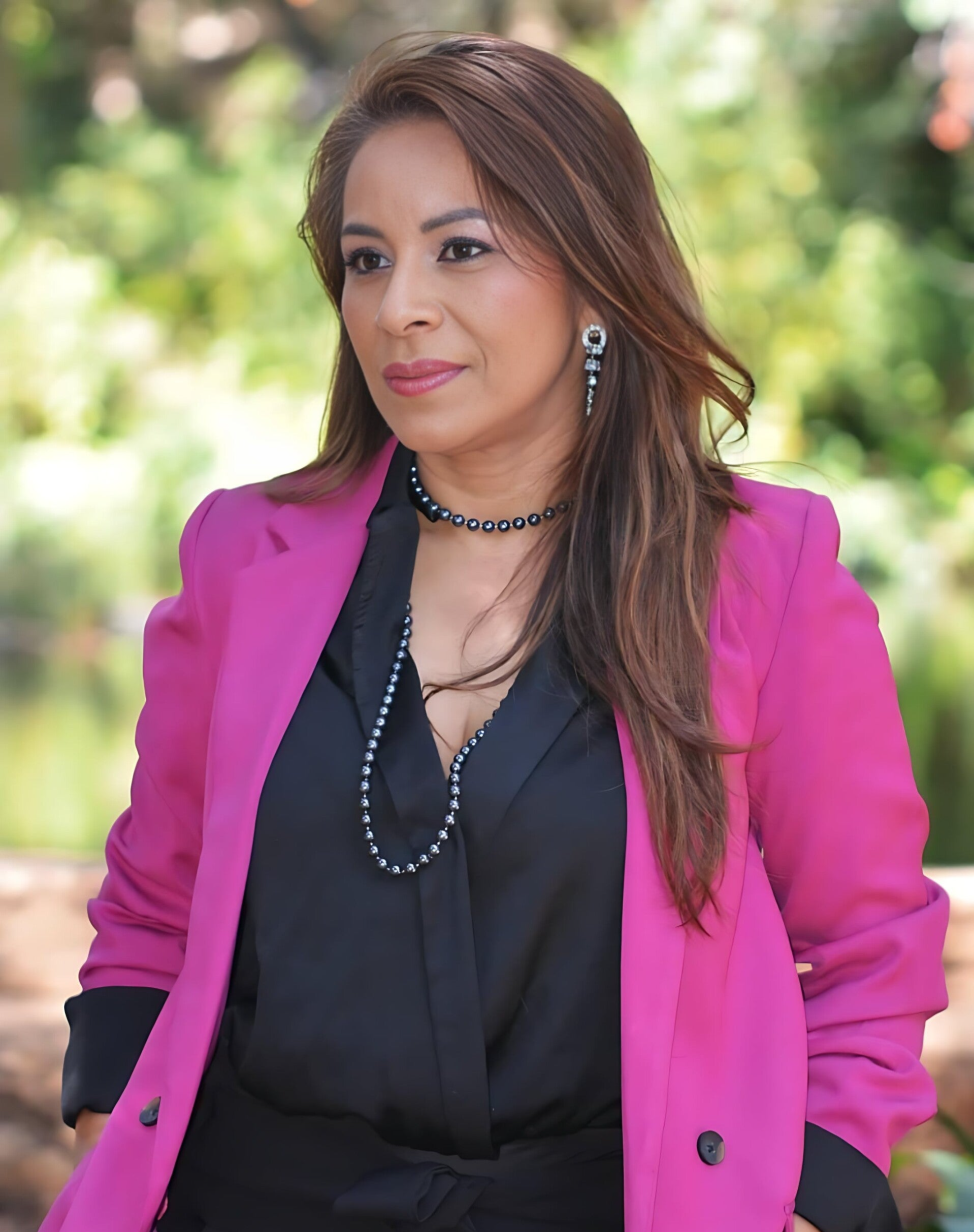
There are lives that cannot fit into a single page, nor into a single country, nor into a single grief. There are women who, by losing everything, become everything for many others. This is not an interview; it is a mirror. In it is reflected the story of Sara Chávez: entrepreneur, refugee, mother, leader. Founder of the magazine Mujeres de Élite, her voice emerges from scars and becomes a loudspeaker for other women silenced by distance, migration, fear, or oblivion. From El Salvador to Barcelona, crossing real and emotional deserts, Sara is today a symbol of resilience with a human face. This conversation seeks to transcend journalism: it is an offering to dignity, courage, and the right to reinvent oneself even after the abyss.
1. Two natural disasters, a forced migration, a murder, an exile… How does one survive so many symbolic deaths without losing the meaning of life?
It is difficult… they have been years of pain in which I have often asked myself, why me? what am I paying for? and you begin to question whether that creating divinity truly exists; but an inner force always tells me that all that pain has only been a crucible to polish me, and I hold on to that, because I know it is for something great and I stand with open arms, ready to receive it.
2. What does “home” mean for someone who has had to build it so many times from scratch?
I believe I have learned to call home the only thing that is truly mine: hope! that which tells you, you will be fine! regardless of whether it is under a roof, with or without family. The love people have given me and the solidarity I have always seen toward me—that has been my home.
3. Throughout your story, when did you discover that being a migrant woman is not a weakness, but a leadership in the making?
Very young. Since I was a little girl, I worked helping my grandfather in the coffee harvest. My mother taught us sewing and household tasks and to be good students. For me, those were the foundations to later understand that your evolution depends on you, that no one will give you anything, that it is you who must go after it. Migrating was not a disadvantage; on the contrary, I always saw opportunities that I would never have in my country, and I decided it was my moment to move forward and change my life.
4. How is inner strength woven when the body is exhausted, the heart broken, and the future uncertain?
I believe deeply in divine power; that strength comes from someone powerful. I believe in God and I know it is He who sustains me, heals me, and gives me hope.
5. What role did sisterhood—the network among women—play in your process of healing and empowerment?
Knowing that there were many women with similar stories makes you feel sheltered; you know you are not alone. Knowing that we are all broken and yet, even within pain, you are capable of giving, empathizing, and helping—of extending a hand to save yourself… it is a temporary anesthesia that turns you into a woman willing to accompany others in their own process.
6. How did the idea of Mujeres de Élite come about? Was it a response to silence, invisibility, or anger?
Mujeres de Élite was born from conscious thought, from internalizing and recognizing myself without judging myself and without reproaching my fate. At the Red Cross, as a volunteer, I encountered stories of women who, within pain, dreamed of becoming once again the brilliant professionals—or simply the homemakers—they once were. Stories silenced by circumstances, as if no one understood them or cared.
I discovered the immense value we women possess. We are givers of life, and for me that is the greatest power we have; and if we have that capacity, everything else becomes light. The idea is to seek truth, to inspire, to accompany, and to reflect the collective power that arises when a woman decides to transform herself… and begins to create.
There are many women like me who think we are alone, and this is the medium to present them, to make them visible, and to give them back a little of what has been denied to us.
7. You have transformed your grief into commitment. What does your son continue to teach you, wherever he may be?
My son has taught me to transform my pain into a powerful cause that sustains me and that has given me life back. He has taught me to draw strength I did not know I possessed. He teaches me that life must be lived with purpose and that every moment must be valued. He teaches me that death is only a transition, that he is present every day and in every act. Everything I do carries his name. That is why he is my refuge.
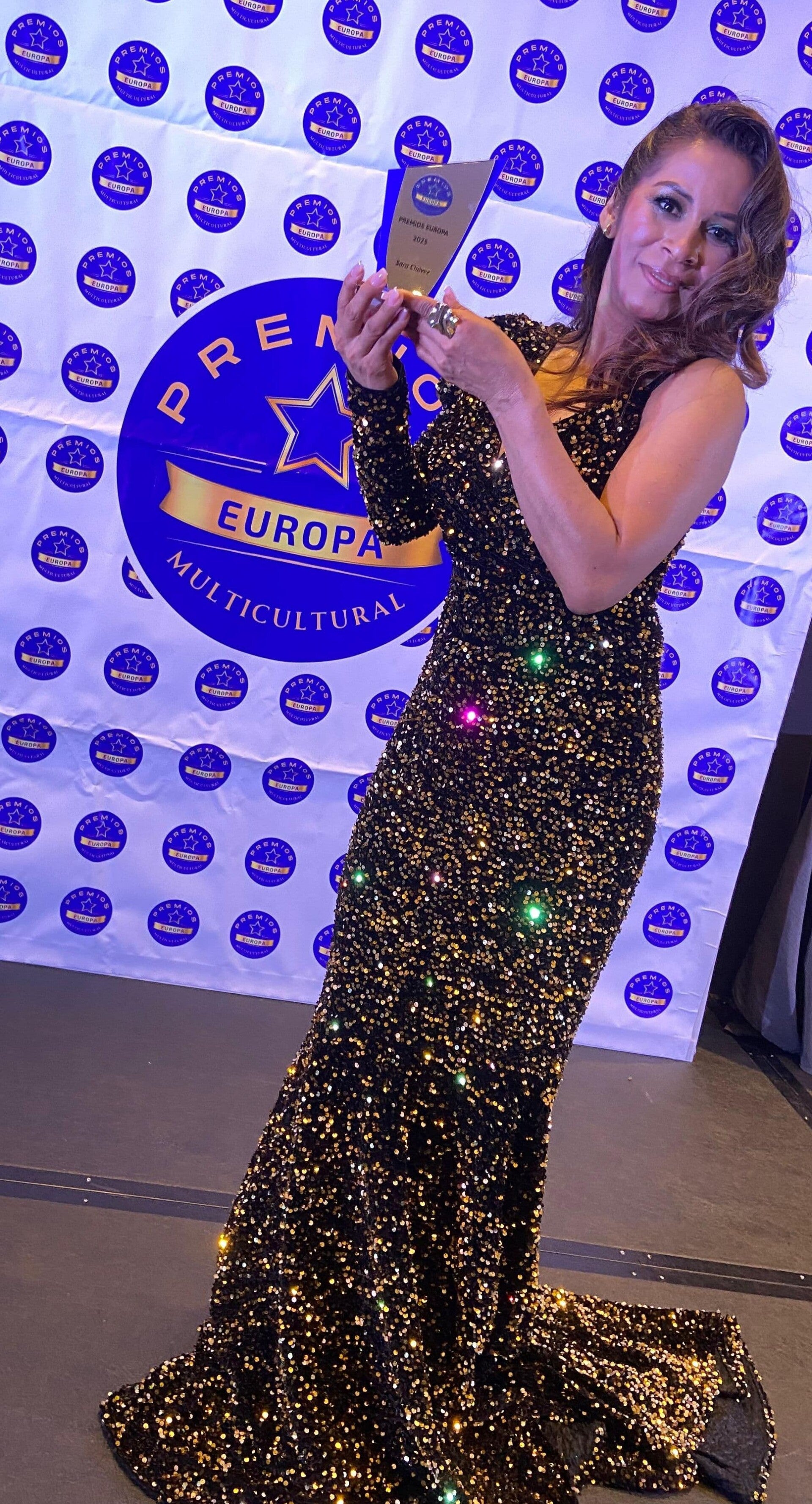
8. What did it mean for you to receive the Europa Prize?
Look, I always say it—I do not feel deserving. I believe there are many people who should have it before me. Being awarded means a commitment to continue my struggle, my ideals, and my purposes; to value that there are people who see your work and recognize and validate your efforts. I am very grateful because I know it is thanks to the support of many people.
9. Do you believe that pain, when accompanied well, can become a seed for others?
Definitely! It stops being that tunnel of darkness. Loneliness plus pain is a bad combination. A single hug can help; being present without saying anything can help.
The pain does not disappear, but it moves to one side and makes way for change—even if only momentarily—but it resolves something. The sum of those moments eventually makes you be reborn and continue fighting.
10. In a world where migrant women are often seen as numbers, what should radically change in the public narrative about them?
If there is something that makes me suffer, it is this reason. I believe the first thing that must change is that we must stop being seen as numbers or statistics. We are not just data in reports—we are real people with needs, but also with contributions. Behind each of us there is a story that is not always pleasant. I assure you that 90% of women migrate out of extreme necessity, not for pleasure. We would never want to leave families, properties, entire lives buried behind us. We arrive torn apart, wounded, with uncertainty and fear running through our bodies. We must be humanized and dignified. People must know us up close and listen to our stories, because we are not only victims with tragedies—we are leaders, inspirers, women with the courage to reinvent ourselves day after day. But we cannot do it without spaces and within a system that minimizes us.
11. If you had in front of you a young woman who has just crossed the border of a country without papers, without family, without certainties… what would you whisper to her?
That she will achieve it. That she is not alone. That the road will not be easy, but that she has already accomplished the hardest part—because she is an invincible being. She just does not know it yet.
12. What is the most improbable dream you have not yet said aloud?
I want to see my son again… I would give anything to embrace him one last time and tell him that he was the most beautiful and painful thing life gave me. (You have made me cry.)
13. What have you learned from silence, when no one listened to you?
I have cried a lot in silence and because of silence. Sometimes I still feel that I am not heard, but I have learned that I should not remain silent or stop building my dream because of that. Silence only brings me peace and renewal, because you no longer expect answers from outside—they are born within you. I have learned active listening and to understand the emotions of others.
Sara does not walk—she rebuilds territories with every step. She does not speak—she redraws language with every word. Her story is not a biography; it is a manifesto. This is not only about a Salvadoran woman who overcame exile, but about a woman who decided to turn pain into a home for all. In a world hungry for real role models, Sara Chávez does not only deserve to be read: she deserves to be remembered as one of the bravest voices of the twenty-first century. Because where others saw ruins, she saw a network. Where others remained silent, she wrote. Where many fled, she returned—for all.
José Luis Ortiz Güell (born July 11, 1967, Zaragoza) is a Spanish writer, poet, actor, and columnist. He is recognized for his multidisciplinary approach to literature and the performing arts, as well as for his contributions to journalism and cultural commentary. His work has been featured in multiple media outlets, providing coverage of his literary projects, poetry, and artistic initiatives
Biography
José Luis Ortiz Güell was born in Spain. From an early age, he showed interest in literature, theater, and artistic creation. Over the years, he has pursued a career combining literary writing with active participation in cultural and performing arts projects.
Ortiz Güell's literary work primarily includes poetry, short stories, and journalistic contributions. His writing often explores human experience, artistic sensitivity, and reflections on contemporary society.
Career Highlights
- Columnist Work: Ortiz Güell has contributed as a columnist to cultural media, writing on literature, society, and contemporary thought.[1]
- Literary Recognition: His literary contributions have been featured in media outlets including Murcia.com, Diario Siglo XXI, ElSolWeb.tv, and Desde Puebla.[2][3][4][5]
- Notable Projects: In 2014, Ortiz Güell acquired a Montblanc pen case containing a letter attributed to Marilyn Monroe. The discovery and analysis of the letter were reported in media outlets including National Geographic Historia and Heraldo de Aragón.[6][7]
Publications
- Poetry collections (titles unpublished online, cited in media interviews)
- Short stories and essays (various cultural and literary publications)
- Soledad: querida dictadura, published under the pseudonym Paolo Da Santos
- Puente en la niebla
- Canto Planetario: Hermandad en la Tierra by Carlos Jarquín [8]
- Antología del Bicentenario de Centroamérica
Awards and recognitions
- 2023 César Vallejo World Excellence Award for journalism
- 2024 César Vallejo World Excellence Award for literature

Recognition and Media Coverage
Ortiz Güell's work has received attention in both local and international media. His interviews and literary coverage demonstrate recognition in literary and cultural circles.
Add comment
Comments