

Portrait in literary prose
By Wilson Rogelio Enciso
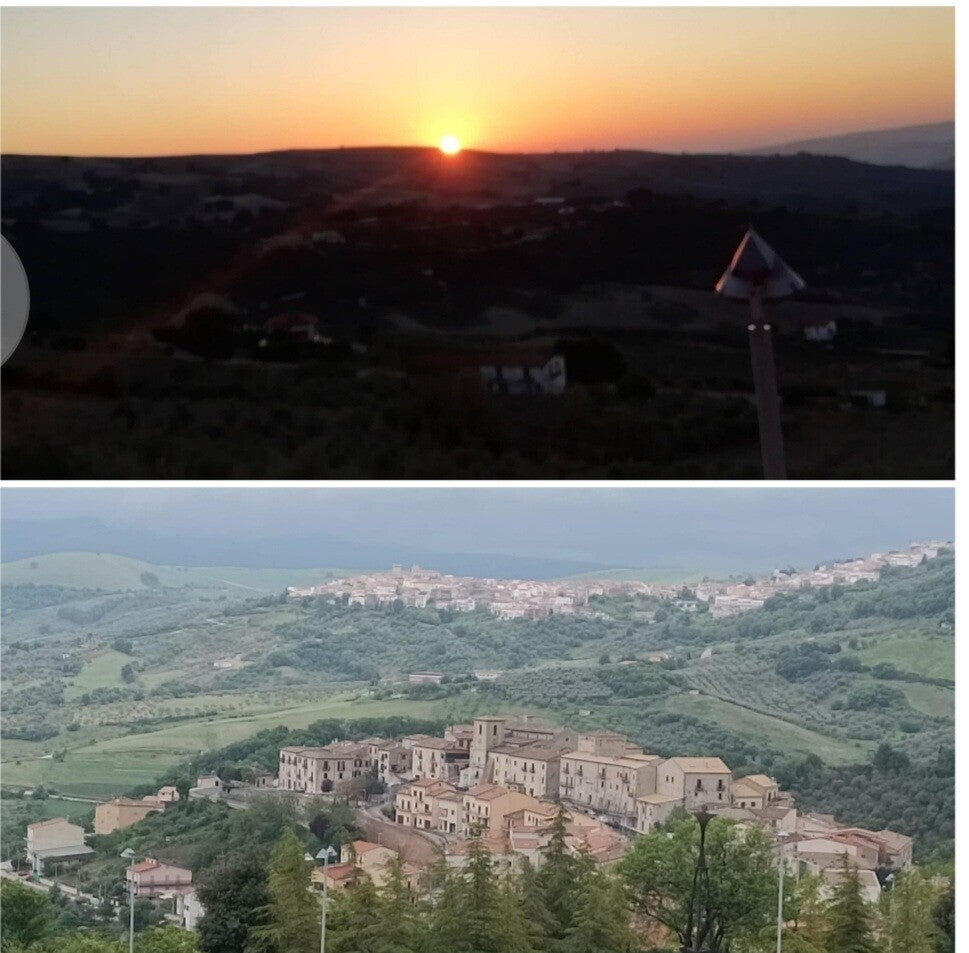
On steep and windswept hills in southern Italy, in the Molise region, near the enchanting Adriatic Sea and at a “crossroads” toward the admirable central-eastern Balkans, stands a beautiful agricultural village called Santa Croce di Magliano.
Since 2013, when the Antonio Giordano Prize was established there, this bucolic hamlet became an “artists’ residence.” In those lands, virtuosos find fresh inspiration for their creations, as well as the quality and hospitality of its nearly five thousand inhabitants. Since then, every summer the open-air art spaces have multiplied, with exhibitions on house facades, squares, stairways, and everywhere else. Creativity seems to infect anyone who crosses, wanders through, hides in, takes refuge in, or takes root in Santa Croce di Magliano.
There, seventy years ago, on April 13, 1956—“the year in which spring was the generosity of a winter…” that completely covered the streets of that hidden municipal paradise—Elisa Mascia was born, the cherished daughter of Otimia Ada Maria Verillo and Pascuale Mascia. A unique couple who deserves a separate portrait, not only because of the ten-year age difference between them—he born in 1916, she in 1926—but also because of other striking contrasts, such as the emotional origin of the name: Elisa!, which that World War II veteran gave to his daughter, despite and against what his beautiful wife, Mrs. Otimia, felt and desired in her heart and soul.
A beauty who, according to some surviving fellow villagers who knew her, and others who heard of her through their ancestors, and who is still spoken of today, and seen in more than faded photographs, possessed at once the natural grace of women from that Mediterranean jewel (the Adriatic), shaped by the slenderness and cultural and historical richness of her Balkan neighbors… like Mirka Epifanía Vilicih, the distant love of Icardo Ardila Jardín during that… something like a dreamlike journey around the world they would undertake in pursuit of environmental protection and life on this blue speck of the Universe we have on loan.
That combative spirit and feminine grace, as is evident, Elisa Mascia inherited and preserves from her parents and distant Yugoslav ancestors, especially from the Arbëreshë.
During her childhood, Elisa learned to love and enjoy the spring that forever filled her heart with poetry, as well as the “icy winter” that shaped and strengthened her character and her understanding of the complex world she would face. But it was only during her adolescence that she perceived and embraced in her soul “the aroma and color of peach blossoms and almond trees in bloom…”
Essences and prisms that, ever since, have inspired and perfumed her writing, verses, and artistic endeavors. They also guided her toward the noble vocation of teaching, dedicating herself entirely to the education of the children she always loved and supported, as she still does, whenever the opportunity arises or it is necessary.
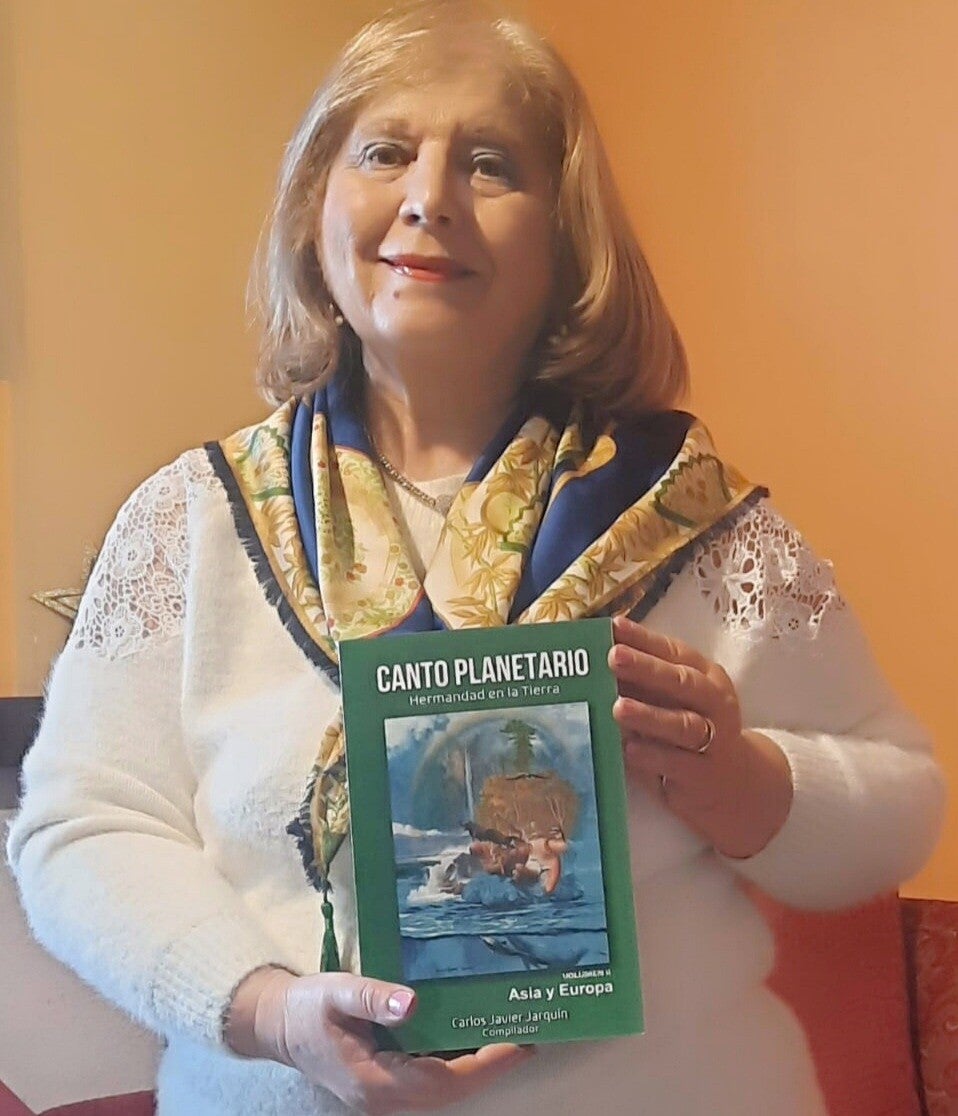
Elisa Mascia presenta el Volumen II de Canto Planetario (H.C. Editores, Costa Rica, 2023), obra de la cual es coautora. Fotografía, diciembre de 2023. Cortesía de Elisa Mascia.

Elisa Mascia and her first two children, photograph from 1992. Courtesy of Elisa Mascia.
Artistic brushstrokes and humanistic feelings that Elisa later expanded and shared throughout the world after retiring and fully dedicating herself to the complex, demanding, and often thankless craft of literature and other related fields of communication, translation, and art. Taciturn roles that, although she practiced in the background of her professional activities and early motherhood, were patiently waiting for their turn. Especially those related to, in addition to “her love for children and for teaching…”, her “…most cherished dreams since she was a little girl, when my teacher made me recite poems, she liked my declamation, improved over the years, and today I recite on video… for many friends.”
That cultural encouragement and support from her teacher are now evident—after turning seventy, in the peaceful San Giuliano di Puglia, neighboring her beloved hometown—as well as in the merits achieved during her teaching career, reflected in a precious bouquet of invaluable achievements: more than thirteen published works, nearly twenty anthologies; one of them: Canto Planetario: Hermandad en la Tierra (HC EDITORES, 2023); a dozen prestigious awards and recognitions, theatrical contributions, literary translations, radio programs and interviews, and many other cultural contributions circulating out there; as well as leadership roles associated with the dissemination and support of poetry and the fine arts.
Each of these achievements and roles, as in her teaching career, bears the signature and personal imprint of that contagious portrait of love that Elisa Mascia instills in everything she does and spreads everywhere she goes, whether speaking or writing in Italian, her native language, or in Spanish, since she is bilingual and an excellent translator.
That legacy of solidarity and affection, undoubtedly carved into her soul and maternal memory, seems to have been forged since, as she recently said: “My mother used to say that, with abundant milk, she had fed two other newborns, and from this memory I have associated having absorbed, through this noble gesture of altruism, the true meaning of my life, which is built upon the value of generosity. Everything returns sooner or later in the bonds and connections of mental interconnection…”
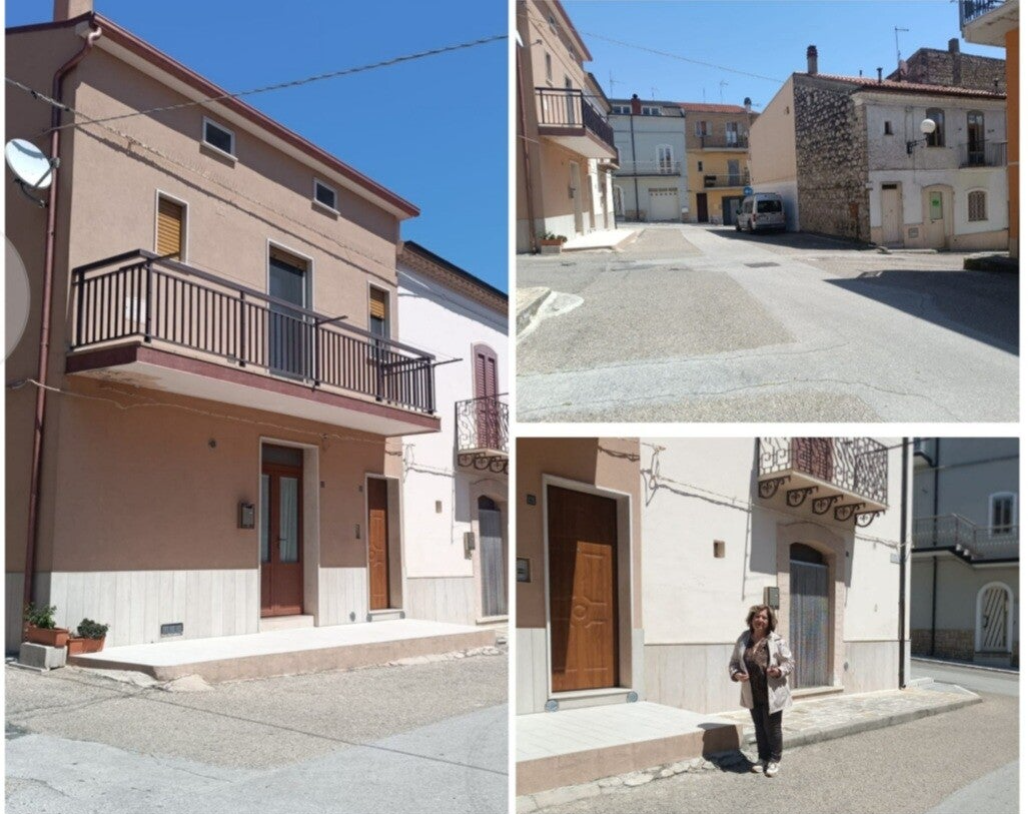
Photograph of the birthplace of Elisa Mascia.
Her time at the school where she studied, thanks to a “commendable scholarship,” as she came from a humble family, not only gave her the first page of the scrolls to become a teacher—one of her most cherished and unforgettable achievements and greatest contributions to her social environment—it also led her to “pass the tests to become a mother.”
She would become one of four children: Nunzio, Pascuale, María Giuseppina, and Giovanni Marco. Later, a mother-in-law twice, one of them to an Ecuadorian woman, as well as having the immeasurable joy of being grandmother to two invaluable gems of her adulthood: Elisa and Alessandro.
Whether she knows it or not, or perhaps notices but chooses to ignore it, Elisa Mascia—when observed or indirectly questioned by some disguised journalist or elusive cultural researcher—appears and presents herself as happy, very happy, and satisfied with having done things well, with having been a teacher all her life, with having managed, together with her husband Umberto Persichillo, despite many vicissitudes, confrontations, and also achievements, to raise a family successfully, to continue dancing, singing, acting, and reciting from time to time, other hidden passions, as well as having friends everywhere; many of them distant, virtual, thanks to the inevitable global digital web. She feels satisfied with her duty fulfilled and with having made happy those she met along her path, which she will continue to do wherever she goes or through networks and media, which in these fragile binary times is the easiest way to interact with anyone, anywhere.
With that captivating elusive smile that characterizes her and magnetizes her white and smooth Italo-Balkan face, perhaps knowing or imagining the literary purpose, and with “a glass half full, perhaps of good aged red wine in oak barrels to toast happiness…”, she left us this explicit message for the journalist and researchers who studied her for a time to pass on to us:
“I thank all those who love me, especially those who have always been present, especially on the most difficult days, regardless of distance.”
Honorable teacher Elisa Mascia, we hope to see you celebrate many more anniversaries with the physical, mental, supportive, and artistic fullness as in these “seven-zero.” Please accept our immense recognition and gratitude for existing, for writing, for being part of the International Literary Artistic Collective 21st Century (CLAI XXI), as well as for, without intending or knowing it, having inspired (embodied) the elusive lady of Lake Como, in the Lombardy region; one of the co-protagonists of a certain novel in the process of publication, written by a elusive author who recently interviewed you and to whom you have translated and published several of his articles.
Note:
This story includes excerpts written in quotation marks by Elisa Mascia, as well as fragmentary data provided by the exegetical planetary cultural manager Carlos Javier Jarquín (Nicaragua, resident in Costa Rica), the almost imperceptible cultural researcher Agapito Téllez Meléndez from Chaguaní (Colombia), and the elusive Bari (Italy) journalist Lorenzo Orcini Colonna, “the LOCO.”
The author is a Colombian writer and novelist, author of more than 15 published novels available on the Amazon platform.
Add comment
Comments