

Following her appearance on Feat on RTVE Play, the artist presents Axis, an introspective album where she blends R&B, electronic music, and personal spirituality
By Susan Villa.
With a career that has moved between the international electronic scene and an increasingly introspective artistic identity, Lara Taylor now stands at a decisive moment in her career. Singer, songwriter, and DJ, her journey includes residencies at some of the temples of dance music and collaborations with major names on the global scene, but also a personal process that is now crystallizing into an honest and uncompromising artistic proposal of her own. In this interview, the artist opens an unusual window into her story, shaped both by an early vocation and by the emotional challenges that have accompanied her evolution.
Far from the linear narrative of success, Taylor reconstructs her beginnings through intuition and the need for expression, revealing how music has always been a natural language in her life. From her first experiences on international stages to her participation in television formats such as Feat, her discourse focuses more on inner growth than on media impact. The artist speaks openly about insecurities, anxiety, and stage fright—elements that not only did not stop her career, but actually redefined her way of understanding her craft and her place within the industry.
The release of Axis marks a turning point: an album conceived as an exercise in emotional introspection and identity construction. Songs such as “Metal” and “Me guía” reflect that duality between strength and vulnerability, between the earthly and the spiritual, shaping a sonic universe that breaks away from conventional labels.
In this conversation, Lara Taylor not only presents her music, but also claims her own narrative, one in which art, life experience, and personal search converge with unusual clarity.
1. How do you remember your beginnings in music, and at what moment did you decide to pursue this path professionally?
Honestly, I don’t have a memory where there wasn’t music; seriously. It may sound a bit pretentious, but I’ve always been connected to art: I was singing and dancing from the moment I started walking. I don’t know, it was something I did almost instinctively and that came out of me naturally.
I started professionally at 17, but like I said, from a very young age I was already moving along that path and making decisions completely influenced by that vocation. I would sing day and night: I sang during school breaks, went to music classes, performed at end-of-year events, attended every casting I could… basically, I took every opportunity to sing and express myself.
When I started working professionally, even though I came from soul and R&B music, since there wasn’t really an urban music scene in Spain at that time, I got the opportunity to introduce this vocal style into electronic and house music. I spent about five or six years working around Spain and many other countries singing with that fusion.

During that time, I was a singer at AMNESIA Ibiza for several years at the Pop Star party, and I worked with artists such as Inna and Avicii. I had residencies in Dubai and Doha, traveled all over the world, and even won two awards for Best Spanish Electronic Music Singer in two consecutive years, which honestly made me incredibly happy. Then, at 22, I decided to start my own personal project as a songwriter.
2. After your appearance on Feat on RTVE Play, what really changed in your career and in your way of understanding the industry?
What changed the most was the way I saw myself. I had never been on television before, and honestly, I was very nervous about all of that. I felt very insecure because I had no experience in those environments and because I was also going through another episode of anxiety.
Since I was little, I’ve always had a lot of stage fright. And yes, with experience you can learn to manage it and enjoy being on stage. But I remember that when I went to Feat, I was once again in that emotional place because of a series of things that had happened in my life, and honestly, it became a huge psychological challenge for me.
Argentina changed me enormously, both personally and professionally. It helped me remember my value as an artist and why I make music, what I can do with it in the studio, in live performances, and by sharing it with fellow artists. It pushed me to the limit many times because everything was filmed very quickly: we didn’t have time to rehearse or properly prepare things, and I realized that I’m capable of anything.
Personally, I also realized that I can create my life anywhere whenever I want, and that many times we see ourselves trapped in situations that seem difficult to change, but we can make everything better simply by making a small (or big) decision, depending on how you look at it.
Professionally, I didn’t gain too much change; Rosalía followed me, which is incredible, but honestly, my career didn’t change much after the program. I changed, and in the end that makes my results look different now, so it was very positive.
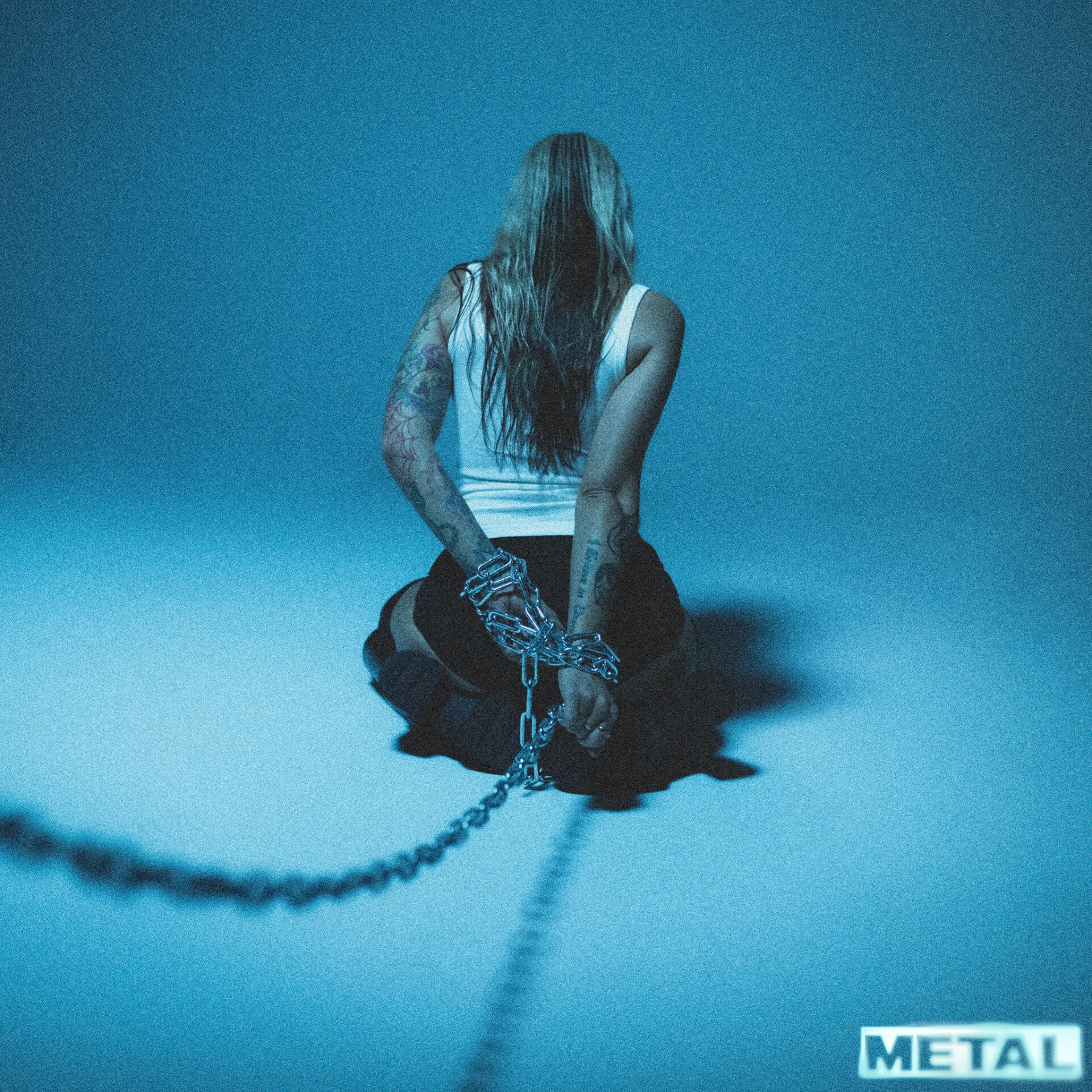
3. “Metal” is one of the standout tracks on the album Axis. What does this song represent for you and what message are you trying to convey?
Well, “Metal” is a very important piece within my first and new album Axis. In this album I mainly talk about my emotional and mental processes throughout my adolescence and adulthood; basically, it’s an introspection into myself, my relationships, and my life in general.
I know people have always just seen my exterior and stayed with that idea, seeing me as superficial. Sometimes they judged me by saying that I seem tough, rude, cold, or overly calculating because of my “confidence,” as if I didn’t need anyone; they even said I looked like a woman living a bad life in every sense or things like that… I don’t know, I’ve been told so many things and judged in so many ways that in the end people treated me in ways I know I didn’t deserve.
“Metal” is like the character that other people imposed on me by prejudging me, and also the character I imposed on myself because of all the terrible situations I’ve gone through throughout my life. All of that has led me to feel a lot of fear and not show who I really am, out of fear of being hurt again or being vulnerable, etc.
I am a strong and confident woman, but I’m also sensitive and vulnerable.
Sometimes I need help, and above all, I don’t need people to assume a vision of me based only on what they see from the outside, because that only leads to me being treated in ways I don’t deserve.
It’s a very deep psychological introspection about trauma, belief, action, and consequence… and I could write so much more, but let’s leave it there.
4. “Me guía” has a very spiritual component and also a strong electronic force. How was this song born and what place does it occupy within the album?
The first part of the album is that stage where I moved from survival mode: trying to control everything happening in my life so I wouldn’t feel bad, constantly trying to prove things in order to achieve them or to be accepted. The second part is the surrender to who I really am, which is even more genuine and powerful: it’s the part of acceptance and divine creation that exists within me. Therefore, my spirituality is very clearly felt in this side of the album.
I’ve always been a very sensitive person and I also consider myself very spiritual. But when I went through this whole emotional journey until I truly reached myself again, rediscovered myself, and embraced myself once more, I connected much more strongly with spirituality and with the idea that we have immense power within us simply because we exist.
Our cells regenerate, our bodies heal, and we create life. For example, when my nephew was born, I saw the power women have and I thought: “My God, we are incredible.” It’s impossible that there isn’t something greater that made us this way; call it God, or whatever you want.
For me, it’s very important to carry that part of myself proudly in my life; it helps me enormously. “Me guía” was born from all of that, and that’s why it’s so important within the album.
5. What do you think differentiates “Me guía” from other current releases within the national scene?
I think the clearest difference I can tell you is the musical and vocal style. I come from R&B, which isn’t a very well-known style here in Spain and not many artists make it, and that already makes it sound different.
But I also think it’s a very risky song, because the narrative comes from that spiritual connection, from something divine and powerful, and I mix it with that hot/carnal side when the electronic chorus drops. For me, one thing is not separate from the other.
The phrase “I’m looking for a kitty like you who gives it to me in the morning, at night, every day” is like clearly defining that I want divinity and reciprocity in every part of my life, including in my sexual moment and energy. But of course, that may blow some people’s minds because they see God or the divine as something too pure to mix with the carnal.
But for me, the greatest creative power is sexual power, because it is the true creative power: I mean, it’s where we come from. Overall, I think “Me guía” is a song that makes you experience many different states.
6. On May 30th you will present Axis live. What can the audience expect from this concert?
I really enjoy singing live, and I think my songs feel very different when I perform them on stage. Honestly, I just want people to be able to see all the processes I went through in order to create this first album.
I think these are processes that all of us have lived through or will live through. In the end, I’m just another person, with my traumas and emotional problems like anyone else. And I think music allows us to feel understood and helps us express ourselves so that things don’t stay locked inside us continuing to hurt us.
So I think people will perceive exactly that: the fact that we are all living the same experience, but in different bodies. I just want people, on the 30th at the concert, to feel that they are in a safe place where they can feel all of that together, as a family and community, and let it all out together.
7. To close, what goals do you set for yourself with this album and what would you like to happen from now on?
I had never dared to make an album before because I was afraid no one would listen to it. So for now, one of my goals—which was to do whatever I wanted and whatever I genuinely felt from the heart without seeking guaranteed results—is already being fulfilled.
I would love to take the album to many places, work with more artists such as dancers, choreographers, directors, etc., within this project to bring it to live performances and make it an incredible experience, and take it all around the world (that’s what I would love the most). And of course, I hope the music reaches as many people as possible; that would make me very happy.
Obviously, I think that’s something we all seek in a way, but honestly, simply building little by little a community that can feel—as I told you—in a safe place with my music, and that we can all connect through it, would already be amazing.
I think that as a person and artist, this album defines me and has helped me enormously. And at least personally, for me it’s going to be a before and after. I don’t know what’s going to happen professionally, but I’m very happy that I dared to release this, and I’m going to work incredibly hard for it to receive the recognition it deserves.
Add comment
Comments