

The Barcelona singer-songwriter revisits his repertoire through an intimate and reflective lens, blending folk, Latin American sounds and Berlin cabaret in his new record alongside Las Almas Sedientas.
By Susan Villa
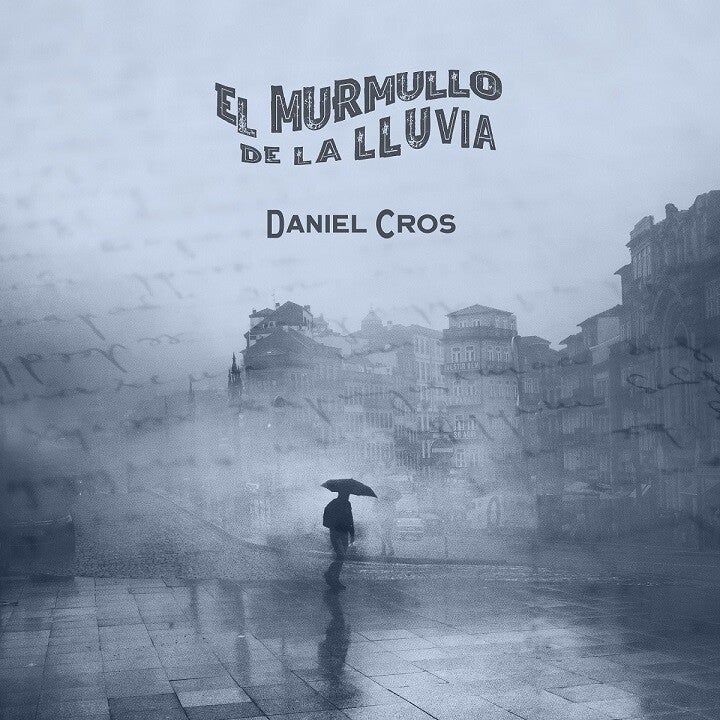
Daniel Cros presents El Murmullo de la Lluvia, an album in which the Barcelona singer-songwriter revisits part of his repertoire from a more intimate and reflective perspective. The album, set to be released on May 20, continues the path initiated in El rumor de las olas, a work published in 2024 and marked by collaborations with artists from different countries and sensibilities.
In this eleventh studio album, influences from North American folk and Latin American music coexist alongside new arrangements that transform songs already familiar within his repertoire. The album also features the participation of musicians such as Manuel Monestel, Norge Batista and Pablo Sciuto, with whom Cros has shared musical experiences over the years.
In this conversation with Susan Villa, Daniel Cros speaks about his beginnings in the Barcelona of the “movida barcelonesa,” the need to reinvent songs over time, and Las Almas Sedientas, the band accompanying him in this new artistic phase. An interview that reflects his way of understanding music through constant exploration, a blend of influences and creative honesty.
Your first steps in music began in Barcelona; what memories do you keep from those early days and what inspired you to dedicate yourself to singer-songwriter music?
I remember a stage full of movement and quite a lot of chaos musically, because we played at full volume and at full speed.

Those were times of emotions running high and of being part of what came to be called the “movida barcelonesa,” which in reality consisted of a handful of bands, most of them self-managed, aspiring to sign with a major label: some rockabilly, others mods, others punks, each with their own aesthetic and style, trying to make their way in a city devoted to jazz and salsa, and generally hostile to anything related to rock.
So, at the beginning, it was not so much about dedicating myself to singer-songwriter music as it was about dedicating myself to music itself, without really knowing at that moment whether that was actually possible.
El Murmullo de la Lluvia has a very introspective atmosphere; how was the emotional and conceptual idea behind this album born?
It was born from the writing and narration that open the album, in continuity with the previous work, El rumor de las olas.
The waves brought and carried rhythms and collaborations from lands across the Americas; the rain, on the other hand, invites you to dive inward, to listen to the reverberation created by thoughts when they endlessly circle around, searching for answers and formulating questions.
In this work you revisit songs already released with new arrangements; what motivated you to reinvent tracks that were already part of your repertoire?
Revisiting the arrangements of a song is something natural for musicians: it represents a creative challenge and, at the same time, gives new life to the repertoire. Dylan is a master at transforming his classics until they become unrecognizable.
In addition, this process allows me to continue writing new material in parallel, which usually requires slow creative development and its own maturation time.
What has the incorporation of Las Almas Sedientas meant to you in this new artistic stage?
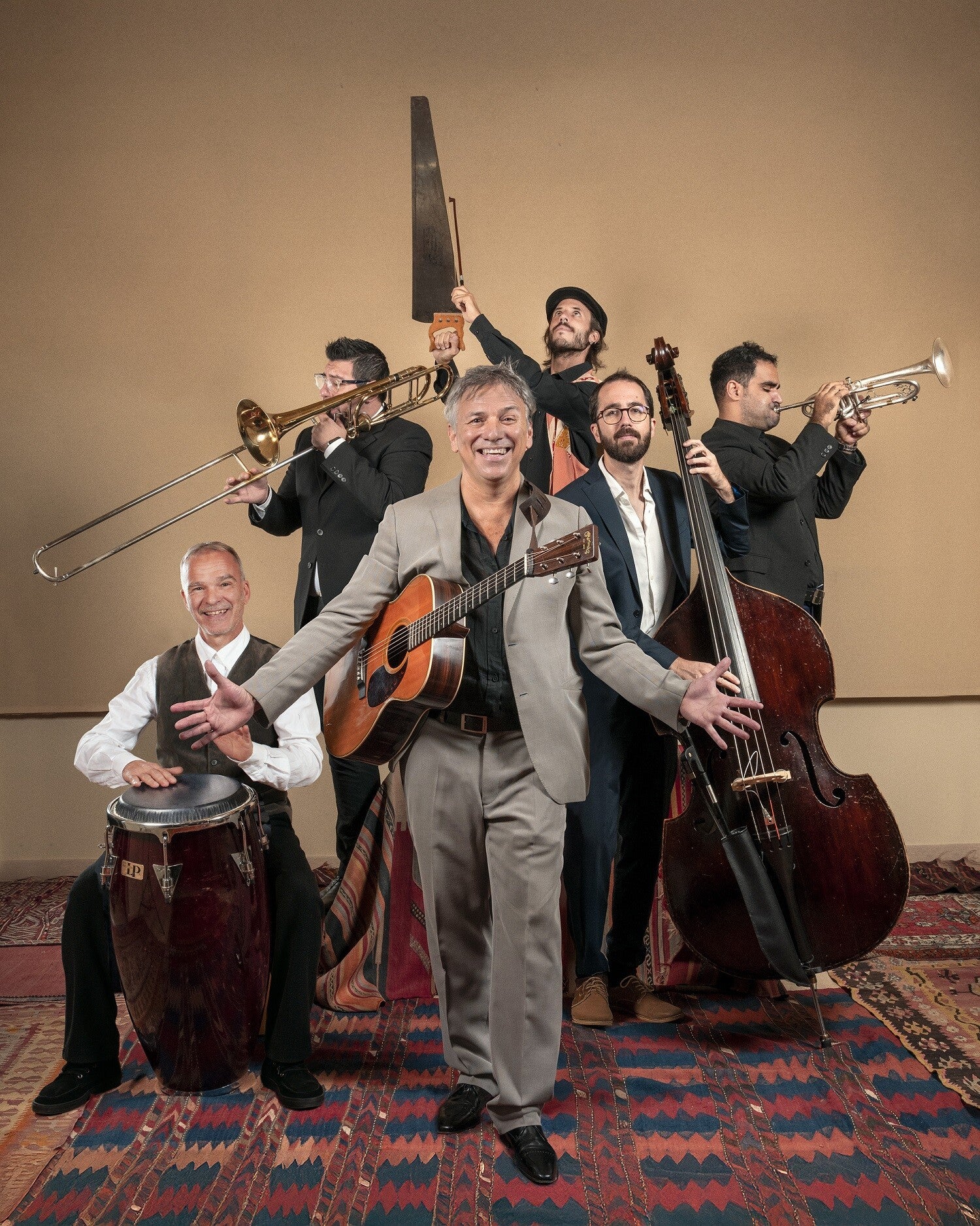
It has been a gift to be able to present the songs with their full sonic breadth. After many years performing alone with guitar or piano, I felt the time had come to take a leap forward and face the creation of a band.
It is good to hear songs stripped down, with only voice and guitar, but when you have the weight of a double bass, the pulse of congas, the counterpoint of an accordion or a wailing saw, they acquire another dimension. It has not been an easy process, but things are gradually coming together and improving concert after concert.
With Las Almas Sedientas we also offer a musical and literary performance, because it incorporates fragments from authors from the places where we perform and connects them with some songs.
Your music blends very diverse influences, from North American folk to Latin American sounds; how do you manage to maintain your own identity within that variety?
Rhythmic foundations can be a starting point and serve as support for harmony, and in turn for melody or words.
They are tools that allow me to experiment and investigate what I feel or what I want to express.
Everything has already been created and, at the same time, everything remains to be created.
Identity is built through the sum of many elements: the way of vocalizing, of telling stories, the people who collaborate in recordings and live performances, and also the gaze of someone sitting on a bench at sunset.
The album includes collaborations with Latin American artists with whom you have shared musical experiences; what have those encounters brought you on a human and creative level?
They give me the possibility of getting to know another human being who, like me, is an artisan, a creator who builds stories, sings them and shares them, each in their own way. I worked with Manuel Monestel, a Costa Rican singer-songwriter and calypso researcher, with whom we recorded a gypsy swing version of “Mali Blues”; with the Cuban troubadour Norge Batista, who collaborated on “No me falles tú”; or with Pablo Sciuto, who participated in “Fortuna de haberte conocido,” among other musicians.
They are people I have met during travels or at concerts we organized at Estudi Rosazul, in Poblenou. And then there is Las Almas Sedientas, who accompanied me on two songs: “Empezó a nevar” and “La ventana indiscreta.”
After this eleventh studio album, what musical projects or challenges would you like to develop next?
Right now my energy is focused on moving Las Almas Sedientas forward and making sure audiences can listen to us. And, in parallel, also on finding the time to compose new material.
The conversation with Daniel Cros leaves the feeling of being in front of an artist who still understands music as a space for constant exploration and transformation. With El Murmullo de la Lluvia, the Barcelona singer-songwriter reaffirms a career built on creative honesty, musical fusion and the need to continue reinventing his songs without losing his identity. A serene and deeply human perspective on the craft of creating.
Add comment
Comments