

By Carlos Javier Jarquín
Dear planetary friends:
Today I present to you a friend, poet and above all humanist, Ron A. Kalman, born on March 6, 1959 in Haifa, Israel. His parents, Gabor J. Kalman and Suzana Kalman, emigrated there after leaving Budapest during the 1956 Hungarian Uprising. At the age of 3, the family first moved to Paris, then to Boulder, Colorado, and finally, at age 7, settled in the Boston area of the United States.
His childhood was marked by constant travel across different countries, where he experienced complex anecdotes for his age. His first language was Hungarian, followed by French and then English. These itinerant experiences are reflected in his literary work, characterized by a sensitive autobiographical tone. Not all authors manage to convey personal life with such authenticity as he does; his unique style invites readers not only to read, but to analyze and reflect from deep lived experience.

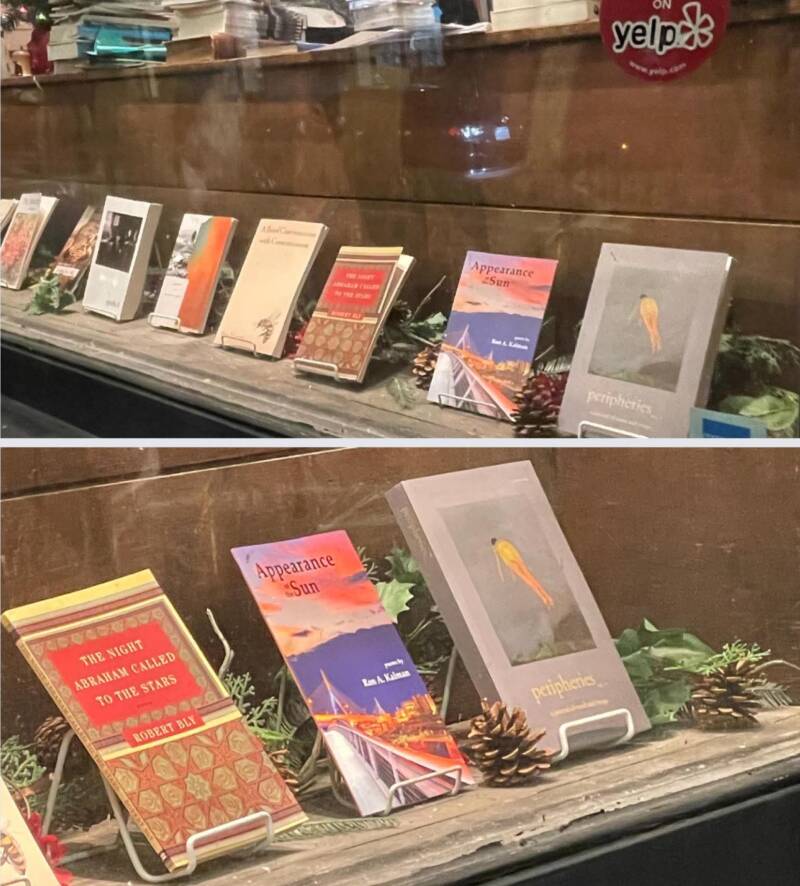
Cover of the book Appearance of the Sun (Main Street Rag Publishing, 2021)
In this interview, Ron speaks to us about the impact that this wandering world had on his poetry. As he himself mentions in one answer: “I learned to observe carefully and to question before accepting anything.” Kalman is co-author of PLANETARY SONG, Volume I (H.C. EDITORES, Costa Rica, 2023), where two of his poems appear in bilingual Spanish-English version, translated by Colombian poet and translator María Fernanda Del Castillo Sucerquia. In the conversation, he briefly explains the message of both.
He began writing with greater freedom after the age of 27 and, after many years, found his unique literary style. His poetry, inspired by experiences such as migration, languages and cultures, makes him a genuine observer of everyday life in its multiple dimensions. Through poetry, throughout his life, he has managed to transcribe those silent messages that, for inexplicable circumstances, he has experienced. I hope you enjoy this interview very much and give yourself the opportunity to learn more about this wandering American author.
Interview
You were born in Haifa (Israel) to parents who had just fled Budapest, and as a child you also lived in Paris, Boulder (Colorado) and later in Boston. In what ways have these moves impacted your literary work?
I think being rooted in a particular place and culture has a lot to do with how you write. Because my family moved so many times—everything before I was seven years old—I never developed a fixed sense of belonging to a single place. That early instability shaped how I related to my environment. I learned to observe carefully and to question before accepting anything. Very early on I developed a healthy skepticism toward anything that smelled like institutional loyalty or forced patriotism. That skepticism extended to literature as well. Even in poetry there are national traditions and aesthetic standards that one is implicitly expected to adhere to. I never felt bound by those expectations. If anything, moving between cultures made me see language as something fluid.
What anecdote from living in different cities during your childhood marked you forever?
When we arrived in Boulder, I was six years old and was placed directly into first grade without knowing a word of English. There was a girl in the class who spoke some French, so I stuck to her. For two months I followed her everywhere—classroom, playground—treating her like my personal interpreter.
One day she turned to me and said she didn’t want me to sit next to her anymore.
It was my first lesson in independence and romantic moderation. I learned that it is not wise to follow a woman for too long. More importantly, I understood that sooner or later I would have to stand on my own.
Having grown up in a Hungarian household and migrated between Israel, France and the United States, how have these experiences influenced your poetic vision of the world and human identity?
Moving between countries at such an early age taught me to approach cultures with humility. When I arrive in a new place, I tend at first to observe rather than participate. What interests me is not the postcard version of a place, but how people actually live—how they speak to each other, what they value, what they assume without saying.
Migration also made me wary of easy nationalism. There is a fine line between feeling pride in your culture and elevating it to the point where you become indifferent—or even dismissive—toward others. Having lived among languages and histories, I have never felt fully contained within a single identity. That sense of being in-between filters into my poetry. My characters often have a stateless quality. Although I have lived most of my life in the United States, part of me will probably always remain slightly outside the frame—observing, translating, belonging and not belonging at the same time.
At what age did your passion for poetry awaken?
I came to poetry relatively late—at twenty-seven. It is true that as a child I occasionally scribbled a poem, and at twelve a teacher was amazed by something I wrote for an assignment. But I was much more drawn to novels than to poetry, which seemed distant to me.
After college, when I began to take writing seriously, I naturally turned to fiction. I spent several years struggling with the novel form, trying to make it accommodate ideas, characters and places that mattered to me. Only through exhaustion—when I was on the verge of abandoning writing altogether—did I stumble upon poetry.
What arrived as a revelation was that ideas that had been forced into narrative form manifested themselves in poetry with surprising ease. I then understood that my problem had not been lack of commitment, but a mismatch of form.
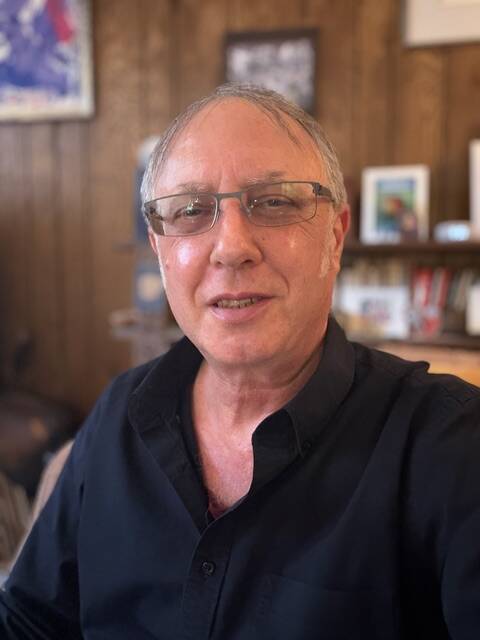
Ron A. Kalman is co-author of PLANETARY SONG, Volume I (H.C. EDITORES, Costa Rica, 2023), where two of his poems appear in a bilingual Spanish-English version, translated by the Colombian poet and translator María Fernanda Del Castillo Sucerquia.
Which authors have mainly influenced your poetic work?
When I was still determined to write a novel, Henry Miller had a significant impact on me. He is often remembered for his frank, even notorious treatment of sexuality, but what interested me more deeply was his artistic struggle. For years he searched for a voice that felt authentic. Only after moving to Paris in the 1930s did something unlock. The prose became exuberant, defiant, unapologetic, alive. That sense of artistic self-discovery stayed with me.
In poetry, I found a comparable vitality in Frank O’Hara. After moving to New York in the 1950s, he became a central figure in the downtown art world, closely associated with the abstract expressionists. His so-called “I do this, I do that” poems captured the immediacy of lived experience—lunches, phone calls, walks through Manhattan—with wit and speed. What I admired was the sense that poetry could unfold in real time, that everyday life itself could carry lyrical intensity.
What are the central themes you address in your poetic work?
I am interested in how ordinary moments, when closely examined, begin to carry aesthetic weight, and how the act of writing in turn alters the perception of daily life.
Several critics have noted that many of my poems linger on the texture of the everyday—conversations with friends, interactions between lovers, the quiet rituals of reading and writing. I do not see these themes as modest or incidental. On the contrary, I believe that within ordinary life lie the greatest tensions of the human condition.
If there is a guiding impulse in my poetry, it is to show how the seemingly small moment can open into something more expansive—how art is not separate from life, but grows directly out of it.
Can you tell us about the main message of your poems published in PLANETARY SONG?
Both poems reflect my concern with how large political and environmental forces enter ordinary life.
In My Next Car, an apparently simple decision—whether or not to buy an electric vehicle—opens into a reflection on climate change, ideology and uncertainty. A private choice becomes inseparable from public turmoil. In Cod, the forced northward migration of Atlantic cod becomes a mirror of our own future. If even fish must relocate due to environmental collapse, what does that suggest about us? In both poems, displacement is no longer merely personal—it is ecological and increasingly inevitable.
What has it meant for you that part of your literary work has been translated into different languages?
I feel fortunate that my work has been translated—not only into Spanish, but also into Hungarian. Given my family’s Hungarian roots (Hungarian was my first language) and my own movement between cultures, seeing my poems enter another language has a particular resonance for me.
Translation is always a risk. A poem depends so much on rhythm, tone and nuance that it can feel fragile when crossing linguistic borders. When a poem survives that journey—when it still speaks to readers in another country—it suggests that something essential in it is not bound to a single language.
It affirms my hope that poetry grounded in ordinary life and personal experience can still reach something shared. I feel both humbled and moved to see my work has found readers in other languages.
Can you tell us about your book Appearance of the Sun (Main Street Rag Publishing, 2021)?
Most of the poems in Appearance of the Sun were written during the first decade after I began writing poetry at twenty-seven. Although some pieces are set in places as varied as Greece, Hungary, France and San Francisco, the emotional center of the collection is Harvard Square, where I was living at the time. At that period I still retained something of the bohemian aura I had acquired in the 1960s.
The poems trace a formative period in my life when friendships, romantic entanglements, artistic ambition and the formation of my voice were my primary concerns.
It took me more than twenty years to find a publisher for the manuscript, which makes its eventual reception all the more meaningful. I was gratified that the book was well received, with individual poems appearing in several South American countries and in Europe. One poem was included in an international anthology published in Serbia, and the entire collection was later translated into Hungarian and serialized in a literary magazine. Its reception compensated for its long journey toward publication.
Why, after completing your MFA, did you decide to work as a hospital messenger and later as a limousine driver?
It is common in the United States for poets with an MFA to pursue an academic career. I chose not to take that path, partly because I was not drawn to teaching and partly because academia can foster a certain professionalization of voice that did not align with my aesthetic.
My writing has always been anchored in lived experience, and I wanted my writing life and my real life to remain closely intertwined. Working first as a hospital messenger—transporting specimens, blood and doctors between facilities—and later as a limousine driver gave me something invaluable: independence. I was able to pay my bills without compromising artistically. It also kept me in contact with a wide range of people and situations that no workshop could replicate.
From your perspective as a poet, what do you think about the rapid advancement of artificial intelligence (AI)?
I believe artificial intelligence can be a valuable tool in many fields. But in relation to the arts, I approach it with caution.
AI can generate texts that resemble poems. They can imitate style, structure, even tone. But for me, art is not defined only by how it looks or sounds. It emerges from consciousness—from lived experience, struggle, contradiction, the pressure of a particular life unfolding in time.
To fully understand a work of art, I believe it must be situated within a human parameter. We must consider what preceded it, what followed it, and how it relates to the artist’s biography. I recently read a biography of Willem de Kooning that shed light on his famous paintings of women. Knowing something about his history, relationships and conflicts deepened the work.
Will we ever read a biography of an algorithm? Can we ask how its childhood shaped a line of verse, or how its disappointments altered its imagery?
For me, art is inseparable from struggle and vulnerability. AI may simulate expression, but it does not risk anything in the act of creation. And without risk, I am not sure the word “art” fully applies.
What new literary publications can you share with us?
I am very much looking forward to the publication of the bilingual Spanish-English poetry anthology on PEACE that you, Carlos Javier, are preparing and which will see the light this year. I feel fortunate to have two of my poems included in it, especially given its international scope and broad readership.
At the same time, I am working on a new poetry book that is still in progress. I prefer not to say too much about it, as describing a project prematurely can sometimes diminish the energy that sustains it. But I hope to have it ready for publication in the near future.
Do you have any ongoing project to publish a bilingual Spanish-English poetry collection?
At the moment, I do not have plans to publish a bilingual Spanish-English collection. However, it is an idea that appeals to me.
Approximately two-thirds of Appearance of the Sun has already been translated into Spanish, and those poems have been well received in Spanish-speaking countries. A bilingual edition would feel like a natural extension of that work.
If the logistics—publisher, format, distribution—can be aligned, it is certainly a project I would welcome.
Dear Carlos Javier, finally, I would like to thank you for your thoughtful questions and for giving me the opportunity to reflect publicly on these aspects of my work. It has been a meaningful exchange.
Dear and admirable poet Ron A. Kalman, I greatly thank you for allowing us to learn a little more about your life and literary trajectory. It has been a true pleasure to talk with you through this format. I wish you much success in each of your projects.
The interviewer is a Nicaraguan writer based in Costa Rica.
Carlos Javier Jarquín (born 26 June 1990 in Rancho Grande, Matagalpa Department) is a Nicaraguan-born writer, poet, columnist, cultural journalist music producer, and cultural activist, currently residing in Costa Rica.[1]

Add comment
Comments