

Feature / Entertainment Highlight
The historic concert in Mexico alongside Juan Gabriel returns restored as a vibrant tribute to her career.
By Susan Villa.
Two decades after her passing, Rocío Dúrcal reconnects with the public through a cinematic experience that rescues one of the most emblematic moments of her career. On March 25, cinemas will host the re-release of El Concierto… En Vivo (1991), now restored in 4K quality and with 5.1 sound, allowing audiences to rediscover her work with modern technology.
The recording, made on November 22, 1991 at the Auditorio Nacional de Ciudad de México, captures the artist at one of the peak moments of her artistic fulfillment. The repertoire includes some of the songs that defined her career, such as “La gata bajo la lluvia,” “Amor eterno,” and “Como tu mujer,” pieces that consolidated her strong bond with Latin American audiences. This recital also includes notable collaborations, among them with Juan Gabriel—a key figure in her career—and Enrique Guzmán, adding additional historical value.
The release is no coincidence: it coincides with the twentieth anniversary of her passing, reinforcing the commemorative nature of the project.
From child prodigy to transnational icon
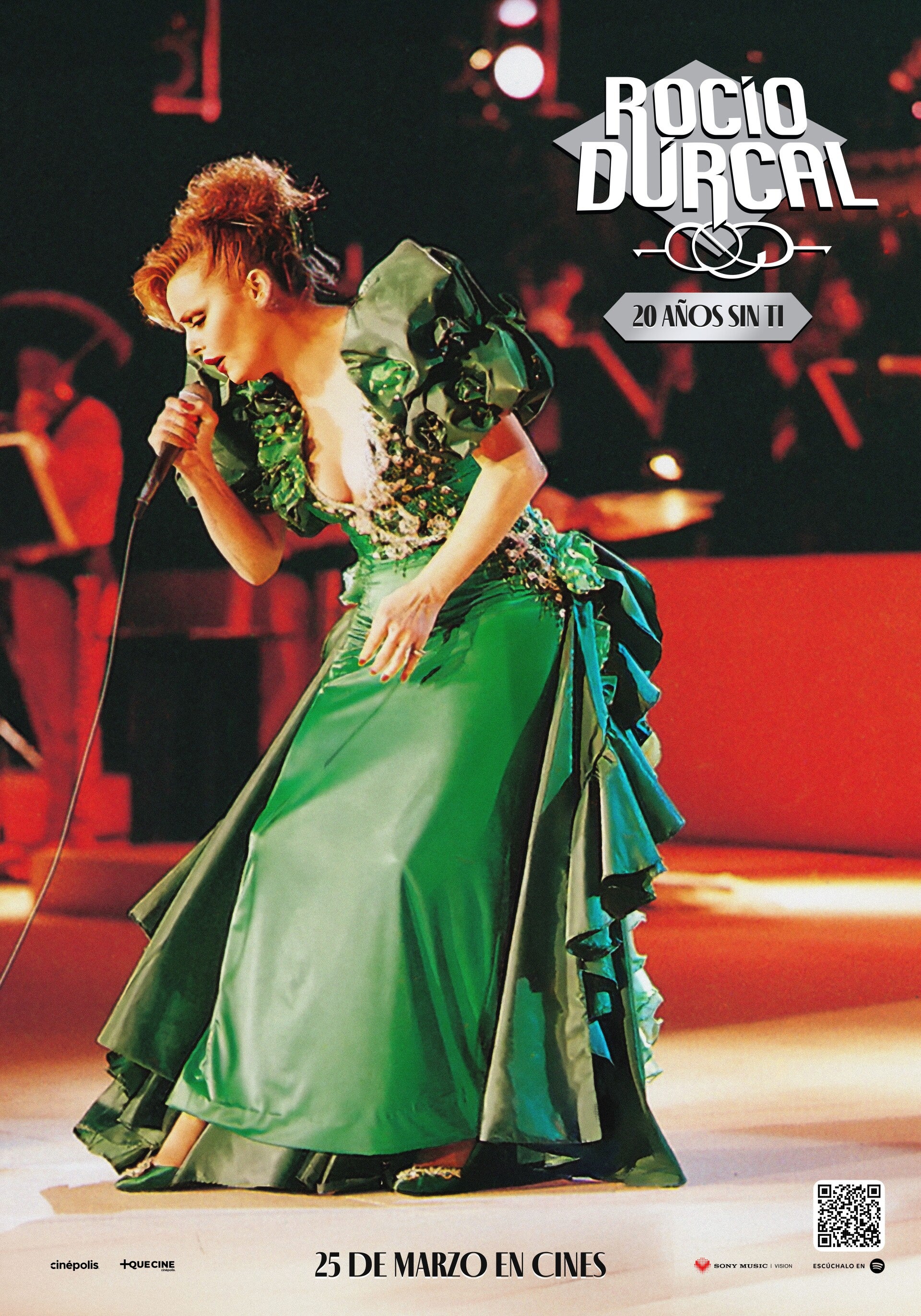
Born in Madrid as María de los Ángeles de las Heras Ortiz, Rocío Dúrcal began her film career in the 1960s, quickly becoming one of the young promises of the Spanish artistic scene. However, her true transformation came years later when she shifted her career toward ranchera music, a move that propelled her to international success.
Her collaboration with Mexican composer Juan Gabriel proved decisive. Thanks to this partnership, Dúrcal found a unique artistic identity that made her a cultural bridge between Spain and Mexico. She became known as “The most Mexican Spanish woman” and “The Queen of Rancheras,” titles that reflect her impact on both sides of the Atlantic.
Throughout her career, she recorded more than twenty albums, sold millions of copies worldwide, and appeared in more than 20 films. Her voice, recognized for its warmth and emotional power, remains a reference in Spanish-language music.

A legacy that remains alive
The cinematic release of this concert is not only an exercise in nostalgia, but also a reflection of the enduring relevance of an artist who continues to connect with new generations. Today, her music maintains a strong presence on digital platforms, where it gathers millions of monthly listeners.
The project, driven by Sony Music Vision and Cinépolis +QUE CINE, seeks to bring Dúrcal’s stage dimension to contemporary audiences beyond traditional listening. The big screen allows viewers to appreciate not only her voice, but also the presence, elegance, and emotional connection that defined her performances.
Her daughters, Shaila Dúrcal and Carmen Morales, stated: “We are very happy to see that this great concert, with our mother’s first performance at the National Auditorium of Mexico City, can now be remastered and released in cinemas. We cannot think of a better way to pay tribute to her on the twentieth anniversary of her passing than to invite fans to relive this unique concert on the big screen, with improved audio and video, and sing along with her greatest hits.”
A collective tribute
The screening will take place in different locations across Spain: Málaga (Vialia), Sevilla (Lagoh), Oviedo (Los Prados), Santa Cruz de Tenerife (Meridiano), Las Palmas de Gran Canaria (Las Arenas), Santander (Peñacastillo), Barcelona – Sant Andreu (La Maquinista), Valencia (Campanar), Alicante (Puerta de Alicante), Vigo, Albacete (Imaginalia), Valladolid (Vallsur), Madrid (TresAguas and Ideal), and San Vicente de Barakaldo – Vizcaya (Megapark).
The initiative is part of a growing trend of bringing historic concerts to cinemas, but in this case it takes on a special meaning: it is not only a recovered performance, but also the revival of an essential figure in Hispanic musical culture.
Twenty years after her passing, Rocío Dúrcal returns to the big screen to confirm her status as a timeless artist, capable of moving audiences across generations and borders.

Add comment
Comments