

By José Luis Ortiz Güell
The cryptocurrency ecosystem in 2025 presents a markedly different landscape from its most effervescent years. The initial promise of a decentralized financial revolution has given way to a phase of institutionalization, regulation, and greater predictability. This process, while bringing stability, has also led some observers to point out a loss of the dynamism and disruptive narrative that once characterized the sector.
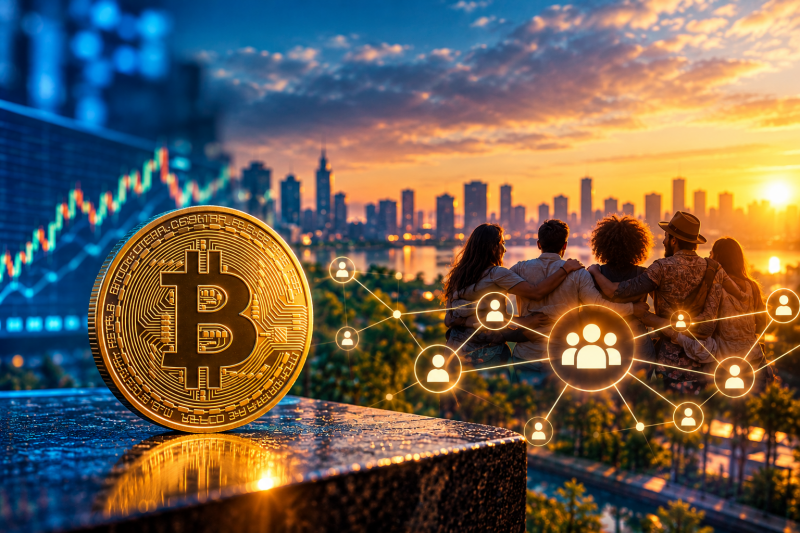
Parallel to this consolidation, a trend is emerging that shifts the focus from financial speculation toward the cultural, playful, and community dimension. This report analyzes this evolution, taking as a case study the phenomenon of platforms like Boinkers, which prioritize participation and play, and examines the implications of this shift for the future of the ecosystem. It is a market that has been transforming, and it could well be said that we are now in the institutional era.
The bull cycles of 2020 and 2021 were largely driven by retail investors, whose collective enthusiasm could move markets. However, in 2025, the weight of institutional capital—coming from ETFs, hedge funds, and family offices—is predominant. According to data from a recent Coinbase survey, 75% of large investors plan to increase their exposure to crypto assets this year.
This structural change has relegated retail capital to a different role: it no longer sets the main trend, but its participation has evolved into forms of engagement that are not purely financial. In this landscape, we can observe the rise of playful and community-driven participation.
In this context, projects have gained ground that function less as traditional investment instruments and more as spaces for social and cultural interaction. These models seek to generate value through community and experience, rather than through the appreciation of a token’s price.
A representative example is the platform Boinkers. Inspired by the internal humor of crypto culture, it has reported rapid growth, claiming to bring together more than 7 million active users in its game and over 200,000 members in its Telegram community within just a few weeks.
These figures, notable in terms of adoption, surpass those of many more established projects in market capitalization but with less active communities. And according to the sources consulted, it has generated strong interest within the investment world.
In this current landscape, the community is the true core of value. Analysts in the sector emphasize that, in the present phase, the strength of a project increasingly depends on its ability to generate and sustain an engaging narrative and a committed community. “Without community, there is no narrative. And without narrative, there is nothing to sustain long-term interest,” notes a report by the consulting firm Web3 Insights.
This paradigm explains why some projects with playful or seemingly informal aesthetics can achieve strong adherence, while initiatives with an excessively corporate approach—but lacking a genuine community base—often struggle to maintain relevance.
What, then, are the prospects and the real challenges ahead?
While this shift toward the playful and community-driven opens new avenues for participation, it also raises questions. Experts consulted warn about the sustainability of models that depend critically on constant user engagement and that may be vulnerable to changes in internet trends. Moreover, long-term profitability and the ability to generate returns beyond entertainment remain areas yet to be proven.
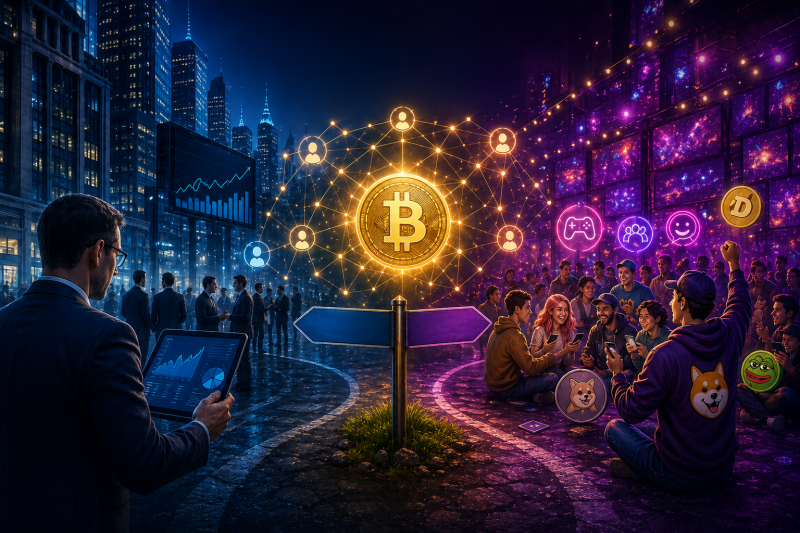
We find ourselves at a moment in which the crypto ecosystem of 2025 appears to be diverging: on one hand, a path of traditional financial integration; on the other, an exploration of new cultural and social territories. In this scenario, “play” and community belonging emerge as drivers of participation for a segment of users for whom mere investment has lost its appeal.
This phenomenon does not necessarily imply the decline of cryptocurrencies, but rather a growing complexity in their role. It is no longer just about an asset, but also about a space where social dynamics, culture, and technology intersect.

Add comment
Comments