

By Carlos Javier Jarquín
Dear planetary friends:
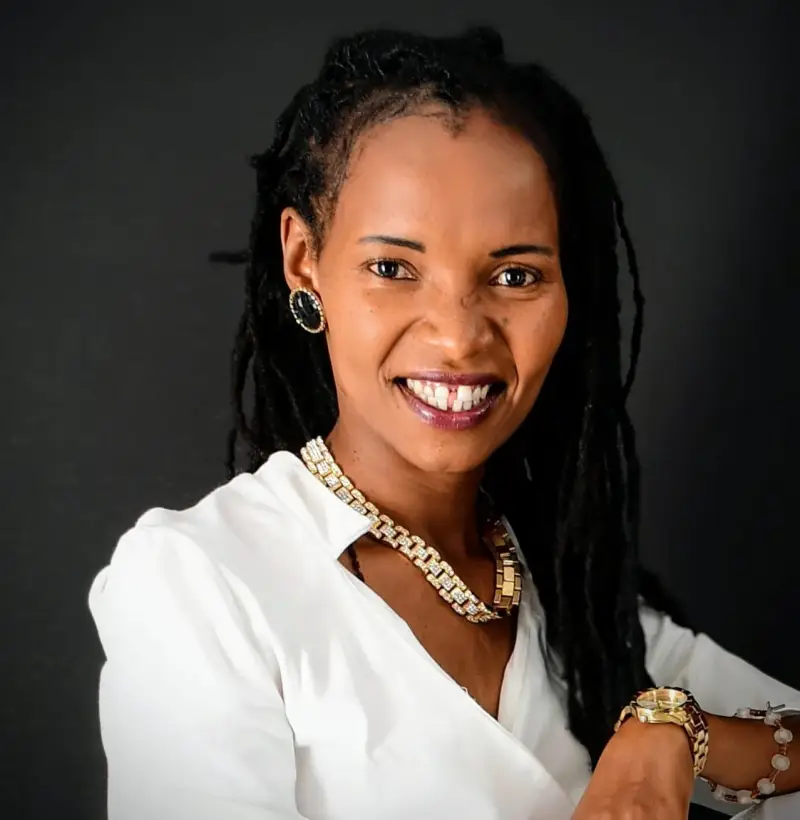
Today I have the great pleasure of introducing you to a remarkable poet, promoter and cultural manager, and of course, a teacher: Jerusha Kananu Marete. She was born in 1984 in Athwana, in the Tigania West constituency, Meru County, in eastern Kenya (she currently resides in Columbus, Ohio, United States). She speaks three languages: Kimeru, Swahili, and English. She is a woman deeply committed to art, her culture, and her mother tongue, Kimeru.

Jerusha Kananu, alongside the Chief Executive Officer of Mystery Publishers Limited, Mr. Vincent de Paul. Photo/Courtesy of Jerusha Kananu.
She studied Education at the University of Nairobi, which awakened her passion for writing, and she obtained a Master’s degree in Literature at Kenyatta University, where she practiced the poetic craft under the guidance of professors such as John Mugubi. In addition, she has taken writing courses at Mystery Publishers Academy and editing courses at the Global Editorial Center Kenya.
Jerusha has published several books and has collaborated in 15 anthologies, with translations of her works into Spanish and other languages. Our dear guest is the representative of Kenya and the Kimeru language in CANTO PLANETARIO (H.C. EDITORES, Costa Rica, 2023). Kananu is a distinguished artist in forum theatre, an enthusiast of drama and cinema, and has produced poems in film format alongside collaborators such as Simiyu Barasa.
Her books are available on the Amazon platform. As an independent author, in 2022 she received the Indie Afrika Redefined Book Award for her excellent literary work. Since 2026, Jerusha has been the National Secretary of the Poets of the World Movement in Kenya, a movement founded by the Chilean poet Luis Arias Manzo.
In this conversation we present, we explore various topics. Through her answers, we learn more about her worldview. She reveals that her main themes are identity, womanhood, migration, cultural memory, social justice, African dignity, and generational healing.
I hope you greatly enjoy this content. The closing of the conversation includes recommendations of diverse places to visit in Kenya, ideal for those of us who have not had the privilege of knowing that wonderful country of East Africa.
How would you describe yourself in general, Jerusha Kananu Marete?
I describe myself as a deeply rooted African woman, a mother, and a cultural bridge. I am a poetic witness of my time. I am shaped by Ameru heritage, strengthened by migration, and refined by experience. I am both soft and radical—soft in spirit and radical in truth. My life is guided by faith, resilience, and an unwavering belief in the power of storytelling.
I am a Kenyan poet, cultural diplomat, theatre practitioner, and a voice of African literary consciousness. Rooted in Ameru heritage and shaped by global migration experience, my work sits at the intersection of poetry, community storytelling, feminist reflection, and social transformation.
I serve as National Secretary of Poetas del Mundo Movement in Kenya, representing Kenyan poetic expression in the promotion of universal fraternity, peace, justice, equality, freedom, and environmental preservation.
What is poetry to you?
Poetry is breath, memory, and resistance. Poetry allows me to say what society sometimes silences. It is where my ancestors meet my present reality. For me, poetry is liberation rather than decoration. Literature is a sacred meeting place between memory and possibility. Poetry is conscience speaking softly yet persistently to humanity. Africa carries a spirit that cannot be erased. It lives in language, music, history, and children. My hope is that my work contributes quietly yet meaningfully to the eternal African song.

Jerusha Kananu Marete is the representative of Kenya and the Kimeru language in CANTO PLANETARIO (H.C. EDITORES, Costa Rica, 2023), an anthology compiled by Nicaraguan poet Carlos Javier Jarquín. Photo/Courtesy of Jerusha.
Could you tell us about your academic background and how it influences your community support work?
I hold a Bachelor of Education (Arts) and a Master’s degree in Literature with specialization in Forum Theatre. My academic journey was not only about acquiring credentials; it was about understanding how language, narrative, and performance influence human behavior and social structures.
Studying literature sharpened my critical engagement with African texts, feminist discourse, and postcolonial identity. It trained me to interrogate systems of power and cultural narratives.
My specialization in Forum Theatre— inspired by Augusto Boal’s philosophy—equipped me with participatory tools for community support. Forum Theatre transforms passive audiences into active participants who rehearse solutions to real oppressions.
This training has been instrumental in my work against gender-based violence. It allows communities to dramatize harmful patterns, interrupt them, and imagine alternatives within a safe and reflective environment.
Currently, I am applying these tools to financial literacy awareness, particularly among women and marginalized communities in America, in collaboration with World Financial Group. Financial empowerment is deeply connected to dignity and freedom, and theatre provides an accessible way to raise awareness about economic agency. Education gave me the theoretical foundation. Theatre gives me the practical tool. Poetry gives me the moral voice.

Books by Jerusha Kananu.
Could you describe what your role as a representative of Kenya in poetry consists of?
My representation of Kenya is within Poetas del Mundo, where I serve as National Secretary of PPDM in Kenya. In this capacity, I am responsible for promoting the movement’s philosophy of universal poetic fraternity. My role includes fostering literary collaboration, integrating new members, supporting the appointment of poetic diplomatic consuls, and advancing poetic activities at both national and international levels.
The mission is humanistic rather than political. Poetry is used as a voice for peace, justice, equality, freedom, human rights, and environmental preservation. Through this representation, I carry Kenyan poetic heritage into global literary dialogue while strengthening local poetic communities.
Which African authors have influenced your poetry?
My poetic voice has been shaped by a constellation of African literary giants whose work embodies cultural depth, intellectual courage, and emotional honesty. I have been influenced by the boldness of Ngũgĩ wa Thiong’o, the revolutionary courage of Chinua Achebe, and the lyrical power of Warsan Shire. I am inspired by the cultural resistance and lyrical storytelling of Okot p’Bitek, and the feminist intellectual fire of Micere Githae Mugo, whose work draws strongly from Pan-African and feminist traditions. I also deeply resonate with the emotional wisdom of Mariama Bâ, author of So Long a Letter, a work that continues to inform my understanding of memory, womanhood, and cultural negotiation.
I have also been profoundly influenced by Austin Bukenya, whose poetry, plays, and storytelling carry the rhythms, oral traditions, and philosophical depth of East African culture. His work taught me the importance of sound, folklore narrative, and cultural embodiment in poetic expression. I also owe a deep debt to Professor John Mugubi, an academic mentor whose teaching in creative writing opened a new dimension in my craft. Together, these authors and scholars have helped shape a poetic philosophy that values both tradition and innovation, memory and agency, community and individual voice.
What themes are present in your literary work?
My literary work is deeply rooted in African identity and the human experience. Core themes include identity formation, womanhood, migration, cultural memory, social justice, African dignity, and generational healing. Through poetry, I explore the lived realities of women in East Africa, using symbolism, satire, and emotional storytelling. My work often speaks to the intersection between tradition and modernity, highlighting the strength, resilience, and agency of African women while fostering reflective dialogue within communities.
What inspired Marry Me a Co-wife and Other Poems Second Edition?
Marry Me a Co-wife and Other Poems is a poetic collection that uses satire, folkloric poetic style, and contemporary social commentary to address issues affecting women in East Africa. The work examines marital dynamics, gender expectations, dowry traditions, and patriarchal social structures through vivid imagery, symbolism, and multiple female narrative voices. Although the tone sometimes carries humor and entertainment, the underlying message is reflective and educational.
What does your Forum Theatre project consist of?
My Forum Theatre project is inspired by Augusto Boal’s Theatre of the Oppressed. Forum Theatre transforms spectators into “spect-actors.” The audience is invited to interrupt the performance, enter scenes, and propose alternative actions to challenge injustice. My current focus is using Forum Theatre for financial literacy awareness, especially for women and marginalized communities in America.
What did it mean to you that your poem “Salaam, My Motherland Africa” was featured in the global event “100 Thousand Poets for Change”?
It was both an honor and a moment of continental responsibility. The platform unites writers advocating for peace, justice, sustainability, and human dignity. The poem is more than a love letter to Africa—it is a call to consciousness, unity, and self-determination.
What did being part of CANTO PLANETARIO represent for you?
It was a deeply meaningful cultural and spiritual experience. Representing Kenya—and especially the Kimeru language—on a global stage affirmed the importance of indigenous languages as living archives of knowledge.
How was your experience working on your audiobook Echoes of Military Souls?
It was not just a creative collaboration but a spiritual convergence of culture, voice, and purpose. The project explored the emotional landscape of soldiers and their families. Working with Mawira M’tuamwari and Kamanu M’tuamwari brought depth, cultural authenticity, and emotional resonance.
What did receiving the Indie Afrika Redefined Book Award 2022 mean to you?
It was a powerful affirmation of my work as an independent African author. It recognized the cultural relevance, literary quality, and emotional depth of my work.
As a mother and poet, how do you feel about your son’s achievements?

It is deeply moving to see Emmanuel Kimathi flourish academically and creatively. His early engagement with poetry feels like a living legacy.
What radical changes occurred in your life after arriving in the United States?
Migration was not just relocation—it was intellectual expansion and professional reinvention. It led me to explore financial literacy, economic empowerment, and new forms of education beyond traditional classrooms.
How has migration influenced your poetry?
It has transformed my poetry into deeper introspection. My writing now explores identity, belonging, and cultural negotiation across spaces.
Who are some mentors, collaborators, and institutions that have shaped your journey?
My journey has been shaped by mentors, academics, editors, and creative collaborators across continents, including Mystery Publishers Limited and various international artists and scholars.
What tourist destinations would you recommend in Kenya?
I would recommend Meru National Park, Lewa Wildlife Conservancy, Mount Kenya, Maasai Mara National Reserve, Lamu Old Town, and Diani Beach.
Kenya is not just a destination, but a living landscape of rhythm, resilience, wildlife, and cultural heritage.
Dear and admirable Jerusha Kananu, thank you for sharing your time and space with the readers of this distinguished medium. Congratulations on your outstanding and multifaceted career.
Add comment
Comments
En gratitud al periodista Carlos Jarquín,
que con generosa pluma abrió caminos y destinos,
al dar voz en sus revistas a mis versos y a los de mi hijo,
y en tierras de Estados Unidos nos tendió su abrazo digno;
tu luz, Carlos, no solo publica—también acoge y siembra futuro.