

By. Yanelki Rodríguez Gómez
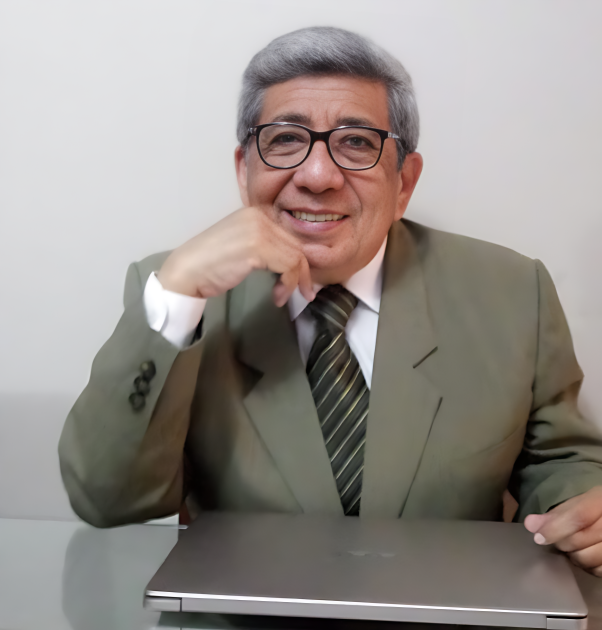
Doctor Carlos Hugo Garrido Chalén, a multi-award-winning poet and writer, is the founding global president of the World Hispanic Writers Union (UHE), which will celebrate its 34th anniversary next June. Recognized as one of the most naturalistic poets of the 21st century, Garrido Chalén has dedicated his life to promoting literature as an ethical, social, and cultural tool, building bridges between writers, generations, and cultures across the Spanish-speaking world. In this exclusive interview, he shares his vision of literature, peace, social justice, and the legacy he wishes to leave for new generations of authors.
Yanelki Rodríguez Gómez: Thirty-four years after the founding of the World Hispanic Writers Union, which initial motivations remain relevant today, and which have had to evolve in the face of the challenges of the 21st century?
Carlos Hugo Garrido Chalén: Faced with the great social, economic, political, educational, financial, and above all ethical and moral crisis that afflicts the planet, 34 years ago we created the World Hispanic Writers Union, which at the beginning was called the Hispanic American Writers Union, understanding that through poetry, art, and literature in general, we had—independently of our primary objective of producing beauty—a great responsibility in the face of the unleashed chaos; and from the very beginning we advocated for the defense of peace with social justice, until we understood that it is necessary to reconceptualize everything, including peace itself, beyond lyricism that remains in the limbo of simple and insignificant conjectures, in order to seek peace with total justice.
Yanelki: You have defended literature as an ethical and social act. In a world marked by digital immediacy and artificial intelligence, what role do you believe writers should assume today in the construction of collective consciousness?
Carlos Hugo Garrido Chalén: Literature is a tool of intellectual work that must be placed at the service of humanity, to improve the soul of the peoples of the earth, defend human rights, and promote new and better ethical guidelines to confront, through education and culture, the great social causes of inequality and exclusion that are promoted in the world when profit from the industries of death is placed above the human being and life itself is disregarded. Digital immediacy and the presence of artificial intelligence represent a major step forward, but also a great danger, when in ten or twenty years it begins to place itself above the human being.
Yanelki: The UHE has managed to build an international network of authors. How is a genuine sense of literary community built from cultural diversity without losing individual identities?
Carlos Hugo Garrido Chalén: None of this would have been possible without that feeling of love that has always guided us, above disloyalties, envy, hatred, and pettiness. It is precisely this love that has allowed us to generate valid and realistic proposals and multidisciplinary calls in defense of that inalienable common good which is the Planet, and in favor of peace with total justice, respecting educational and cultural identities across all continents.
Yanelki: Throughout your career, you have promoted the recognition of new voices. What responsibility do cultural institutions have today in democratizing access to literature and the visibility of emerging authors?
Carlos Hugo Garrido Chalén: That is the greatest drama fostered by indifference, which we have faced over these 34 years. However, despite this reality that offends human dignity, we have made the necessary efforts to make governments, cultural institutions, and the peoples of the planet understand that poets, writers, artists, academics, educators, and intellectuals must be taken into account in national and international educational and cultural plans, and in efforts to democratize culture, promote art and literature, and defend freedom, justice, peace with total justice, and human rights across the five continents.
Yanelki: Looking toward the future, what is the greatest challenge facing the World Hispanic Writers Union, and what legacy would you like to leave to future generations of Spanish-speaking writers and writers of other languages in the world?
Carlos Hugo Garrido Chalén: Our greatest challenge is not simply that our organization transcends beyond the years, but rather to achieve, as a legacy, that the works of our members are loved and read by children, young people, and the elderly of the world, as a contribution to their own soul, teaching them to reject war, criminal barbarism, all forms of violence and intolerance, dishonesty, racism, discrimination and inequality in the world, as well as political, social, institutional, and economic corruption that harms and offends humanity. Otherwise, none of our efforts along this path will have served any purpose.
The World Hispanic Writers Union, under the guidance of Garrido Chalén, celebrates 34 years of literary, ethical, and social construction, reminding us that words can be the most powerful bridge between cultures and generations.
Yanelki Rodríguez Gómez: Cuban Journalist, Poet, and Political Scientist
Yanelki Rodríguez Gómez is a Cuban journalist, poet, political scientist, and cultural promoter, recognized for her work in radio, television, cultural journalism, and in the defense of peace, social justice, and Hispanic American literature.
Yanelki Rodríguez Gómez has developed a multifaceted career that brings together journalism, literature, political science, and cultural promotion. Through her work in different media and cultural spaces, she has cultivated a particular interest in literature, social issues, and the role of culture in fostering dialogue and human connection. Her work as a poet complements her journalistic perspective, allowing her to explore human experiences, emotions, and contemporary realities through both literary and journalistic expression.

Add comment
Comments