

By José Luis Ortiz Güell
There are artists who illuminate stages with flashes of fame—and then there is Aitana. Behind the voice that has conquered charts and emotions across continents beats an intimate, almost secret pulse. She is not only the girl with light eyes and an electric smile who appears on screens, but an architect of feelings, a composer of her own resilience. Today, in a quiet room far from the roar of the crowd, we sit down not to talk about numbers or tours, but to listen to the music that plays when no one is recording—the story between note and note, in the life of one of the most influential Spanish artists of her generation. This is a conversation to discover the woman behind the art, the one who lives in the silences between chords.
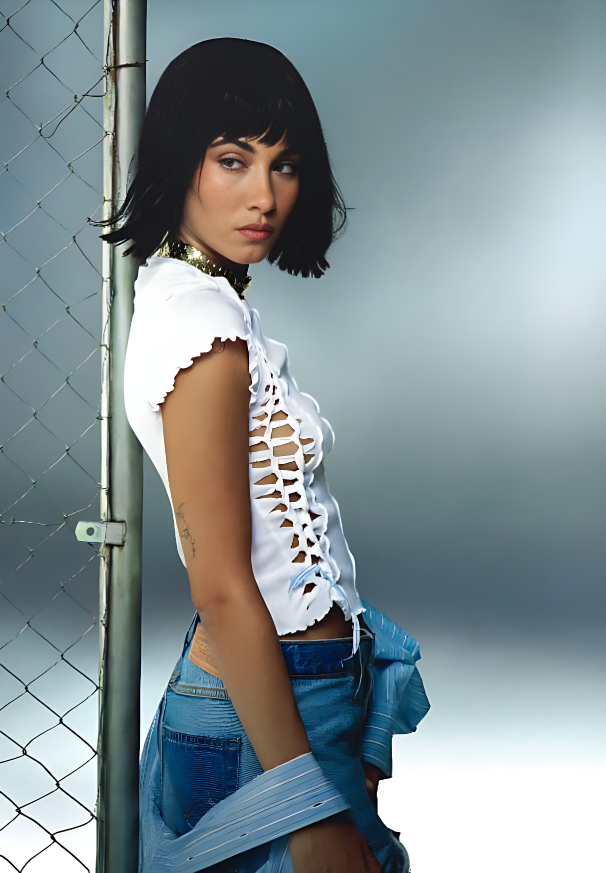
1—Aitana, your career looks like a meteoric journey from the outside: from Operación Triunfo to filling stadiums. But every light casts a shadow. What person or moment in the shadows—one that success does not illuminate—do you consider the true foundation of who you are today?
It’s a beautiful question to start with. Look, I think the foundation… isn’t a moment of success, but rather one of stillness. It was right after OT, when everything seemed like it should be noise and celebration. I was in my childhood bedroom, in Sant Climent, and suddenly I felt an enormous emptiness. The project had ended, and with it, an identity. There, in that shadow of “what am I now?”, I had to choose: let myself be defined by what the world expected, or listen to what I wanted to say. It was a silent and terrifying process, but it was mine. And from there, everything that came after was born. My family, especially my mother, was my anchor in that journey. She reminded me who I was before they called me “Aitana” on TV.
2—Your music often navigates between euphoria and vulnerability. In songs like “Corazón sin vida” or “Mariposas,” a very deep emotional duality emerges. Is there any lyric you’ve written that, when you listen to it now, reveals a truth about yourself that you weren’t fully aware of at the time?
Absolutely! It’s curious how songs are like emotional time capsules. If I had to choose… “Mariposas.” When I wrote it, I was thinking about that beautiful nervousness of falling in love, about lightness. But now, listening to it from a distance, I realize I was actually talking about my fear of freedom, of truly letting go. The lyric says, “Voy a darte alas, que tú me das paz.” Now I understand that at that moment, I longed for that inner peace I felt I was missing, more than for the wings themselves. It was as if, unconsciously, I knew I needed stability in order to fly. I discover myself in those lines years later. It’s magical—and a bit strange.
3—The world sees you as a symbol of strength and empowerment for millions of young people. In what recent moment of fragility or doubt did you find that it was more powerful to surrender to that vulnerability than to pretend to be invincible?
Oh, this one is very real. I think it was during preparations for my last tour. The pressure of production, of wanting everything to be perfect, of being “the Aitana” who can handle everything… I broke down. I cried during a rehearsal, in front of my team. It was embarrassing in the moment, but it was the most liberating thing. By letting out that “I can’t do it all,” my team didn’t see me as weaker; on the contrary, they came closer. It was like removing a layer of armor that weighed tons.
I learned that empowerment is not pretending nothing affects you, but having the courage to say “I’m not okay today,” and to keep moving forward with that truth. That makes you stronger, more authentic, and it connects you to people in a different way.
4—Imagine for a moment that music were taken away from you—not as a profession, but as a language. What other form of art or silent expression do you think you could use to communicate the emotional universe you now place in your songs?
That’s so difficult! Music is my oxygen, but… I think it would be writing. Not lyrics, but prose—maybe journals or short stories. Since I was little, I’ve filled notebooks. And if not, maybe analog photography. There’s something about capturing a unique, imperfect moment that never returns, which for me has the same essence as a good song: pure feeling frozen in time. Photography, like music, speaks without making noise. But hey, don’t take music away from me—it makes me a little anxious just thinking about it.
5—You’ve spoken before about the importance of your inner circle. In an industry that often treats people as projects, what simple, genuine gesture—unrelated to your fame—from someone close to you has recently reconnected you with the Aitana who exists beyond the surname Ocaña Morales?
Recently, I came home exhausted after weeks of promotion. My best friend, the one from my whole life, came to visit. We didn’t talk about work, or numbers, or criticism. We just started baking cookies, got flour all over ourselves, laughed like fools about silly things from when we were 15, and watched a bad movie on the couch. In that moment, I wasn’t “the singer.” I was just me. That gesture, so normal, so ordinary… is the greatest luxury I have. It reminds me that my value isn’t in streams, but in being terrible at baking cookies and still making someone laugh.
6—Looking toward the future, beyond upcoming albums or professional goals… what emotional or personal seed would you like to be nurturing today so that, twenty years from now, you can look back and say: “that’s where the best of me began”?
The seed of patience and compassion with myself. I’m very demanding, very self-critical. My mind runs at a thousand miles per hour. But lately I’m trying to learn to listen to myself without judging, to accept that some days are for producing and others are just for existing. I want to nurture that inner calm. Because I think if I can be at peace with the person I am when the lights go out, everything else—the art, the relationships, life—will flourish in a healthier and more genuine way. In twenty years, I’d like to look back and think: “how good that you learned to be your own best friend.”
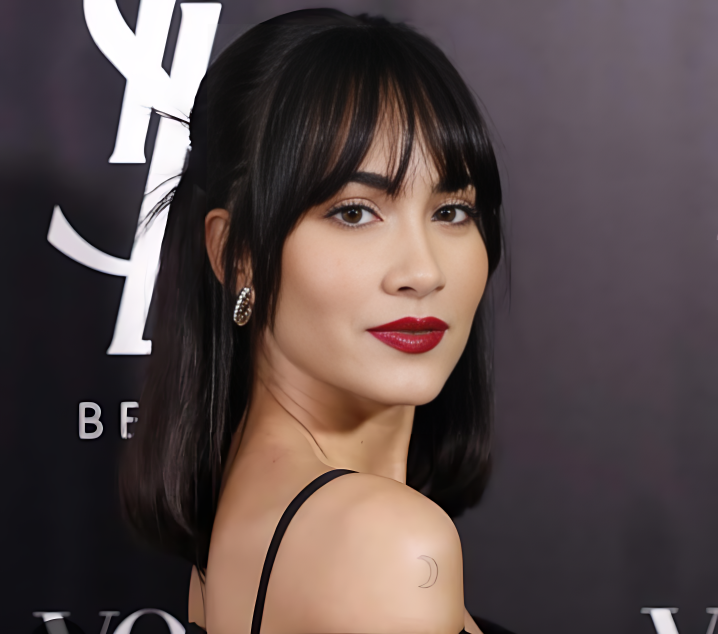
At the end of the conversation, Aitana holds a silence that is not empty, but full—like a pause before the next note. Perhaps that is her true essence: not only the artist who masters sound, but the woman who understands the value of silence. Because within it, the most honest melodies take root. Her legacy will not only be the songs that captivate on the radio, but the courage to show fragility in a world of glitter—to remind us that behind every “great international artist” there is a person who, like anyone else, searches, feels, and dreams. And it is in that shared humanity, precisely, where Aitana finds her most universal resonance, her most enduring tone. The interview ends, but its echo—like the best of her songs—remains.
Add comment
Comments