

Memories, characters, and reflections from an actor who has gone through six decades of filming, fame, and passion for acting
By Susan Villa
Talking with Luis Fernández de Eribe is entering a way of understanding acting built over time. With more than six decades of experience in film, theater, and other audiovisual formats, his career has developed steadily, away from the ups and downs that usually accompany the profession, and marked by a calm relationship with success, recognition, and the craft.
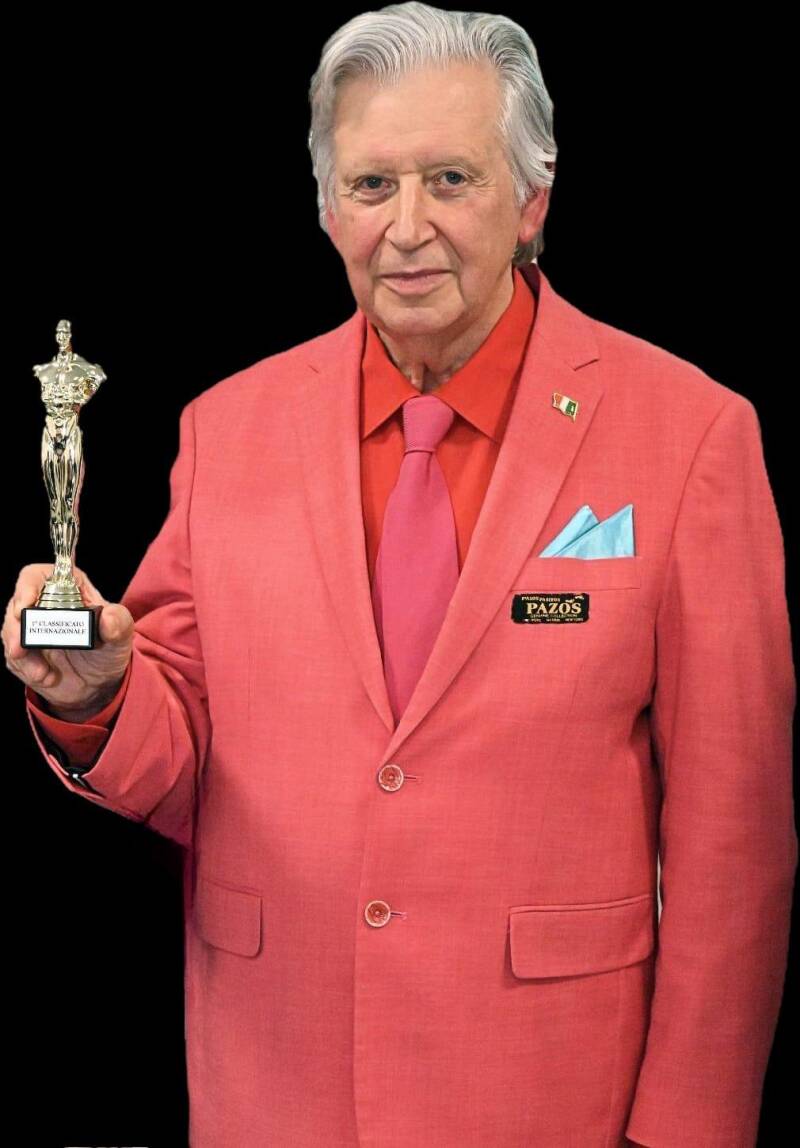
From his first contact with cinema as a teenager —at a time when making a film was, above all, just another job— to his participation in international projects and prestigious festivals, Fernández de Eribe has been a direct witness to the evolution of the audiovisual sector. His perspective, shaped both by experience and reflection, offers an unusual point of view in a context dominated by immediacy and constant exposure.
In this conversation, the actor revisits his beginnings, reflects on the profession and the passage of time, and openly addresses topics such as fame, character construction, and staying true to oneself. A calm and uncompromising testimony that highlights discipline, continuous learning, and respect for well-done work as fundamental pillars of a life dedicated to acting.
1- What memories do you keep from your childhood and from that first moment when you sensed —even if vaguely— that acting could be part of your life?
At first, the memories are vague. I was 13 years old and my mother took me to a casting for an advertisement for a pharmaceutical product. I was selected and did the advertisement, nothing more. Three years passed and, once again, my mother took me to another casting: that of the film “The Good, the Bad and the Ugly,” directed by Sergio Leone and starring Clint Eastwood.
At that time, it was something unknown, just another job. Nothing to do with the success the film later achieved, now considered one of the best Westerns. I played the role of a coat soldier. From that point on, a desire to continue in cinema began, but my parents told me that I first had to finish my degree in Chemical Engineering. I did so and, once I completed the process of presenting my project, I began studying Dramatic Arts, music, and dubbing.
2- Looking back, was there any person, experience, or specific circumstance that marked a turning point and pushed you to take acting as a serious path and not just as a concern?
I have to say that the person who was always behind all the castings and projects that came up was my mother. Years later, she also participated in different important projects and is very loved and remembered in the world of cinema.
3- The acting profession is usually full of doubts and uncertainties. Do you remember any particularly difficult stage in which you thought about quitting, and what made you continue?
In my case, those doubts did not exist, common among other colleagues, because I had my back covered by having a fixed job and a monthly income. This is something that makes it difficult for many colleagues to reach the top.
Precisely because cinema is like a sawtooth graph: today you are up, tomorrow down, then up again, and then four or five months without any project coming up. Since it is not continuous work, many disappointments arise, as daily expenses must be covered —food, rent, clothing—. Many vocations are lost precisely for that reason.
4- Throughout your career, how has your way of understanding the profession changed and, above all, your personal relationship with success and public recognition?
My career has been linear. I have worked and I have enjoyed it, and I continue to do so. I have had successes and some failures, but overall the graph has been upward, with a continuous slope. Success has not overwhelmed me, so my level has always been the same with my colleagues and followers.
5- Many performers talk about acting as a refuge, but also as constant exposure. What has acting given you emotionally and what do you think it has taken from you?
Whoever says that, bad sign. One cannot take refuge in acting; one must live it and enjoy it. Once we expose ourselves on stage or on screen, we become the target of all criticism. But one must know how to interpret it and, if it is negative, channel it toward the goal of improvement.
Exposing oneself to the public gives verbal fluency and, knowing how to moderate it according to a project, a script, or a character, it is always positive on an emotional level. For this reason, I am very grateful for these 60 years of cinematic work in all its facets.
6- When you build a character, what part of yourself inevitably ends up entering that work, even if you do not intend it?
Once the script is read, preparation begins and the observation of the details of that “Mr. X.” From there, a breakdown of characteristics begins: types, movements, tones of voice, gestures, etc.
Normally, the director corrects these elements during rehearsal, adjusting values up, down, or flat. My person becomes the character and lives within me while the work lasts. Even afterward, you remember phrases and typical characteristics of that “Mr. X.” Many things are not forgotten and, years later, you are able to recall exact lines from the script learned thoroughly.
7- Fame often projects an image that does not always match the real person. How do you manage the distance between the public and private Luis Fernández de Eribe?
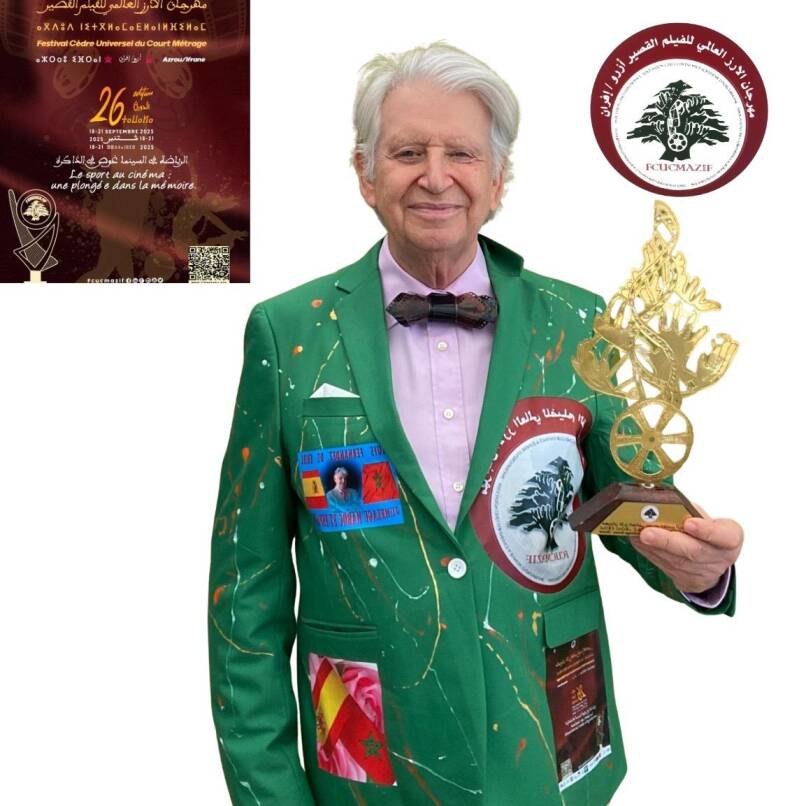
In my case, in the different phases in which I have been at the peak of fame, I have managed to remain the same person with colleagues and followers. I have not had headaches from winning awards —and there are more than 200—.
Luis Fernández de Eribe remains the same as before and always will be. The head is not only for wearing a hat, but for thinking and assessing each moment. That is why I am the same in public as in private.
8- With the perspective that the years provide, is there any role or project that you feel especially close to, not so much because of its impact, but because of what it stirred inside you?
After 60 years of work in cinema, logically you come across characters that fit your profile more than others, and you become more fond of some. This is the case with roles in which you die, and I have quite a few; they seem to touch you closely and, at some point, “little ants” run through your stomach. In other roles —in which you get married, are famous, or a winner— the actor’s ego is fed and the personality is doubled.
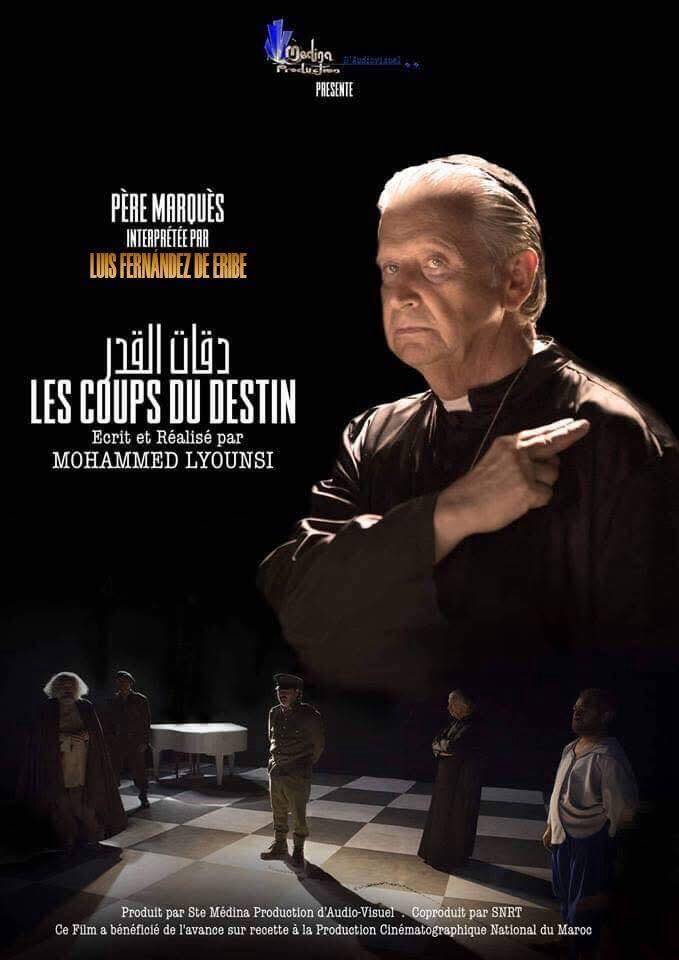
If I had to select one, it would be a role set in the Civil War: friar, execution by firing squad. The fall to the ground shocked the director due to the realism of the action, in “Under a Mantle of Stars.”
9- In such a changing sector as audiovisual and theater, what do you think is most important today to remain true to oneself without stopping evolving as an actor?
The personality of the person must prevail over that of the actor, but knowing how to adapt to a specific role when circumstances require it. Later, the actor may have to make some personal modification to adapt to the character, if the director indicates so. Evolution must be permanent on a daily basis, with courses, master’s degrees, and acting training. You should never go to bed without having learned something new.
10- What projects are you currently working on and what excites you most about them?
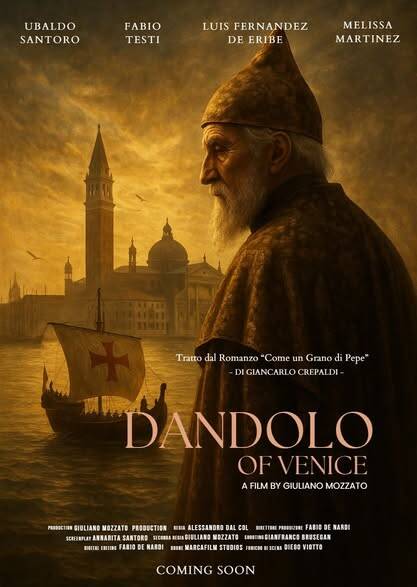
I always have my agenda full or ready to fill it, and I modify it daily, although I manage it annually. Next Wednesday, a two-hour interview conducted by the University of Oviedo will be published for a book about the filming of “The Good, the Bad and the Ugly.” In ten days I begin filming an experimental and educational series. At the end of the month, I have a music video for a singer. In March I shoot a short film in Naples. In April I return to Italy, to Venice, as the lead in “Dandolo of Venice.” In May I take a route through Morocco, at the festivals of Tiznit and Ouarzazate. There I will be awarded and give a lecture on the cinema of Luis Buñuel and Pedro Almodóvar. In July I return to Italy, to Padua and Treviso, to shoot as the lead “Io ti amo.” In August I will be at the Luna de Cortos Festival, in Veguellina de Órbigo (León). The agenda continues to grow with new projects every day. The enthusiasm is placed in all of them, whether big or small. I frequently shoot for film schools, free of charge, so that students can carry out their internships, which is also very gratifying, even though it does not have financial compensation.

Add comment
Comments