

From working with David Kano to creating his own sound, the Almerian musician explores identity, emotion, and new musical paths.
By Susan Villa.
In an industry where identity often becomes a label, Álef moves in the opposite direction: he turns indefinition into his greatest artistic statement. Proyecto Encarnación is not just a collection of songs, but a process in motion, a deliberate search for sounds, emotions, and narratives that escape any recognizable formula. Between synthesizers that evoke the dance floors of the 70s and 80s and a contemporary sensitivity, his proposal moves between nostalgia and experimentation with unusual naturalness.
But beyond aesthetics, there is an intimate impulse that runs through the entire project: the need to express without filters. Álef does not speak of music as a product, but as a refuge, as catharsis, and as a way of organizing —or disorganizing— what happens within. His lyrics are born from emotion, from lived experience, and from what still hurts, building an honest narrative that connects with that part of the listener that rarely finds space in the conventional.
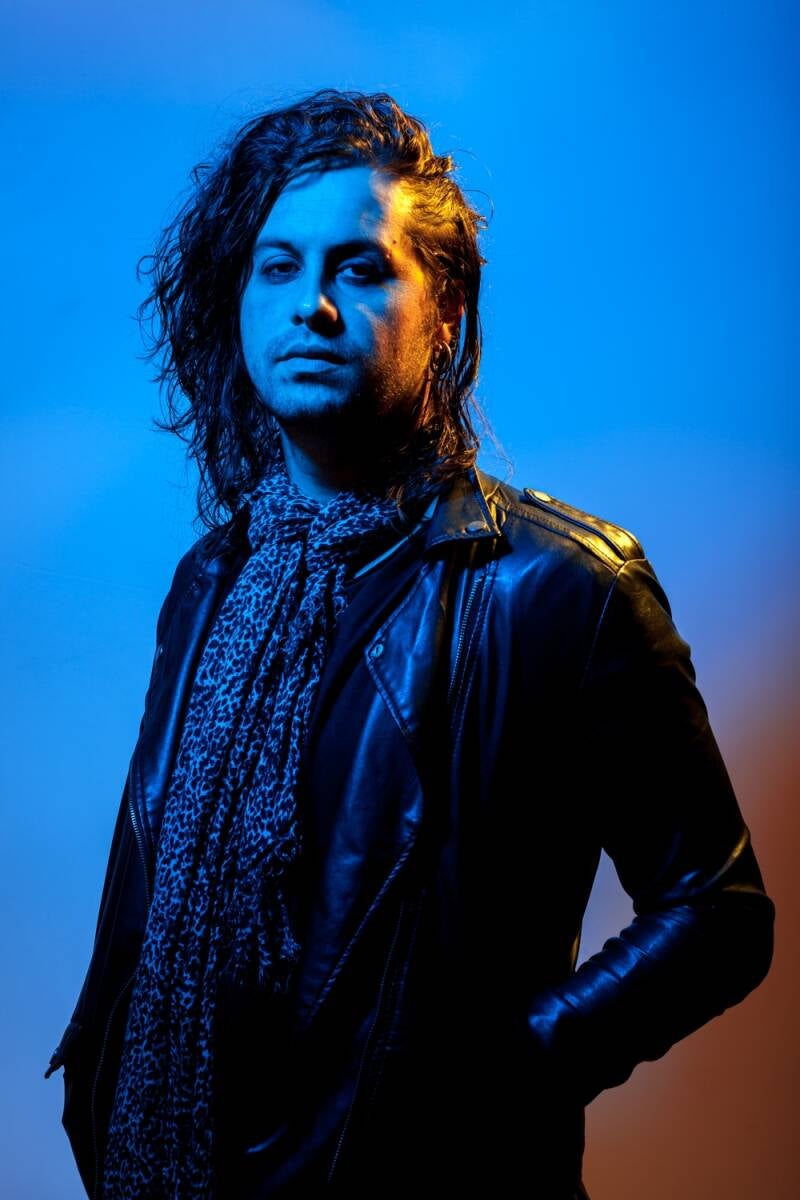
In this conversation, the artist reflects on his beginnings, his evolution, and the current moment of a project that constantly reinvents itself. With a new stage underway and a renewed band, Proyecto Encarnación opens itself to new paths without losing its essence: that of someone who creates not to fit in, but to understand himself.
1. Alef, how do you remember your beginnings in music, and when did you feel that this artistic path would become an essential part of your life?
Since I was 14, I always tried to form bands, but in my town it was very difficult to find people my age who truly wanted to commit. It wasn’t until I was 18 that I first went on stage with a cover band called “Sólido.” I played guitar and, in some songs, I sang. From that point on, I began composing and, thanks to the confidence my bandmate Porlan had in me, I started to strengthen the idea that I wasn’t bad at writing songs.
2. You represent a new generation of Spanish artists who freely fuse styles; how would you define your musical identity today within Proyecto Encarnación?
I don’t have a musical identity. Each single we release is very different from the previous one, although now we are thinking about making an album with a more defined identity. We have explored everything from electronic music to 70s italodisco pop. Now, who knows… maybe we’ll even make an album of Almerian parrandas.
3. Proyecto Encarnación was born from a search for new sounds; what did you want to find artistically in this work that you perhaps hadn’t found in previous stages?
I wanted a signature identity, to surprise myself and to surprise others. To bet on something different. Proyecto Encarnación, from its name to its songs, is a commitment against what some call “the formula for success.” It is pure artistic expression.
With this project, I put into practice an artistic-spiritual theory: to express the individuality of being and to trust my own mental processes without external conditioning.
4. Your proposal blends pop-rock, electronic music, and an aesthetic with Italo echoes from the 70s and 80s; what attracts you to that sonic mix and what does it allow you to express?
It allows us to express the nostalgia of a life not lived. I am from the 90s, but for some strange reason I feel a huge affinity with the music of that era. I suppose that, deep down, I seek for my parents to feel proud of me. Like the child of left-wing parents who becomes a communist, or the right-wing one who ends up becoming far-right. In the end, we are wounded children desperately seeking our parents’ acceptance. At least I can say that the path of art is healthier, more creative, and more honest.
5. Your songs address intense emotions, complex relationships, and also a critical view of certain realities; from what personal or creative place are your lyrics born?
When I write, I seek catharsis: to turn emotional residue into poetry. As a child, I took refuge in music during the darkest days. Now I just want to give back all the love it once lent me.
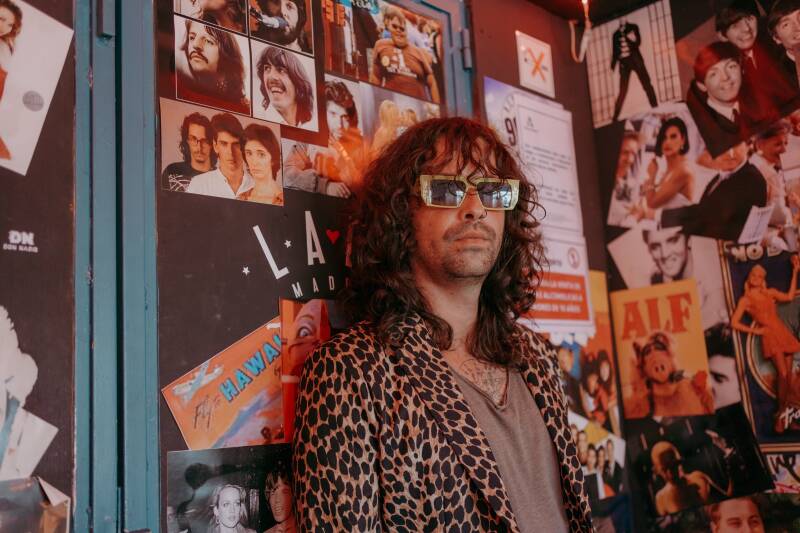
6. Throughout your career you have worked with names such as David Kano, Guillermo Quero, and more recently Malax; what have these collaborations contributed to your evolution as an author and producer?
With David Kano we made a version of the single E.P. Guillermo mastered “Desvanecido.” But Malax… Malax is the cornerstone of this project. And I say it without hesitation: he is the best producer in Spain.
7. Proyecto Encarnación now enters a new stage with a renewed band and a tour in preparation; what projects excite you the most at this moment and where do you want to take your music in the coming months?
Right now everything is a bit uncertain. We have good media promotion and we are waiting to release the latest single. After that, we will fully dive into composing a new album. We are incredibly excited!
Susan Villa is a Spanish journalist, communicator, actress, model, and cultural writer.
She has worked across journalism, television, fashion, culture, and entertainment, and currently contributes to several Spanish media outlets, including Fashionista Edition, where she writes interviews and features about artists and cultural figures.
Her journalistic work is characterized by an interest in the people and stories behind the arts, with a particular focus on music, fashion, cinema, culture, and emerging talent. Through her interviews and cultural features, Villa brings a close and insightful perspective to the personalities and creative projects she covers.

Add comment
Comments