

She presents Aire, a project that fuses contemporary jazz and Ibero-American roots with a deeply personal artistic vision.
By Susan Villa.
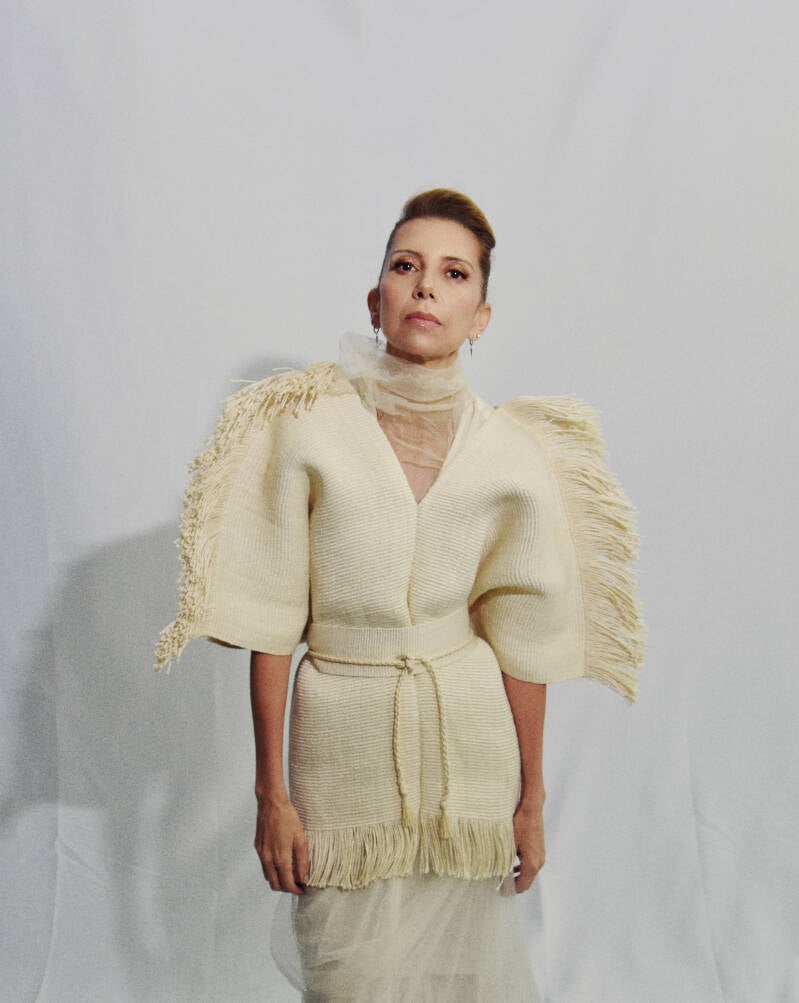
The Mexican singer Magos Herrera returns to Madrid to present Aire, a project that reflects a stage of profound introspection and artistic renewal. With more than two decades of international career, the artist has built her own language in which contemporary jazz, chamber music, and Ibero-American roots converge, establishing herself as one of the most singular voices on today’s scene.
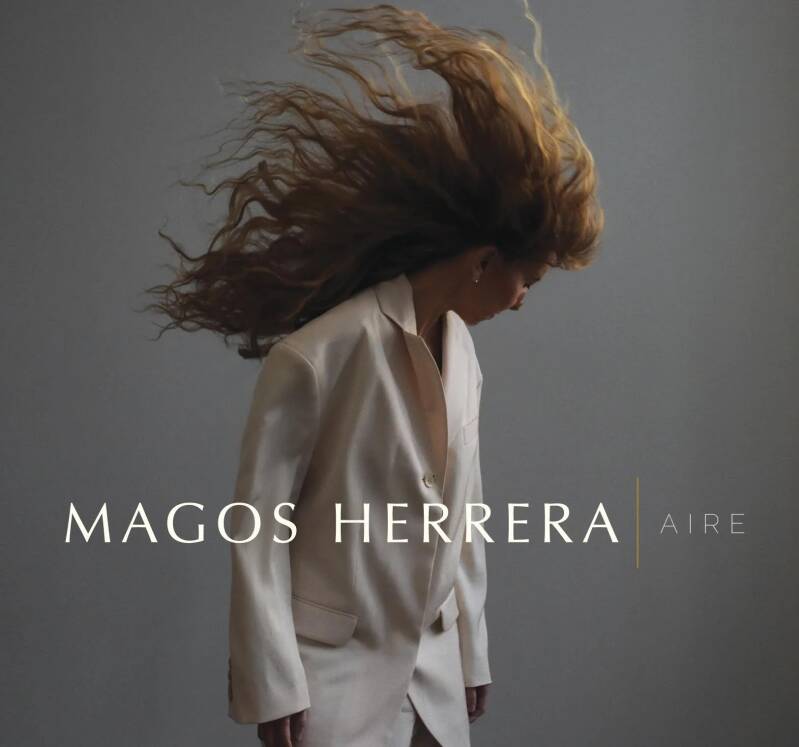
Based in New York, Herrera has developed a career marked by a constant search for identity and cultural dialogue. Her work moves between the intimate and the universal, combining musical rigor, improvisation, and a narrative sensitivity that transcends borders. In this interview, the artist reflects on her evolution, her creative process, and the meaning of her latest work, conceived after the transformative experience of the pandemic.
In addition to her musical facet, Magos Herrera has established herself as a voice committed to social causes, especially in the defense of gender equality. Her involvement in international initiatives and her interest in building narratives that engage with the present reinforce a trajectory in which art and awareness coexist organically. Her return to Madrid stages is not only a reunion with the audience, but also a new opportunity to share an artistic proposal in constant evolution.
1- Your musical roots originate in Mexico City and have evolved to major international stages; how do you remember today that first impulse that led you to dedicate yourself to music?
For me, music is a calling. In a way, I always sensed it, but I didn’t know what the path would be. I could have been a dancer, painter, or writer, but music was a choice that made its way organically —and with a lot of work—. It is a space where I continue to grow as a human being, singing.
2- Throughout your career, how have you defined that personal style that fuses jazz with Ibero-American influences?
At music school in Los Angeles, I had a teacher, Kevin Letau, who introduced me to vocal jazz and improvisation, which I immediately identified with. She was part of Brazilian Sergio Mendes’s group, and it was very important for me to see that I could be a jazz-trained singer and bring other colors to the table.
Thus, little by little, I integrated my own language. Moving to New York was decisive because, within such a competitive scene, it pushes you to anchor yourself in your own voice, filled with the flow of my roots as a Latin American woman.
3- After more than two decades of career, what has changed in your way of interpreting and understanding music?
Everything. My relationship with music is much more intimate and profound. The voice is a reflection of your inner world, through which life has passed.
I have learned a lot from my collaborators in my way of phrasing and interpreting: from my work with Brooklyn Rider (string quartet), masters of chamber music, to jazz ensembles and great storytellers such as Mercedes Sosa or Elis Regina.
Life has led me, beyond writing songs, to a more compositional work. I wrote my opera Primero Sueño, which has been an important step. In it, I portray Sor Juana Inés de la Cruz and, in addition, I co-wrote the work with Paola Prestini. All of this led me to see music from a multidimensionality.
4- In your latest work Aire, what conceptual axis guided the creation of the project?
It is a post-pandemic album. During isolation, my experience was to survive with the essential and invisible, to need nothing more, and to long to converse with the world. That is why the album is an impulse to celebrate, connect, and honor our shared humanity.
5- You have developed your career between Mexico, the United States, and Europe; how has that international journey influenced your artistic identity?
Having been born in a country like Mexico has given me a very important root anchor: the ancestral, the purpose of the sacred, the origin. New York has nourished my need to converse with the world, as well as the universality of what is possible in production and narratives, and the rigor of building an international career.
In Europe there is much to discover and cultivate. That is why I return to Spain and Portugal, places where I have already been before and with which I have a very strong emotional connection.
6- In addition to your musical facet, you are involved in social initiatives; what role do you believe art plays in the defense of equality and rights?
The artist, as a storyteller and public voice, portrays our humanity. It can be denunciation, evocation, memory, or an invitation to imagine a different world. It can be a transformative agent and generate impact in the construction of individual and collective paradigms. In my case, as a spokesperson for UN Women, I have learned enormously about everything that remains to be done in terms of equity and ending gender-based violence. In 3 that sense, we have developed many joint initiatives, from the album He for She to the project Con Alma, which was part of the CSW67.
The album Dreamers, with Brooklyn Rider, was my way of denouncing the conception of the Latin American migrant during the first administration of Donald Trump, showcasing thinkers from Ibero-America affected by dictatorships. Also, the opera about Sor Juana Inés de la Cruz seeks to place in the collective imagination the reference of a woman who challenged her historical circumstances and pursued her dream of access to knowledge. All these values are timeless, relevant, and transformative.
7- On the occasion of your concerts in Madrid, what does it mean for you to return to this stage?
My connection with Madrid is deep. I have a wonderful audience that has accompanied us over the years. It is a relationship that began with my first album, more than 20 years ago, and has been intermittent. My intention is to nurture and cultivate more frequently this love I have for Spain.
8- Throughout your career you have received important recognitions; what place do awards hold in your artistic trajectory?
Awards are beautiful and affirming. However, a career is built with many other things: consistency, permanence, real connection with the audience, coherence, and the many questions we artists ask ourselves day by day, especially in an industry that changes rapidly.
9- After this tour, what projects do you have planned in the short and medium term?
We will continue with my concerts in Europe and Mexico with Aire, including some performances at Carnegie Hall in New York with my opera Primero Sueño. In addition, we are preparing two new projects: my next solo album and a new collaboration with composer Paola Prestini. Stay tuned!

Add comment
Comments