

Co-produced with Mexico, it addresses abuse and mistreatment, taking Santiago Segura as a reference to connect with a wider audience.
By Susan Villa.
In a social context in which violence—in its multiple forms—continues to be one of the major issues that remains invisible, the documentary Almas de Hierro emerges as a committed, courageous, and necessary audiovisual proposal. Co-produced between Spain and Mexico, the work focuses on complex realities such as gender-based violence, cyberviolence, and vicarious violence, through real testimonies and analysis by professionals from different fields. Its premiere will take place on April 29 in Madrid, at an event that aims not only to move audiences, but also to raise social awareness.
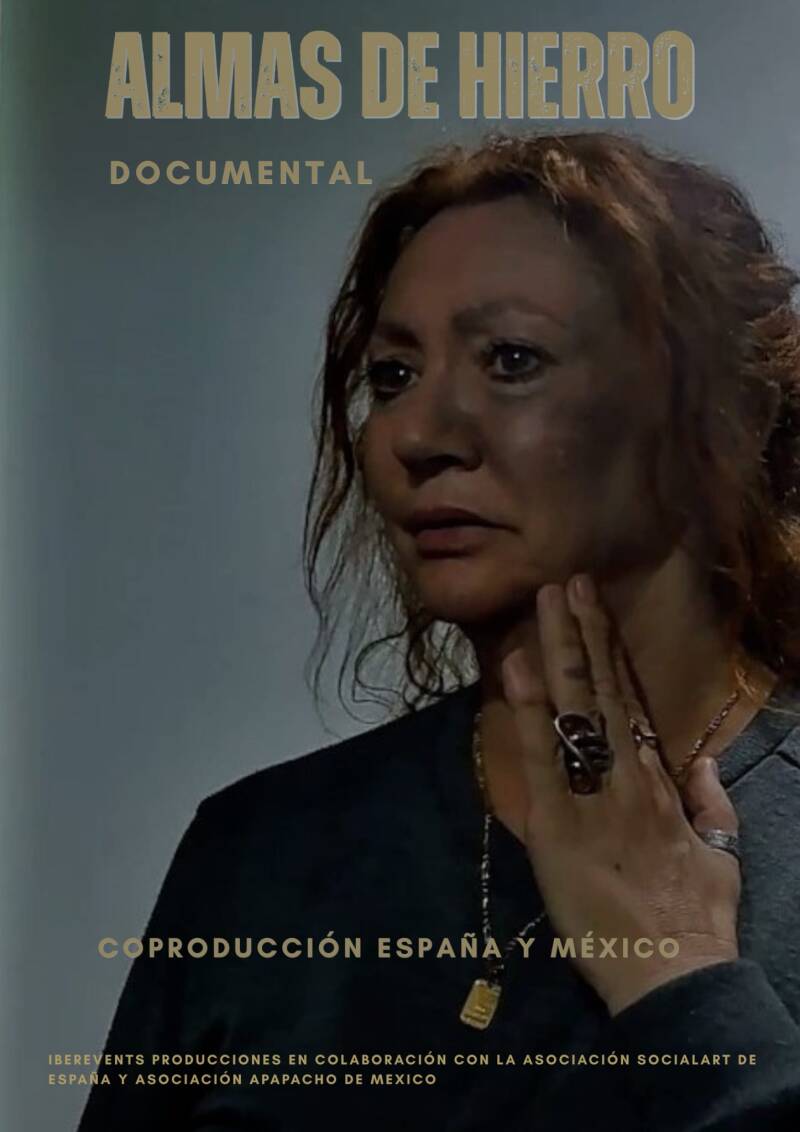
Behind this project is Ana Navasquillo, a producer and social activist whose career combines the audiovisual field with a firm commitment to social causes. Through initiatives such as Iberevents Producciones and the SocialArt Association, Navasquillo has consolidated a line of work focused on giving visibility to urgent social issues, embracing the transformative power of audiovisual media as a tool for denunciation and reflection.
In this interview, Navasquillo delves into the origin of Almas de Hierro, the challenges of working with sensitive and protected testimonies, and the importance of addressing forms of violence that are still poorly understood by society. She also reflects on the value of a multidisciplinary perspective in this type of project and previews her future work, always maintaining her commitment to social reality as a central axis.
1. How did the idea of creating Almas de Hierro arise, and what motivated you to address such a delicate topic as violence in its different forms?
Unfortunately, it is a very current issue, and it is very necessary to give it visibility. I am very sensitive to fair social issues, and through the association we also saw the need to bring these kinds of topics to the screen. In addition, Mexico is also involved in this project.
2. This documentary is based on real events and protected testimonies. What has the process been like working with these stories and ensuring the safety of those involved?
It has been tough, as these are chilling situations, and when cases are in legal proceedings, it is extremely important to protect identities.
3. The work addresses not only gender-based violence but also cyberviolence and vicarious violence. Why do you think it is important to make these less understood forms visible?
Precisely because some forms of violence are more invisible, it is necessary to name them. There is increasingly more vicarious violence. And of course, violence on social media, which many young people normalize or do not know how to identify.
4. Almas de Hierro is a co-production between Spain and Mexico. What has this international collaboration contributed to the approach and final result of the documentary?
Mexico is a country where all types of violence, abuse, and sexual mistreatment are very present. We were interested in including the perspective of Mexican professionals to establish a comparison with Spain in terms of complaint management, victim intervention, etc.
5. The project includes professionals from different fields such as law enforcement, psychology, social work, and law. What value does this multidisciplinary perspective add to the narrative?
Having different expert professionals involved in these cases enriches the documentary and, above all, provides a broader perspective on this issue.
6. In addition to your work as a producer, you lead social initiatives such as Iberevents Producciones and the SocialArt Association. How does your audiovisual work connect with your social commitment?
It really comes down to organization. I try to prioritize and gradually complete what I consider most important. The truth is, sometimes I don’t have enough time, but the body also needs rest.
7. After the premiere of Almas de Hierro on April 29 in Madrid, what new projects are you working on or would you like to embark on next?
I would like to successfully complete this premiere, of course—I won’t reach the level of success of Santiago Segura, haha—but I hope it reaches as many people as possible. Next, I want to move forward with a feature film titled Un mensaje para el cielo, about the life of a young man who suffers from quadriplegia. It is also based on real events.
Add comment
Comments