

The third season arrives on Netflix combining international artists, real audiences, and iconic landscapes in a production of global cultural and media impact.
By Susan Villa.
The third season of La Reina del Flow consolidates its status as a global phenomenon and opens a new stage in Spanish-language audiovisual production by expanding its narrative universe into Europe and choosing the Canary Islands as the main setting. Filming in Lanzarote and Fuerteventura turns the archipelago into a recognizable narrative space, integrating real concerts, massive audiences, and iconic landscapes into a proposal that fuses fiction, music, and territory before millions of viewers around the world.
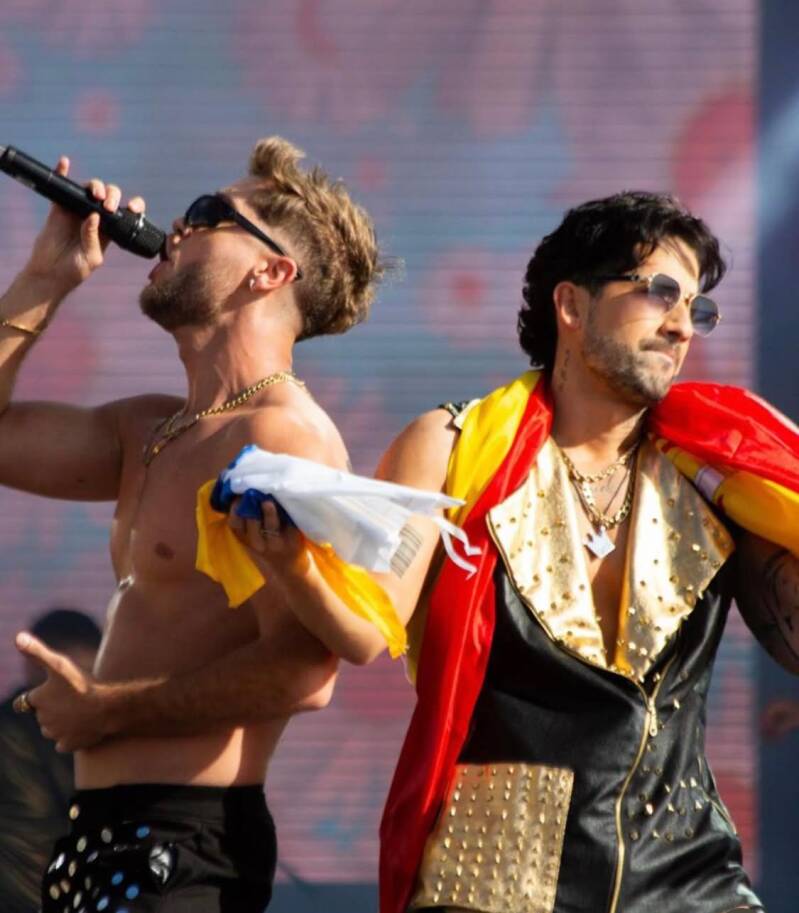
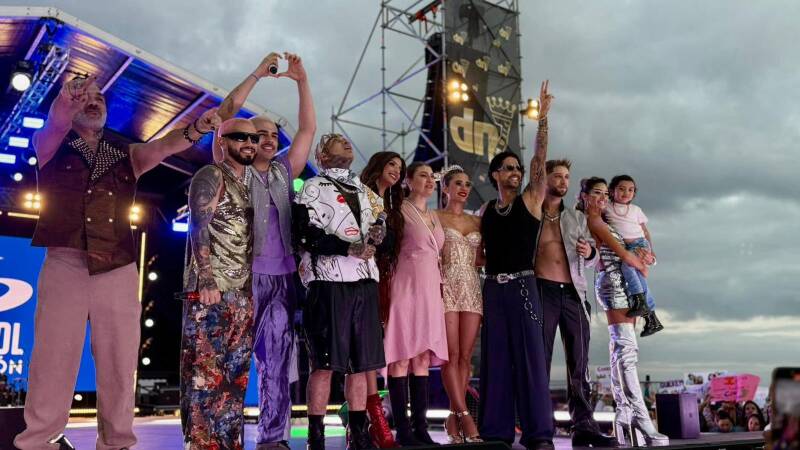
In this international effort, key figures of contemporary urban music such as Rauw Alejandro, Omar Montes, and DJ Nelson converge, along with emerging new talents, in a strategy that strengthens the link between the real music industry and serialized fiction. The presence of these artists brings authenticity, projection, and cultural strength to a series that has managed to turn urban music into its own narrative language, capable of transcending the screen and connecting with global audiences.
At the helm of this creative operation is David Navarro, producer and CEO of DN7 Music, whose trajectory and network of alliances have been decisive in building bridges between major production companies, international artists, and real settings. In this interview, Navarro explains how the idea of bringing La Reina del Flow 3 to the Canary Islands was born, the logistical and creative challenges of an unprecedented shoot, and the cultural, touristic, and audiovisual impact generated by a production that reinforces the positioning of the archipelago as a strategic reference for future international productions.
La Reina del Flow 3 has made history by filming outside Latin America for the first time and choosing the Canary Islands as its European setting. How did the opportunity to bring this production to the islands arise?
The idea arose in Colombia, in conversation with its producer, my dear friend Andrés. I thought that, given the global success of the series, it would be fantastic to project some episodes incorporating real concerts, with real fans, and thus mix fiction with reality through actors and internationally successful artists.
The Canary Islands not only provide landscape, but also visual identity and international projection. From your point of view, what does the archipelago have to compete with other major international filming locations?
The Canary Islands, in addition to their natural light —which has already attracted hundreds of American productions— are a spectacular set in themselves. Historically, they have been the epicenter of Latin music in Europe: from salsa to reggaeton or merengue, many of these genres began their European journey here.
It has always been said that the Canary Islands function as the Latin thermometer of Europe, in the same way that Puerto Rico does for Latin America.
The scenes filmed in Lanzarote and Fuerteventura recreate massive concerts with a strong visual and emotional charge. From production, what was the greatest logistical and creative challenge?
The greatest challenge was turning an idea born in my head into a tangible reality. I was clear that La Reina del Flow has a huge fan base and that people would travel from different places to live the experience of participating in an episode of their favorite series.
Bringing more than 10,000 people onto a beach, on a working day —with jobs, studies, and responsibilities— was a challenge as big as it was exciting. Added to this was getting Sony Pictures and Caracol to commit to taking, for the first time in the history of the series, one or several episodes to another territory. It was an enormous challenge that had to work out no matter what.
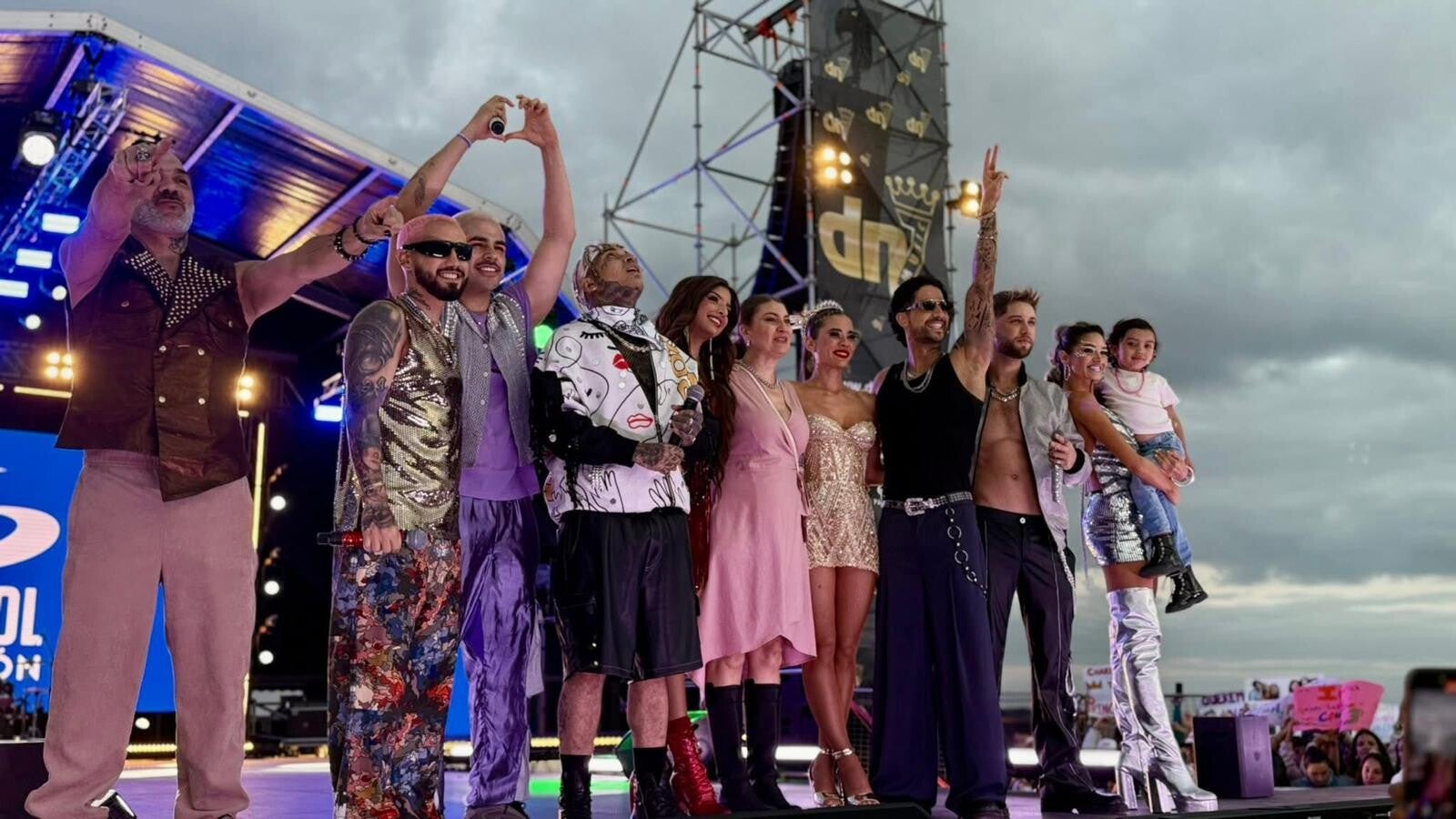
We moved more than 55 professionals from Colombia, not counting the human team from the islands themselves. Thanks to God, the result was an absolute success and we managed to position the Canary Islands worldwide through social networks such as Twitter, Instagram and TikTok, as well as through media, television and press.
I am deeply grateful for the trust placed in my company and for the unconditional support of my friend Andrés in making this dream a reality.
DN7 Music has acted as a bridge between audiovisual fiction and the real music industry. How is this collaboration structured with a series with such a consolidated musical identity?
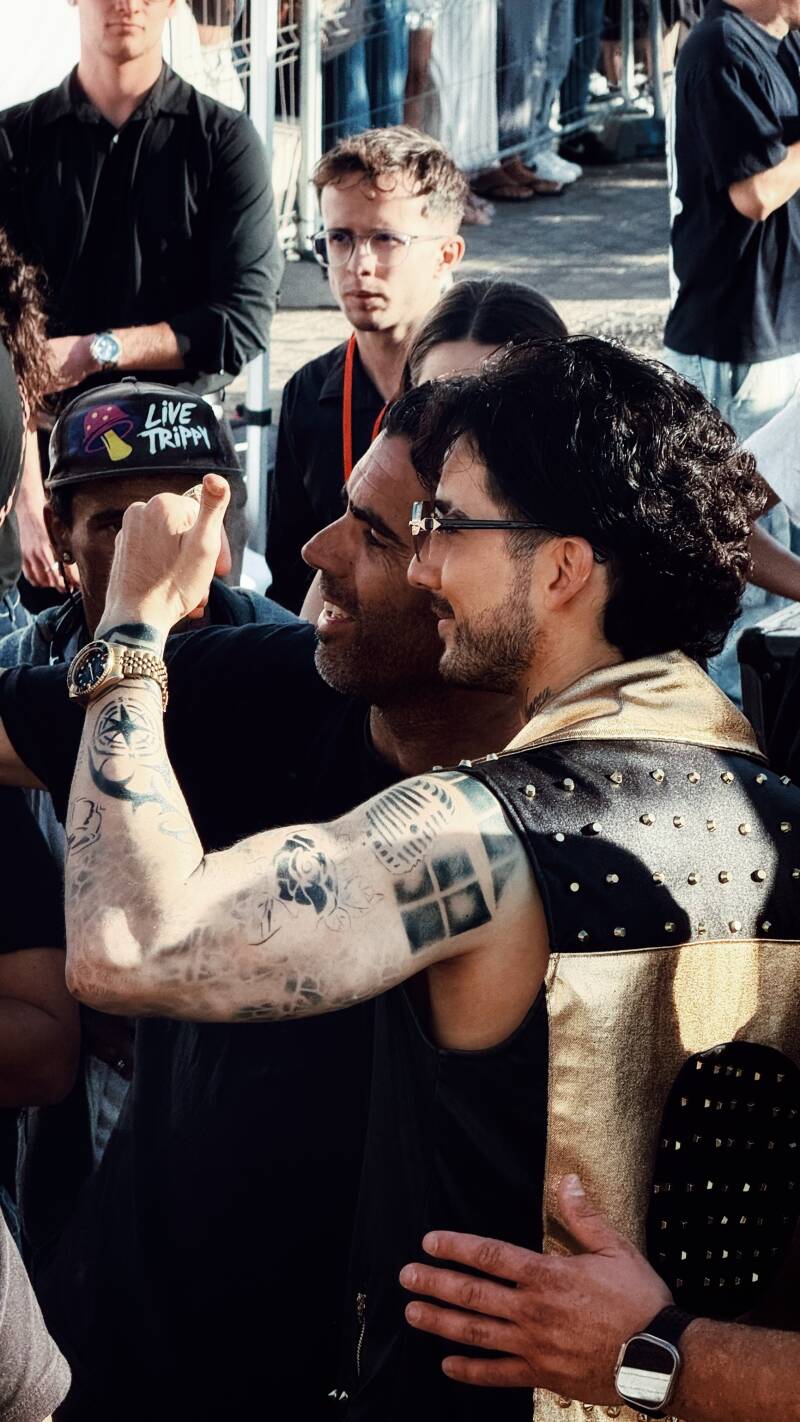
Throughout the trajectory of DN7 Music we have built very strong relationships with artists, record labels, music industry professionals and media outlets. All of this facilitated that, through my long-standing friendship with one of the actors of La Reina del Flow —who before being an actor is one of the most powerful artists in Colombian hip hop and freestyle— a natural path of collaboration opened.
I detected the need to integrate real artists already in the second season. After discussing it with Andrés on several occasions, we brought Juanfran, from the duo Jowell & Randy, and later Rauw Alejandro for the final episode. I personally handled closing those agreements and putting them in Andrés’ hands.
After the success of that collaboration, Andrés called me for the third season and we resumed that initial idea. He told me: “Hey David, do you remember what you told me for the third season?” I said yes, and he replied: “Well, let’s go for it.”
I contacted Omar Montes, who was filming a music video in Morocco, and he accepted without hesitation. DJ Nelson also joined, creator of the term “reggaeton” and one of the most important producers of the genre worldwide, with major hits alongside artists such as Jay Wheeler, Tito El Bambino, or Don Omar.
DJ Nelson came at my request and also brought one of his new artists, Maare, to participate in the series. Along with him, Omar Montes and Elio, we also promoted rising artists such as Carlos Heredia, Juanfran, Alda, and Angelyah, creating a balance between major figures and new talents from Colombia.
The shoot had a massive public response. What impact do you think it has had on the cultural and audiovisual projection of the Canary Islands?
The shoot had an absolutely massive public response, and it was not only local audiences. People came from Italy, the United States, and different cities in Spain, which demonstrates the enormous reach of the project from the very beginning. The immediate impact was brutal: in just 24 hours all hotels were full, there were no available plane seats, and restaurants and businesses were completely full. Even inter-island flights sold out. To give an idea of the scale, the airline Binter ran out of seats within hours of the official announcement of the shoot.
On top of that came a real explosion on social media: videos, shared experiences, testimonials… Lanzarote and Fuerteventura remained Trending Topic on Twitter for days, reflecting the enormous interest generated.
Now, with the release of the series on Netflix, all that impact is being reactivated. Everything that already happened during filming is being relived, but multiplied by the global reach of the platform. We are talking about one of the most-watched Spanish-language series in the world, La Reina del Flow, which turns this phenomenon into a sustained impact over time rather than something punctual.
I sincerely believe it is exceptional marketing and unique publicity for the Canary Islands. This type of visibility greatly helps more companies in the film and audiovisual world to explore the possibilities of shooting on the islands, especially considering the important tax advantages offered by the archipelago.
In addition, there is a fundamental difference compared to other major international productions. For example, when Star Wars filmed in the Canary Islands, the viewer did not know they were seeing a beach of the archipelago; they thought they were on Mars or another fictional planet referred to in the film. In other words, Canary landscapes were completely decontextualized and not associated with the real territory.
In La Reina del Flow 3 the opposite happens. From the very first minute of the series it is made clear that the characters are in the Canary Islands. The actors themselves explicitly mention it, and the landscapes are shown as what they are. Anyone who does not know the Canary Islands, or does not know the idyllic landscapes of Lanzarote and Fuerteventura, will identify them immediately. You see a landscape and you know it is the Canary Islands.
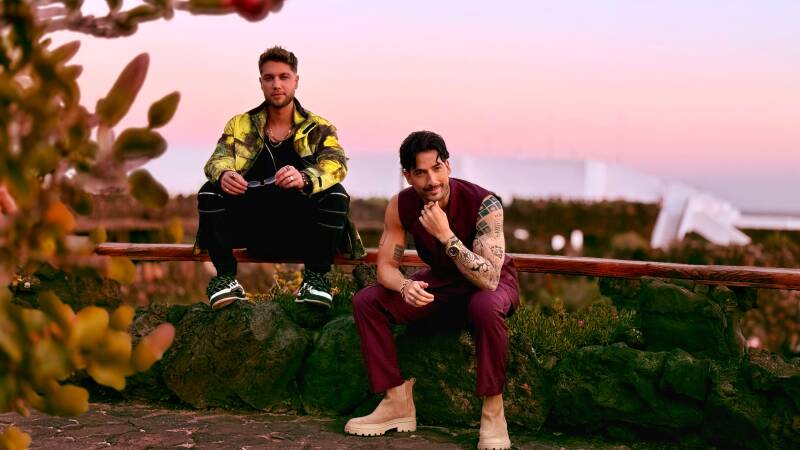
This represents an enormous added value: that one of the most-watched series in the world on Netflix, within the Spanish-speaking sphere, clearly shows and names what the Canary Islands are, and specifically Lanzarote and Fuerteventura. This time it does not happen like with Star Wars, where nobody knew it was the Canary Islands; here it is completely clear from the very first minute. And that, at a cultural, audiovisual and touristic level, is simply incalculable.
La Reina del Flow is a global phenomenon that influences musical and cultural trends. How has urban music evolved within international serialized fiction?
As an expert in record advertising, I believe urban music has adapted perfectly to the new times. Today we see major artists, such as Rauw Alejandro or Bad Bunny, mixing reggaeton with salsa, merengue, or other traditional rhythms.
That capacity for fusion and adaptation has expanded the creative spectrum and has allowed urban music to continue setting trends both inside and outside fiction.
After this international milestone, what projects is DN7 Music currently working on and what development lines does it aim to consolidate?
At DN7 Music we are developing several cultural projects. Among them, a series dedicated to the history and origins of reggaeton, the Leyendas del Reggaetón festivals, and several television formats that we will present to different networks.
In addition, we continue with record work: artist development, international tours, releases, and promotional campaigns. The truth is that we have a very busy 2026 full of projects.
Add comment
Comments