

Dear planetary friends:
Today I have the privilege of introducing you to a poet who has traveled the world thanks to his poetic art: I am speaking of the Chilean poet Luis Arias Manzo, Secretary General and Founder of the Poetas del Mundo Movement.
In this conversation, Luis shares the origin of his project, born in October 2005, and what motivated him to embark on this ambitious literary journey. He tells us about the objectives of the movement, as well as the challenges he has faced in 2024: his Facebook page with more than 40,000 followers was hacked and, some years ago, unscrupulous individuals attempted to hack the Poetas del Mundo website. Thanks to the tireless work of Arias Manzo, in recent months the movement has been reborn with a cutting-edge platform. On March 21, World Poetry Day, this incredible digital showcase was relaunched, bringing together contemporary poets from all corners of the world.
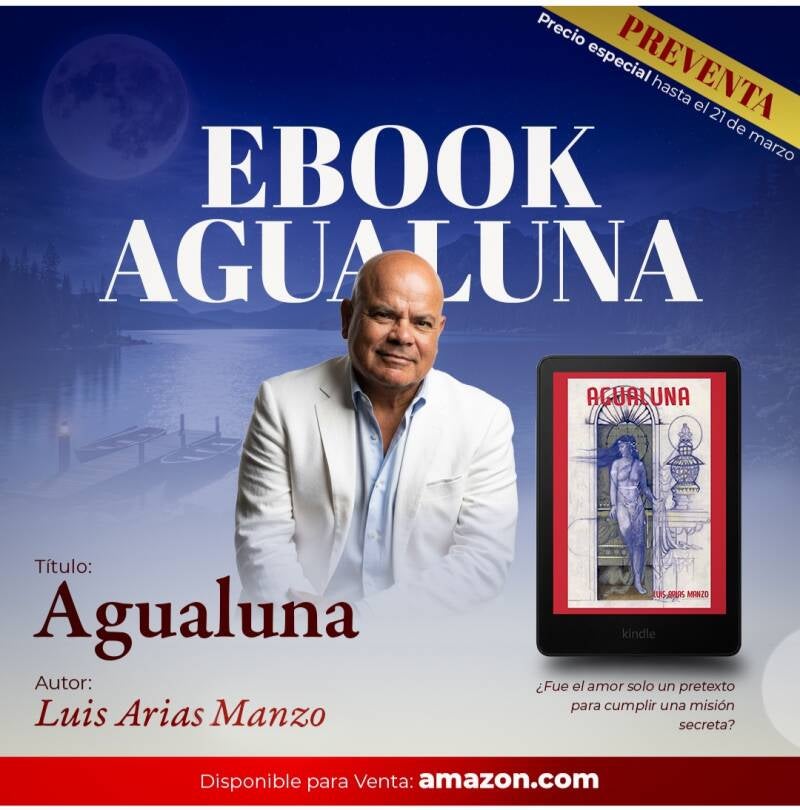
Luis has been a tireless traveler thanks to poetry; therefore, he has friendships everywhere. In this interview he tells us a curious anecdote that he experienced during one of his trips in the Middle East. In addition, he speaks about his book Agualuna, relaunched in 2025 in digital format after 25 years since its publication.
Poetas del Mundo is a platform where contemporary poets from many countries come together, one that knows no borders. Its commitment and main objective is to promote peace and brotherhood on a global level; it is a medium that allows sharing with a click regardless of distance; it is that virtual table where, regardless of the time, you can delight in reading good poetry; it is that space where dialogue is open; it is that place where we forget that borders exist and live in a world without divisions. I urge all poets to join this initiative, but also, dear reader, there is space for you: join this planetary network to which you are welcome. In essence, everyone is cordially invited to be part of this planetary family, to share in this project that grows every day and to the members who have trusted Luis to adorn this international literary legacy.
I congratulate Luis and his team for keeping this initiative alive for more than 20 years, promoting contemporary poetry in an exceptional, formal, professional, and reliable way, without profit, unlike other organizations of this kind.
Luis Arias Manzo was the prologue writer of the multilingual anthology CANTO PLANETARIO (H.C. Editores, 2023). At the close of this conversation, he told us what it meant to have been the prologue writer of these volumes of planetary poetry. Thank you, dear Luis, for your complicity in this literary adventure.
Dear friends, enjoy this conversation with Luis Arias Manzo.

What inspired you to create the Poetas del Mundo Movement?
At the beginning of the 21st century, in a context of profound political, social, and technological transformations, an idea was born that might seem simple, but was deeply bold: to bring together the poets of the world in a single movement or guild, however we may call it.
This initiative arose from a reflection on the role of poetry in the contemporary world. Humanity was going through complex times, marked by persistent wars, growing social inequalities, and an evident deterioration of the environment. Faced with this scenario, a fundamental question emerged: does poetry still have a role in the destiny of humanity?
For some, poetry seemed to have been relegated, like a weak voice amid the noise of the modern world. However, for others—and I include myself—it continues to be one of the deepest expressions of human consciousness. Throughout history, poets have not only created beauty, but have also been chroniclers of their time, guardians of memory, and critical voices in the face of injustice.
That tradition remains alive. In every corner of the world there are poets who write, often in silence, from very diverse contexts: cities, towns, indigenous communities, academic spaces, or independent circles. They are dispersed voices, but deeply connected by the same sensitivity.
Then a key idea emerged: what would happen if all those voices could meet?
Thus Poetas del Mundo began to take shape, as an international network of poets united by a humanist vision, convinced that the word can be a real tool for awareness, encounter, and transformation.
The Poetas del Mundo Movement has already turned 20 years old. What have the results been during this time?
When Poetas del Mundo was born in Valparaíso in 2005, it was more of an intuition: the desire to bring together the poets of the planet in a community based on dialogue, awareness, and human fraternity.
Allow me a brief context. October 14, 2005 marked for me the closing of a significant stage. I had come from participating as a guest in the 10th Poetry Festival of Cuenca, Ecuador, organized by the Latin American Poetry Association (ASOLAPO), where I was entrusted with organizing the next edition in Chile. During that process I noticed a profound lack: many literary organizations had lost the sense of a common ideal; each one advanced individually, prioritizing personal positioning over what is essential.
Over time, that intuition transformed into an international cultural network that has managed to bring together thousands of poets in different countries and continents. Voices from diverse languages, religions, and traditions found in this movement a common space where the word can transcend borders and build bridges among peoples.
During these twenty years, Poetas del Mundo has promoted international gatherings, cultural tours, public readings, and multiple collective initiatives, bringing poetry to schools, communities, universities, and social spaces where poetic language was often not present.
One of the most unique aspects of the movement has been the creation of the Poetic Diplomatic Corps, made up of ambassadors and consuls of poetry, who have actively contributed to expanding this spirit in different countries.
Like any living process, we have also faced significant challenges, such as the loss of our digital platform and cyberattacks that put the continuity of the project to the test. However, these difficulties demonstrated that what was essential was not technology, but the human network built over the years.
Today, after two decades of existence, Poetas del Mundo is recognized as an international cultural reference. Its permanence over time —without depending on subsidies— and its ability to continue bringing together wills around poetry and human consciousness are perhaps the best evidence of the solidity and meaning of this project.
This movement has a universal manifesto. Can you summarize what it consists of?
The Universal Manifesto of Poetas del Mundo is, essentially, the expression of the humanist vision that gives meaning to the movement. It is not an academic text, but a declaration of principles that understands poetry not only as a literary exercise, but as a form of consciousness.
The manifesto states that poets cannot be indifferent to the great challenges of humanity—such as war, inequality, or the destruction of nature—but that, from their creative freedom, they can contribute to reflection and awareness.
It also proposes that poetry must leave closed spaces and return to society, reaching communities, schools, and towns, recovering its living and collective dimension.
In this sense, Poetas del Mundo seeks to unite diverse voices—from different cultures, languages, and traditions—around universal values such as peace, human dignity, and brotherhood among peoples.
What happened with the Poetas del Mundo website and Facebook page?
Throughout its history, Poetas del Mundo has not only been a cultural space but also a movement that has touched sensitive global issues. And that inevitably has had consequences.
From its early years, our digital platform began to be the target of cyberattacks and attempts at intervention. These were not isolated incidents, but repeated episodes that affected both our website and later our social media.
Beyond the technological aspect, there were even more concerning situations. In the early years of the movement, several member poets—of Jewish origin—were forced to resign after receiving threats. The perpetrators were never clearly identified, but I have no doubt that these actions came from sectors interested in generating division and weakening a space that promoted intercultural dialogue.
The most serious episode occurred in 2024, when our official Facebook page was hacked. That space, which gathered more than forty thousand followers, was taken over by third parties who began posting content completely unrelated and contrary to the spirit of Poetas del Mundo. Despite multiple efforts, it has not been possible to recover it to this day.
These events cannot be understood as simple technical incidents. They reflect that even a cultural and poetic movement, when it promotes awareness, peace, and fraternity among peoples, can disturb interests and provoke reactions.
However, there is something they could not and will not be able to intervene in: the human network built over the years. Poets from all over the world have remained active, organizing meetings, writing, and keeping the spirit of the movement alive.
Because poetry, when born from consciousness, cannot be silenced.
On March 21, the relaunch of the platform was made official. What new features does this new stage bring?
The relaunch of Poetas del Mundo marks more than continuity; it is a true rebirth of the movement.
After difficult years—marked by cyberattacks, the loss of our digital platform, and partial disconnection of our network—we took on the challenge of rebuilding not only a website, but also the memory and projection of the movement.
One of the most significant milestones was the unexpected recovery of historical archives from the old platform, long believed to be lost. This allowed us not only to rescue part of our history but also to project it into the future.
The new platform, launched on March 21, 2026, World Poetry Day, incorporates updated tools that facilitate content publishing, poet visibility, and global connection among members. It also introduces new dynamics that encourage community participation.
But this new stage is not only technological. We have also promoted an organizational restructuring, strengthening international coordination and opening space for new generations of poets, without losing the experience accumulated over these twenty years.
Today, Poetas del Mundo reopens its doors to the planet with more strength, clarity, and renewed conviction: that poetry remains a living tool for consciousness, encounter, and human transformation.

Poetas del Mundo is 20 years old, and you are turning 70. How do you perceive the future of this movement?
Good question, and I deeply appreciate it. I have not built this movement for myself, nor for ego or personal ambition; I have driven it with the conviction that poetry must regain the place it deserves in these times of chaos, fragmentation, and deep crisis of meaning that humanity is experiencing.
I firmly believe that the human project can only survive if intelligence prevails over brutality, if collective consciousness overcomes the greed of those who today hold power without humanist vision. In that scenario, both philosophy and poetry are called to play an essential role in the coming decades.
For this reason, I believe poets cannot remain dispersed, nor thinkers committed to humanity’s destiny. It is time to unify energies, to build a common consciousness capable of contributing reflection, sensitivity, and meaning.
When one reaches a certain stage of life, one understands that every true work must transcend its founder. My greatest concern is not my personal permanence, but how this collective process will continue and evolve.
I look to new generations with hope, but also with attention, seeking those who can assume this responsibility not as personal benefit, but as a deeply ethical mission.
Because the moment will come when the place must be handed over. And when that happens, Poetas del Mundo must remain in the hands of someone—or a generation—who understands that this movement does not belong to a person, but to a vision: to place poetry at the service of life, the planet, and humanity.
If I wish anything for the future, it is that Poetas del Mundo continues growing beyond names and time, as a planetary force of consciousness.
Because as long as there is a human being willing to transform the world through words, this movement will have a future.
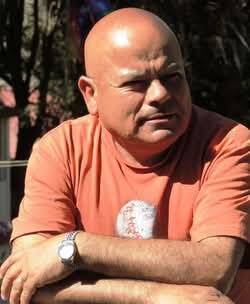
Luis Arias Manzo was the prologue writer of the multilingual anthology CANTO PLANETARIO (H.C. EDITORES, 2023),
a compilation by the Nicaraguan poet Carlos Javier Jarquín.
In how many countries is the Poetas del Mundo Movement present?
Today, Poetas del Mundo has presence in 143 countries, extending its voice across continents, cultures, and languages. It is a living network that beats in different corners of the planet, uniting sensitivities that, although geographically distant, share the same human consciousness.
But more than a number, this represents a process in movement. Our horizon has no borders: we aspire to reach all territories where there is a human being willing to transform reality through the word.
The true destiny of Poetas del Mundo is not only its geographical expansion, but the strength of new generations, emerging in a time of global crisis but also awakening.
They are the ones who will give continuity to this movement, making poetry not only an art, but a tool of consciousness, encounter, and transformation for humanity.
Because as long as there is a poet anywhere in the world, Poetas del Mundo will continue growing.
Can you share the main details of the global call for video poems?
We live in a paradox: the main dissemination platforms—such as Facebook or YouTube—are in the hands of large corporations that often influence how information circulates globally. However, today they are also the most effective tools for spreading art and reaching broad audiences.
From Poetas del Mundo we believe that, rather than rejecting them, we must use them consciously and strategically, placing these spaces at the service of poetry and the human values we promote.
In this context, we have launched a global call for the creation of poems in video format, seeking to adapt to new digital languages and expand the reach of poetic expression.
We invite poets from all over the world to send short videos, in vertical format, between 10 and 30 seconds, preferably recorded with mobile devices in a fixed shot, to facilitate viewing.
The content should address themes such as peace, humanity, global consciousness, the suffering of peoples, childhood in contexts of war, and the awakening of collective awareness.
All videos will be edited and distributed through our official channels, always giving proper credit to their authors.
Submissions can be sent via WhatsApp or email, as a direct and accessible form of global participation.
This initiative seeks not only to spread poetry but also to build a contemporary language capable of dialoguing with new generations, without losing the depth and commitment that characterize our movement.
You have traveled countless countries. What curious anecdote can you share?
You can imagine that after so many years traveling the world, participating in meetings with poets, social leaders, parliamentarians, and even presidents, the anecdotes are countless. Many of them, out of respect, must remain private: experiences lived in complex contexts, such as in Colombia before the peace process, in Chiapas territories, or in encounters with Palestinian poets in Jordan, where poetry inevitably intertwines with political reality.
Because when peace is one of the pillars of our movement, one inevitably finds oneself in the midst of those tensions.
But if I must share a curious anecdote, there is one that always returns to my memory.
I was in Rabat, meeting with Arab and Amazigh poets, when the Moroccan poet Fatima Bouhraka arrived. She had traveled from Fez to invite me to visit her city. I accepted, and I spent three unforgettable days there. Then I had to continue my trip to a city near Melilla, a fourteen-hour bus journey under quite precarious conditions.
Fatima accompanied me to the terminal and made sure I was settled on the bus. Although I insisted she leave peacefully, she stayed until the last moment. Finally she left, and I thought everything was in order.
But shortly after, a man boarded the bus and began speaking in Arabic. I understood absolutely nothing. Suddenly, about half of the passengers stood up and quickly got off to board another bus. The other half remained seated. I, not understanding the situation, kept repeating my destination’s name, waiting for a sign.
After a few minutes, someone kindly indicated that I had to change buses. I went to the other vehicle: it was completely full, with people standing, carrying bags and packages.
I managed to get on. And then something happened that I still cannot explain: in the front row there was an empty seat. Through gestures and smiles, they made me understand that the seat was reserved for me.
I never knew why. But in the midst of chaos, an unknown language, and uncertainty, someone—without words—had made space for me. And perhaps that is also a form of poetry.
Tell us about your recently published book.
Talking about Agualuna is, in a way, talking about a moment of rupture in my own life. Although it was published twenty-five years ago, today it is reborn in its first digital edition, as if time—far from closing it—had been preparing it for this new encounter with readers.
Agualuna is not simply a book; it is an experience. It is the testimony of a moment when life bursts in with force and disrupts all our certainties. I came from a deeply rational, structured, even materialistic background, and suddenly I find myself facing an event I could not explain through that logic.
What happens there is, essentially, a transition: the passage from a rational understanding of the world to another where mystery, intuition, and the invisible begin to have a place. And that transition is not comfortable. It is painful, contradictory, deeply human.
Agualuna—more than a character—is a symbol. It is the irruption of the inexplicable into everyday life. It is that force that arrives without asking permission, that transforms, that dismantles, and that often leaves without offering answers. And yet, it leaves an irreversible mark.
The book is built as a dialogue between prose and poetry, because there are experiences that cannot be contained only in rational language. Poetry appears there as a necessity, as a way of saying what cannot be explained, of touching what escapes logic.
At its core, Agualuna poses a question that remains valid: what truly transforms us? Is it reason, or is it love? Is it certainty, or is it mystery?
Today, seeing it circulate in digital format, I feel the book is entering a new time. Because perhaps humanity is beginning to ask itself those same questions with greater urgency.
And perhaps, just perhaps, the real revolution is not in external structures, but in the awakening of the heart.
What did it represent for you to have been the prologue writer of CANTO PLANETARIO?
It represented, above all, a profound honor, but also a responsibility that at first felt almost impossible to assume. Writing the prologue for a work like Canto Planetario, in which poets from practically the whole world converge—in dozens of languages, around 77 languages if I remember correctly—is to face a collective expression of humanity that transcends the literary and becomes a true testimony of our time.
At first, I must confess I did not understand why you gave me that place. I am not an academic nor a specialist formed in literature classrooms; I am rather a self-taught person who has learned from experience, from life, and from poetry itself. I told you that at the time.
However, your insistence was not aimed at titles or credentials, but at something more essential: lived experience, commitment, and the vision of poetry as a universal language capable of bringing peoples together.
As the process continued, I understood that this prologue should not be a technical analysis nor a conventional critical reading, but an opening of consciousness. An invitation to understand that we were facing a unique work: a multiple, diverse, deeply human chant, where each voice, from its geography and culture, contributes to a single planetary breath.
Being the prologue writer of Canto Planetario was, in short, accepting the challenge of putting into words the spirit of a work that, in itself, already transcends them.
• The interviewer is a Nicaraguan writer.
Contact: carlosjavierjarquin2690@yahoo.es

Add comment
Comments